AI Upstream Hardware Market Differentiation Analysis
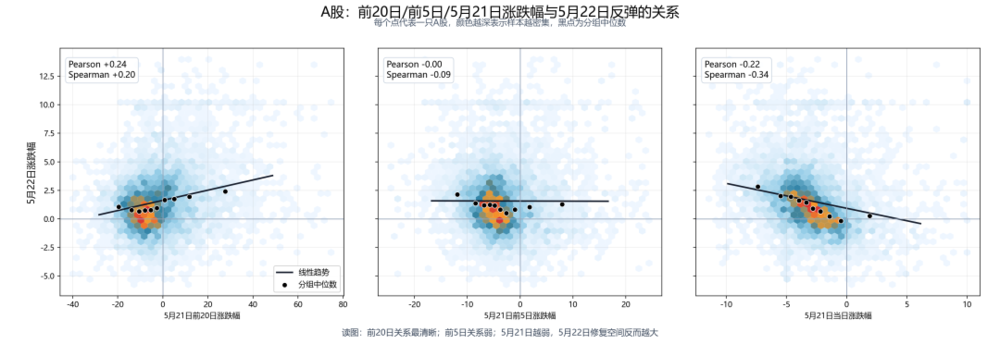
💡Data-driven insight into which AI hardware sectors are leading the market recovery versus those facing sell-off pressure
⚡ 30-Second TL;DR
What Changed
Optical communication and storage sectors are showing signs of high-level differentiation and profit-taking.
Why It Matters
Understanding these sector-specific dynamics helps investors and industry participants allocate resources more effectively during volatile market windows.
What To Do Next
Use 20-day moving average trends as a primary filter when evaluating the resilience of AI hardware supply chain stocks.
Key Points
- •Optical communication and storage sectors are showing signs of high-level differentiation and profit-taking.
- •PCB, high-speed copper interconnects, and AI chips demonstrate strong trend continuity.
- •Data center and power infrastructure sectors are primarily following broader market recovery rather than leading.
- •Quantitative analysis reveals that recent 20-day performance is a stronger predictor of rebound strength than 5-day trends.
🧠 Deep Insight
Web-grounded analysis with 22 cited sources.
🔑 Enhanced Key Takeaways
- •The global AI chip market is experiencing robust expansion, projected to grow from USD 68.31 billion in 2026 to USD 194.93 billion by 2034, driven by increasing data generation, cloud computing advancements, and government initiatives like the U.S. CHIPS Act.
- •Optical communication, particularly the optical module market, is undergoing accelerated growth due to AI infrastructure, with the global market exceeding USD 23 billion in 2025 and expected to grow by approximately 25% in 2026, driven by the transition to 800G and 1.6T optical modules for hyperscale AI data centers.
- •The AI-powered storage market is projected to grow significantly from USD 35.95 billion in 2025 to approximately USD 255.24 billion by 2034, fueled by the increasing need for efficient management of vast data volumes and the demand for high-performance, low-latency storage for AI/ML workloads.
- •Hyperscale cloud and AI infrastructure providers, including Microsoft, Alphabet, Amazon, Meta, and Oracle, have committed to spending between $660 billion and $690 billion on capital expenditure in 2026, nearly doubling 2025 levels, with the majority directed at AI compute, data centers, and networking.
- •The demand for high-bandwidth memory (HBM) driven by AI infrastructure expansion is causing unprecedented memory shortages, with current production capacity unable to scale fast enough to meet the explosive growth in AI data centers, leading to potential disruptions across the technology supply chain well beyond 2026.
🛠️ Technical Deep Dive
- Co-Packaged Optics (CPO): This technology integrates optics directly with switching silicon, shortening electrical paths for lower power consumption, higher integration density, and improved signal integrity at ultra-high bandwidth. CPO relies on silicon photonics for high-density optical integration and advanced packaging technologies like 2.5D and 3D integration, chiplet architectures, and optical interposers.
- Compute Express Link (CXL): CXL enables memory pooling at scale, allowing AI inference workloads to access shared memory with cache coherency across multiple racks. CXL 3.0, released in 2022, doubled bandwidth to 64 GT/s and introduced flexible networking. CXL 4.0, released in November 2025, further doubled bandwidth to 128 GT/s via PCIe 7.0 and introduced bundled ports for 1.5 TB/s connections, addressing the 'memory wall' problem by providing DRAM-like latency across the data center.
- High-End Printed Circuit Boards (PCBs): AI computing and data center expansion are driving a shift towards high-value-added PCBs. This includes higher layer counts, more complex stack-ups, tighter impedance control, increased adoption of low-loss and high-frequency materials, and wider use of back drilling, High-Density Interconnect (HDI), and advanced via structures.
- High-Bandwidth Memory (HBM): HBM is a critical component for AI workloads, offering superior performance compared to traditional DRAM. However, its specialized manufacturing and limited production capacity are leading to significant supply constraints and price increases.
🔮 Future ImplicationsAI analysis grounded in cited sources
⏳ Timeline
📎 Sources (22)
Factual claims are grounded in the sources below. Forward-looking analysis is AI-generated interpretation.
- intelmarketresearch.com
- adtek-fiber.com
- c-light.com
- precedenceresearch.com
- fortunebusinessinsights.com
- futurumgroup.com
- traxtech.com
- adtek-fiber.com
- institutionofelectronics.ac.uk
- substack.com
- introl.com
- rocket-pcb.com
- avnet.com
- bvp.com
- goldmansachs.com
- mofo.com
- deloitte.com
- randtech.com
- mordorintelligence.com
- precedenceresearch.com
- bnef.com
- openpr.com
Weekly AI Recap
Read this week's curated digest of top AI events →
👉Related Updates

AI-curated news aggregator. All content rights belong to original publishers.
Original source: 虎嗅 ↗