AI Supercharges Content, Platforms Harvest
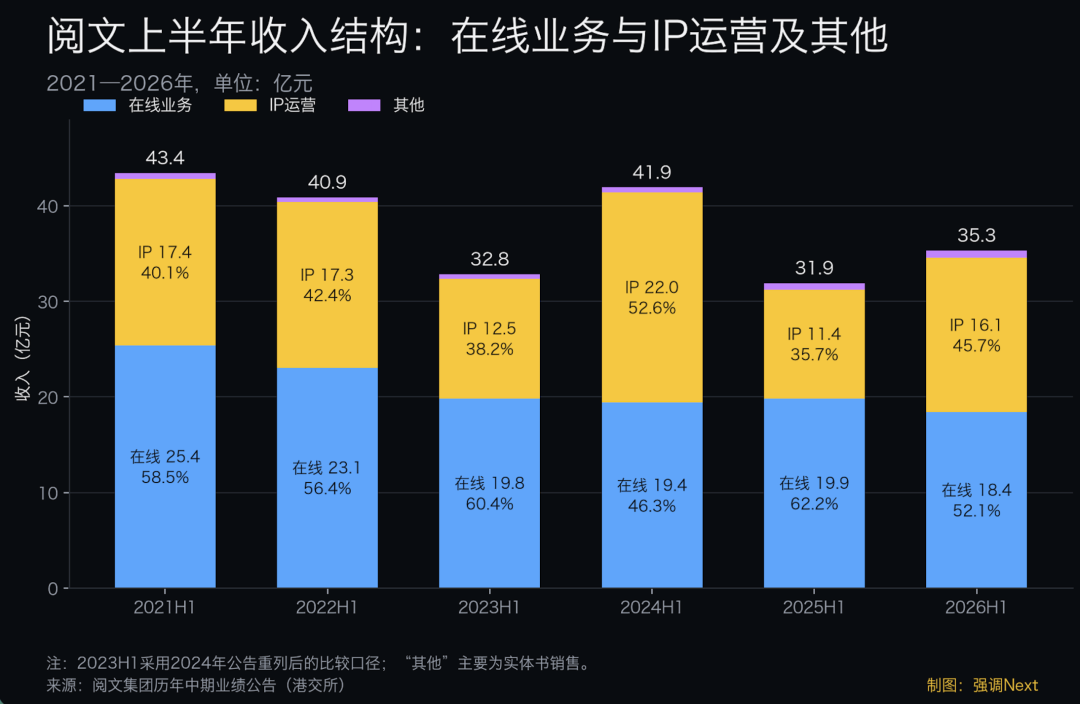
💡AI lowers content costs, but Yuewen’s real moat may be distribution and rights.
⚡ 30-Second TL;DR
What Changed
AI reduces the time and cost required to produce written entertainment content.
Why It Matters
For AI founders, the value chain may shift from content creation toward distribution, recommendation, rights management, and monetization. Companies with strong user data and efficient feedback loops could capture more value than companies that merely generate text faster.
What To Do Next
Run a controlled pilot with the OpenAI Responses API and compare AI-assisted drafts against human-written content on completion time, retention, and editorial rejection rate.
Key Points
- •AI reduces the time and cost required to produce written entertainment content.
- •Yuewen’s historical content, author, and distribution barriers may be weakened but are not automatically eliminated.
- •Hongguo’s advantage may lie in efficiently converting abundant AI-assisted content into user traffic and revenue.
🧠 Deep Insight
AI-generated analysis for this event.
🔑 Enhanced Key Takeaways
- •Yuewen Group has integrated its proprietary 'Yuewen Miaobi' large language model specifically to assist authors with world-building, character consistency, and plot generation, aiming to lower the barrier for entry-level writers.
- •Hongguo (often associated with ByteDance's ecosystem) utilizes algorithmic recommendation engines that prioritize high-frequency, short-form serialized content, which creates a distinct monetization advantage over traditional long-form subscription models.
- •The shift toward AI-generated content (AIGC) has triggered a legal and ethical debate regarding copyright ownership of AI-assisted literary works, with Yuewen actively lobbying for clearer intellectual property protections for platform-hosted AI content.
- •Market data indicates that platforms leveraging AI-driven content production are seeing a 30-40% reduction in the 'time-to-market' for new serialized web novels compared to traditional manual writing workflows.
- •The competition between Yuewen and Hongguo reflects a broader industry transition from 'IP-centric' value chains (where long-term adaptation is key) to 'traffic-centric' value chains (where immediate user engagement and ad-revenue conversion are prioritized).
📊 Competitor Analysis▸ Show
| Feature | Yuewen Group | Hongguo (ByteDance) | AI-Native Platforms |
|---|---|---|---|
| Core Model | IP-Centric / Subscription | Traffic-Centric / Ad-Supported | Efficiency-Centric / Freemium |
| Content Strategy | High-quality, long-tail IP | High-frequency, short-form | Rapid, automated generation |
| Monetization | Subscriptions/Adaptations | Ad-revenue/Micro-transactions | SaaS/Subscription/Ads |
| AI Integration | Author-assist tools (Miaobi) | Algorithmic distribution | Full-stack generation |
🛠️ Technical Deep Dive
- Yuewen Miaobi Model: A domain-specific LLM trained on massive proprietary datasets of web literature, focusing on narrative coherence and stylistic mimicry.
- Recommendation Architecture: Hongguo utilizes deep learning-based collaborative filtering and reinforcement learning to optimize content delivery based on real-time user interaction metrics.
- AIGC Pipeline: Implementation of RAG (Retrieval-Augmented Generation) to ensure AI-generated plot points remain consistent with established lore and character bibles within long-running series.
🔮 Future ImplicationsAI analysis grounded in cited sources
⏳ Timeline
Weekly AI Recap
Read this week's curated digest of top AI events →
👉Related Updates



AI-curated news aggregator. All content rights belong to original publishers.
Original source: 钛媒体 ↗