AI startups face bankruptcy from high usage costs
A critical look at why scaling AI apps can lead to bankruptcy if unit economics aren't managed.
30-Second TL;DR
What Changed
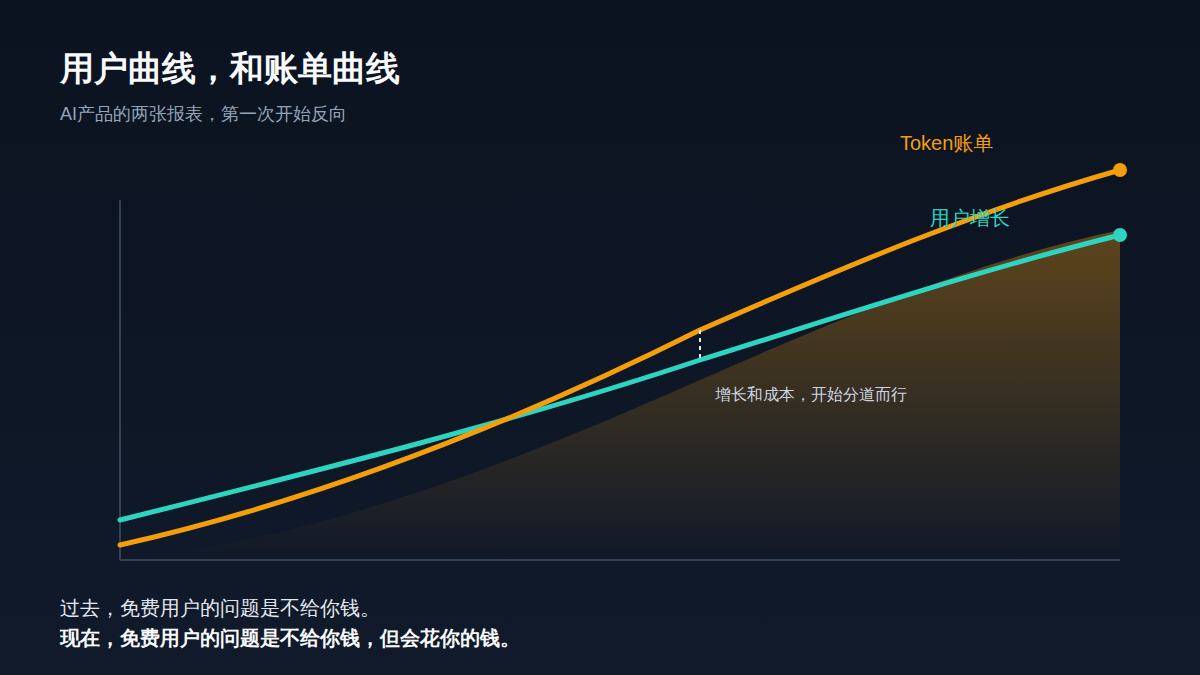
High API and compute costs are threatening startup viability.
Why It Matters
This highlights a critical 'unit economics' crisis in the AI industry. Founders must prioritize cost-efficient inference and tiered pricing to survive.
What To Do Next
Implement strict usage quotas or move to smaller, specialized models to optimize your unit economics.
Key Points
- •High API and compute costs are threatening startup viability.
- •Increased user engagement is leading to financial losses rather than growth.
- •Business models need urgent adjustment to balance usage costs.
Deep Insight
AI-generated analysis for this event — not the original article.
Enhanced Key Takeaways
- •The 'inference-to-revenue' gap is widening as model complexity increases, with many startups spending over 60% of their gross revenue on cloud GPU rental and API inference fees.
- •Venture capital firms are shifting investment criteria, now prioritizing 'compute-efficient' architectures and proprietary data moats over raw user acquisition metrics.
- •Startups are increasingly adopting 'model distillation' techniques, where they train smaller, specialized models on outputs from larger frontier models to slash operational costs.
- •The rise of 'inference-optimized' hardware and specialized cloud providers (GPU clouds) is creating a secondary market that challenges the dominance of hyperscalers like AWS and Azure.
- •Regulatory pressures regarding data privacy and sovereignty are forcing startups to move away from public API reliance toward on-premise or private cloud deployments, further complicating cost structures.
Technical Deep Dive
- Model Distillation: The process of transferring knowledge from a large teacher model (e.g., GPT-4 class) to a smaller student model to reduce latency and inference costs.
- Quantization: Reducing the precision of model weights (e.g., from FP16 to INT8 or INT4) to decrease memory footprint and increase throughput on consumer-grade hardware.
- Mixture of Experts (MoE): Architectural approach where only a subset of model parameters are activated per token, significantly lowering compute requirements per inference request.
- Speculative Decoding: A technique that uses a smaller, faster model to draft tokens, which are then verified in parallel by a larger model, improving speed and reducing cost-per-token.
Future ImplicationsAI analysis grounded in cited sources
Timeline
- 2023-03GPT-4 API launch sets high industry standard for inference pricing
- 2024-05Industry-wide GPU shortage peaks, driving up cloud compute costs for startups
- 2025-02Rise of 'Small Language Models' (SLMs) as a cost-saving alternative to frontier models
- 2026-01VC funding for AI startups pivots toward profitability and unit economics
Weekly AI Recap
Read this week's curated digest of top AI events →
AI-curated news aggregator. All content rights belong to original publishers.
Original source: 钛媒体 ↗
This is a summary, not the original. Read the source, or get the weekly briefing.
The weekly digest
One email a week. Unsubscribe anytime.