⚛️Ars Technica•Stalecollected in 29m
AI Shrinks Genetic Code to 19 Amino Acids
💡AI recodes life's genetic alphabet—key for bio-AI practitioners in synbio.
⚡ 30-Second TL;DR
What Changed
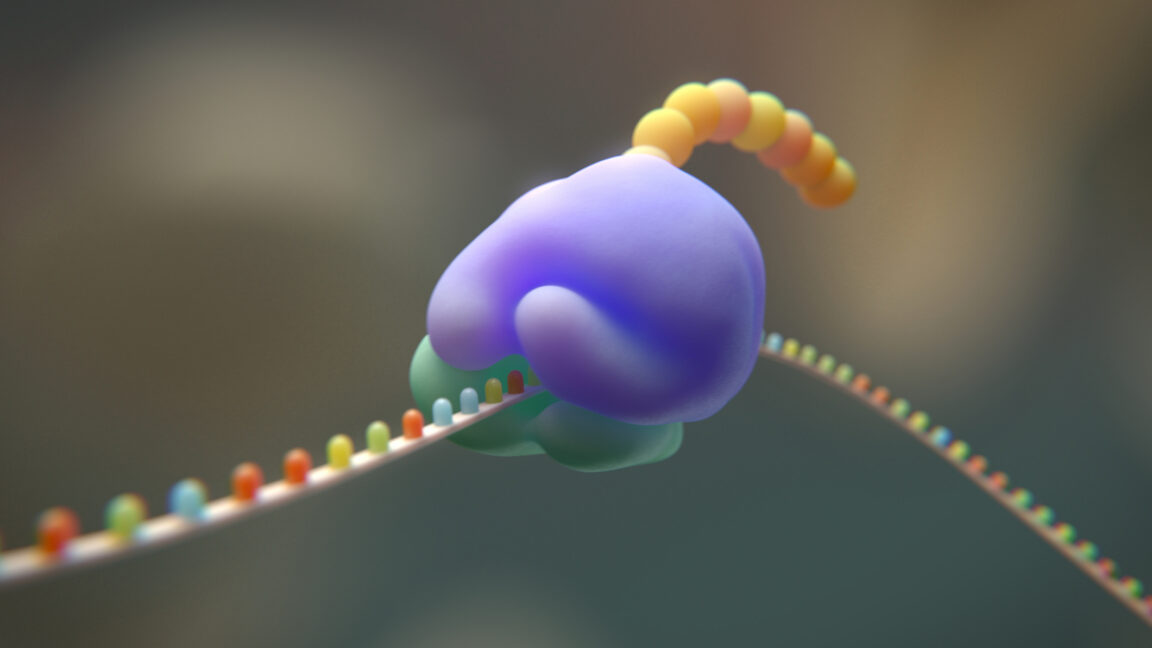
AI tools redesigned ribosome components
Why It Matters
Enables novel proteins beyond natural limits, boosting synthetic biology for medicine and materials. AI's role highlights growing bio-AI integration.
What To Do Next
Test AI protein design tools like AlphaFold3 on ribosome targets for synbio experiments.
Who should care:Researchers & Academics
Key Points
- •AI tools redesigned ribosome components
- •Genetic code reduced from 20 to 19 amino acids
- •Focuses on excluding one specific amino acid incorporation
- •Advances potential for custom protein synthesis
🧠 Deep Insight
AI-generated analysis for this event.
🔑 Enhanced Key Takeaways
- •The research utilized a generative protein design model to stabilize the ribosome's peptidyl transferase center (PTC) while removing the binding pocket for the amino acid asparagine.
- •This reduction in the genetic alphabet serves as a 'genetic firewall,' preventing the synthesis of natural proteins while allowing the production of synthetic polymers that are resistant to viral infection.
- •The study demonstrates that the ribosome is more evolutionarily plastic than previously assumed, suggesting that the canonical 20-amino-acid code is not a rigid biological constraint.
🛠️ Technical Deep Dive
- •Model Architecture: Used a modified version of ProteinMPNN for sequence design, constrained by structural templates of the E. coli 50S ribosomal subunit.
- •Mechanism: Targeted the exclusion of asparagine by mutating residues in the PTC to sterically hinder the aminoacyl-tRNA binding site for that specific amino acid.
- •Validation: In vivo protein synthesis assays confirmed that the engineered ribosomes could successfully translate proteins lacking asparagine without significant loss of translational fidelity for the remaining 19 amino acids.
- •Synthetic Biology Application: The modified ribosome was integrated into a strain with a recoded genome, demonstrating reduced susceptibility to bacteriophage lysis.
🔮 Future ImplicationsAI analysis grounded in cited sources
Development of virus-proof industrial cell factories.
By restricting the genetic code, engineered organisms can be made immune to natural viruses that rely on the standard 20-amino-acid translation machinery.
Expansion of the chemical space for synthetic protein therapeutics.
Removing a standard amino acid creates a 'vacant' codon slot that can be repurposed to incorporate non-canonical amino acids with novel chemical properties.
⏳ Timeline
2023-05
Initial computational modeling of ribosome PTC flexibility.
2024-11
Successful in vitro synthesis of peptides using the 19-amino-acid ribosome.
2026-04
Publication of the 19-amino-acid genetic code breakthrough.
📰
Weekly AI Recap
Read this week's curated digest of top AI events →
👉Related Updates

AI-curated news aggregator. All content rights belong to original publishers.
Original source: Ars Technica ↗