AI Short Dramas vs Real: Premium Path
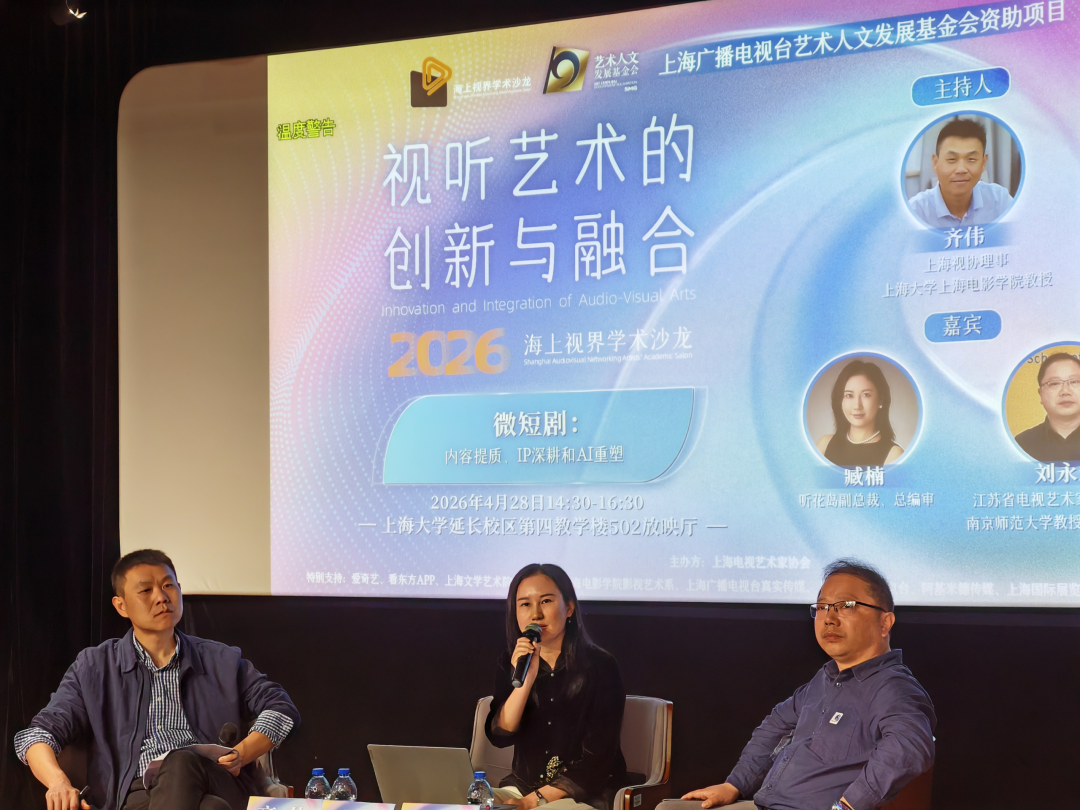
💡AI short dramas dominate 10:1; strategies for quality IP in exploding 1000B RMB market.
⚡ 30-Second TL;DR
What Changed
Micro-short drama market to exceed 1000B RMB in 2025, 1200B in 2026.
Why It Matters
AI disrupts short drama production, forcing quality focus via IP series amid infringement challenges. Creators must blend tech efficiency with narrative depth to compete. Signals maturing Chinese AI content market prioritizing sustainability.
What To Do Next
Prototype AI video generation for family-themed short dramas using tools like Kling AI to test IP extensibility.
Key Points
- •Micro-short drama market to exceed 1000B RMB in 2025, 1200B in 2026.
- •AI short dramas production ratio 10:1 vs real-person dramas in early 2026.
- •Tinghuadao builds 10 IP series matrix, focusing on memorable characters and extensible themes.
- •AI boosts efficiency but highlights need for human storytelling and IP governance.
- •Future talent: storytellers with production mindset and deep aesthetic training.
🧠 Deep Insight
AI-generated analysis for this event — not the original article.
🔑 Enhanced Key Takeaways
- •The surge in AI-generated short dramas has triggered a regulatory pivot in China, with the National Radio and Television Administration (NRTA) implementing stricter content review standards specifically targeting AI-generated visual consistency and copyright provenance.
- •Major Chinese streaming platforms are shifting monetization models from pure pay-per-episode to 'AI-integrated interactive drama' formats, where viewers influence plot progression via real-time LLM-driven character responses.
- •The industry is experiencing a 'compute-to-content' bottleneck, where the cost of high-fidelity, long-form video generation (using models like Sora or domestic equivalents) is currently higher than traditional filming for dramas exceeding 50 episodes.
📊 Competitor Analysis▸ Show
| Feature | AI-Native Short Dramas (e.g., Tinghuadao) | Traditional Production Houses | Interactive AI Drama Platforms |
|---|---|---|---|
| Production Cost | Low (High initial model training) | High (Labor intensive) | Medium-High |
| Turnaround Time | Days | Months | Weeks |
| IP Ownership | High (Proprietary models) | High (Contractual) | Shared/Platform-dependent |
| Viewer Engagement | Passive/Linear | Passive/Linear | Active/Dynamic |
🛠️ Technical Deep Dive
- •Production pipelines utilize a multi-agent architecture: one agent for script-to-storyboard generation, a second for character consistency (LoRA-based fine-tuning), and a third for temporal consistency in video generation.
- •Integration of 'Video-to-Audio' synchronization models that utilize lip-syncing AI (e.g., Wav2Lip or proprietary variants) to ensure character dialogue matches generated facial expressions.
- •Implementation of 'Asset Reuse' frameworks where 3D character meshes are generated once and re-skinned for different episodes to maintain visual continuity across an IP series.
🔮 Future ImplicationsAI analysis grounded in cited sources
⏳ Timeline
Weekly AI Recap
Read this week's curated digest of top AI events →
👉Related Updates

AI-curated news aggregator. All content rights belong to original publishers.
Original source: 虎嗅 ↗
This is a summary, not the original. Read the source, or get the weekly briefing.
Weekly AI briefing
One email a week. Unsubscribe anytime.