🐯虎嗅•Stalecollected in 57m
AI Shifts from Results to Usage Billing
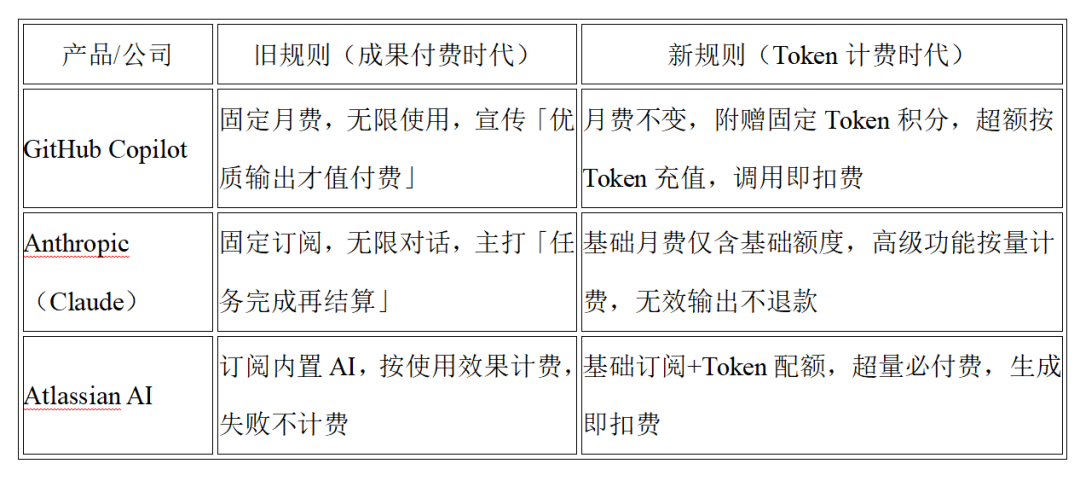
💡AI pricing flip kills subs—optimize usage or budgets explode now!
⚡ 30-Second TL;DR
What Changed
Major AI tools switch from fixed subs to per-token charging due to GPU costs.
Why It Matters
Heavy users and enterprises face bill spikes; AI startups risk bankruptcy without cost buffers. Forces efficient prompting but kills broad experimentation.
What To Do Next
Audit Copilot/Claude token usage and optimize prompts to cut costs 20-50%.
Who should care:Founders & Product Leaders
Key Points
- •Major AI tools switch from fixed subs to per-token charging due to GPU costs.
- •Unlimited plans were loss leaders; heavy users cost vendors $30+/month.
- •Usage billing eliminates startup trial space, stifling AI innovation.
🧠 Deep Insight
AI-generated analysis for this event.
🔑 Enhanced Key Takeaways
- •The transition to usage-based billing is being driven by the 'inference cost wall,' where the marginal cost of serving complex reasoning models (like o3 or Claude 3.5 Opus) exceeds the revenue generated by flat-rate monthly subscriptions.
- •Enterprises are increasingly adopting 'FinOps for AI' tools to monitor token consumption in real-time, as unpredictable usage spikes under per-token models have led to significant budget overruns for development teams.
- •Cloud providers are introducing 'committed use' tiers for AI inference, allowing companies to trade usage flexibility for lower per-token rates, effectively re-introducing a hybrid model that bridges the gap between flat subscriptions and pure pay-as-you-go.
📊 Competitor Analysis▸ Show
| Feature | GitHub Copilot | Anthropic (API) | OpenAI (API) |
|---|---|---|---|
| Primary Pricing | Per-seat subscription | Per-token (input/output) | Per-token (input/output) |
| Usage Control | Seat management | Rate limits/Budget caps | Rate limits/Budget caps |
| Enterprise Tier | Fixed per-user/month | Committed use discounts | Committed use discounts |
| Model Access | Fixed model set | Model-specific pricing | Model-specific pricing |
🛠️ Technical Deep Dive
- •Token-based billing architectures rely on high-precision metering services that intercept API requests to calculate input/output tokens before the response is fully streamed to the client.
- •Dynamic pricing models are being implemented where token costs fluctuate based on real-time GPU cluster utilization and model quantization levels (e.g., FP8 vs. INT8 inference).
- •Implementation of 'Context Window Caching' allows users to reduce costs by paying a lower rate for frequently reused prompt prefixes, shifting the technical focus from raw token count to efficient state management.
🔮 Future ImplicationsAI analysis grounded in cited sources
AI development will shift toward 'inference-efficient' model architectures.
As usage-based billing becomes the industry standard, developers will prioritize smaller, distilled models that achieve similar performance to large models at a fraction of the token cost.
The rise of 'AI Cost Management' as a dedicated software category.
The unpredictability of per-token billing necessitates third-party observability platforms to prevent runaway costs in automated agentic workflows.
⏳ Timeline
2021-10
GitHub Copilot launches in technical preview with a flat-rate subscription model.
2023-03
OpenAI releases the ChatGPT API, formalizing the per-token pricing structure for developers.
2024-05
Anthropic introduces Claude 3.5 Sonnet with aggressive per-token pricing to compete for enterprise market share.
2025-09
Major AI providers begin phasing out 'unlimited' legacy plans in favor of tiered usage-based contracts.
📰
Weekly AI Recap
Read this week's curated digest of top AI events →
👉Related Updates




AI-curated news aggregator. All content rights belong to original publishers.
Original source: 虎嗅 ↗