AI Reshaping Bank Dealmaking
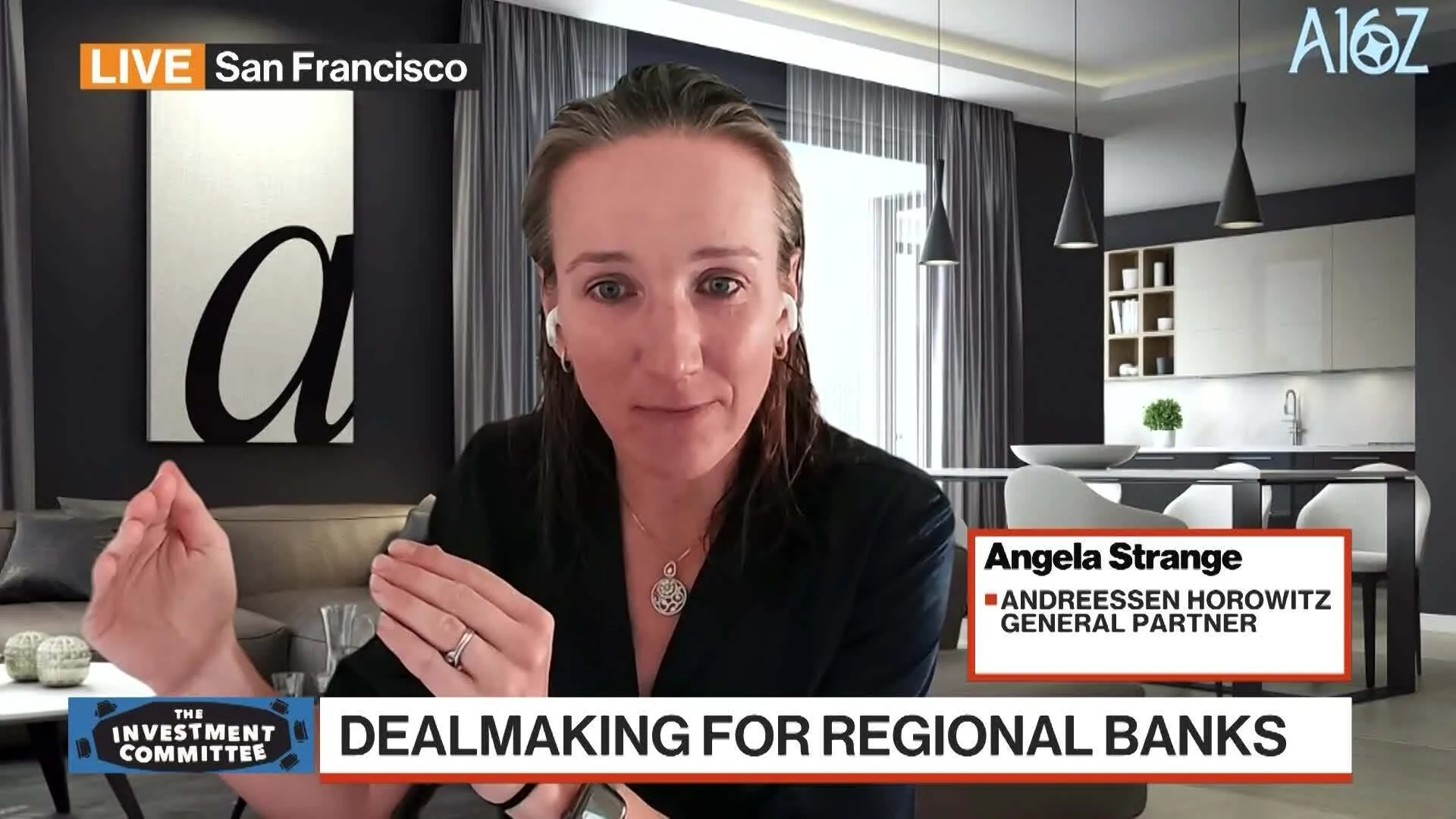
💡Top VCs & bankers reveal AI's edge in dealmaking—key for fintech AI builders
⚡ 30-Second TL;DR
What Changed
Randy Paine (Key Institutional Bank president) shares banking insights
Why It Matters
AI integration could accelerate deal processes and uncover new opportunities in finance, benefiting AI practitioners building fintech tools.
What To Do Next
Watch Bloomberg Deals episode for AI fintech strategies from a16z and McKinsey experts.
Key Points
- •Randy Paine (Key Institutional Bank president) shares banking insights
- •Amit Garg (McKinsey senior partner) on AI deal strategies
- •Angela Strange (a16z general partner) discusses VC perspective
- •Featured on Bloomberg Deals with Dani Burger
🧠 Deep Insight
Background and context from public sources — not the original article. 10 sources cited.
🔑 Enhanced Key Takeaways
- •AI is compressing weeks of research into hours for boutique investment banks—internal AI agents have reduced what took eight man-weeks of work to just a few hours, fundamentally reshaping the analyst leverage model[1].
- •M&A activity in 2026 is being directly accelerated by competitive pressure to acquire AI expertise and capabilities, with firms pursuing strategic acquisitions specifically to gain client bases and market penetration in AI-driven services[3].
- •The productivity gains from AI in investment banking are quantified at 27% improvements in front-office operations, with boutique banks leveraging AI to match the output capacity of multi-analyst teams without proportional headcount increases[1][9].
- •A significant divide is emerging between leading and lagging banks on AI adoption, with 82% of U.S. banks increasing AI budget allocation and the window to catch up closing rapidly as capability gaps widen[2][7].
- •Vertical AI platforms purpose-built for banking workflows—including synergy modeling, comp scraping, deck drafting, and Q&A acceleration—are improving rapidly and becoming critical competitive tools for dealmaking efficiency[1].
🛠️ Technical Deep Dive
- •AI agents parse filings, product documentation, and internal notes to generate buyer rationales and synergy hypotheses automatically, replacing manual document synthesis[1]
- •Rapid Q&A response systems leverage AI to search across CIMs (Confidential Information Memoranda), financial models, emails, and notes simultaneously to answer buyer diligence questions in minutes rather than days[1]
- •Audio briefing tools (such as NotebookLM) enable bankers to absorb complex deal information asynchronously, improving information retention for management and buyer meetings[1]
- •AI-powered visual materials generation creates draft pitch decks and CIMs before designer handoff, reducing iteration cycles and improving clarity[1]
- •AI capabilities are doubling approximately every 100 days in banking applications, making recent advancements (last three months) the most relevant benchmark for competitive positioning[2]
🔮 Future ImplicationsAI analysis grounded in cited sources
⏳ Timeline
📎 Sources (10)
Factual claims are grounded in the sources below. Forward-looking analysis is AI-generated interpretation.
- finalis.com — The Real Impact of AI on Dealmaking What Boutique Investment Banks Need to Know in 2026
- bankingdive.com — 808818
- morganstanley.com — AI Market Trends Institute 2026
- keyrus.com — Top AI Trends Transforming Financial Services for 2026
- thefinancialbrand.com — Three Key Shifts to Make 2026 Your Inflection Point for AI in Banking 194723
- accenture.com — Accenture Banking Trends 2026
- backbase.com — AI and the Future of Banking
- citizensbank.com — AI Trends Financial Management 2026
- kms-technology.com — Top AI Trends Driving the Future of Banking
- kpmg.com — Banking Trends
Weekly AI Recap
Read this week's curated digest of top AI events →
👉Related Updates
AI-curated news aggregator. All content rights belong to original publishers.
Original source: Bloomberg Technology ↗
This is a summary, not the original. Read the source, or get the weekly briefing.
Weekly AI briefing
One email a week. Unsubscribe anytime.