🐯虎嗅•Stalecollected in 24m
AI Limits Communities to 20% Unique Value
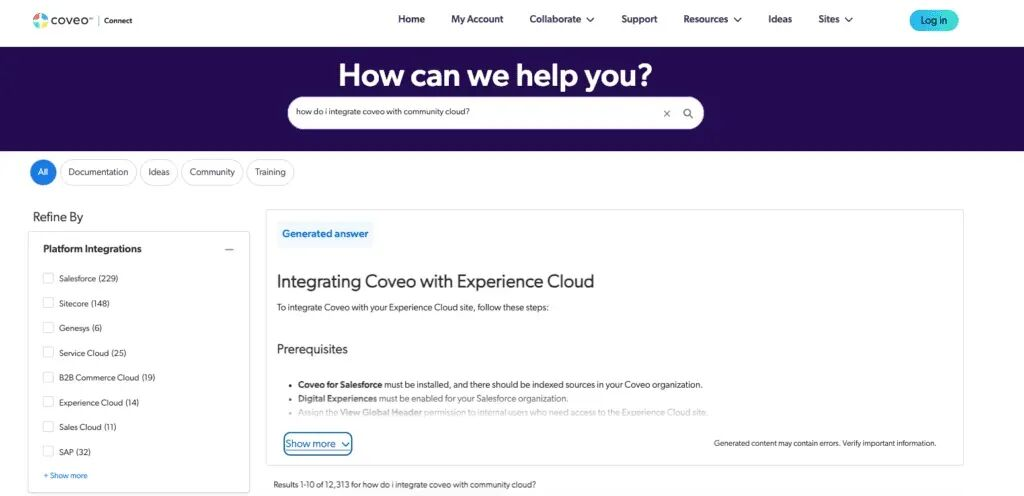
💡Unlock communities' edge over AI/RAG in real-world support insights
⚡ 30-Second TL;DR
What Changed
Communities shine in practice knowledge for edge cases and workarounds
Why It Matters
Enterprises can refocus communities on irreplaceable insights, boosting support efficiency amid AI adoption.
What To Do Next
Audit your community posts and tag them by the five knowledge types for AI integration.
Who should care:Enterprise & Security Teams
🧠 Deep Insight
Web-grounded analysis with 9 cited sources.
🔑 Enhanced Key Takeaways
- •AI knowledge bases employ semantic search and automated tagging to handle structured and unstructured content, enabling precise retrieval for standard queries while still requiring communities for nuanced edge cases[1].
- •RAG frameworks like LangChain, LlamaIndex, and Haystack integrate vector databases such as Pinecone and Chroma to augment LLMs with external knowledge, reducing but not eliminating reliance on community-driven experiential insights[3].
- •Data classification in AI systems categorizes information by sensitivity (public, internal, confidential, restricted) and type, supporting the article's call to classify posts as canonical or experiential for optimized knowledge management[4].
🛠️ Technical Deep Dive
- •RAG (Retrieval-Augmented Generation) systems use embedding models (e.g., OpenAI Embeddings, Voyage AI) to convert documents into vectors stored in databases like Chroma or Weaviate for similarity-based retrieval before LLM generation[3].
- •Semantic search in AI knowledge bases leverages NLP to understand query intent and relationships between terms, improving over keyword matching for standard queries[1].
- •Automated tagging employs machine learning to categorize content dynamically, using metadata like titles, update dates, and priority tags to enhance retrieval accuracy[1].
🔮 Future ImplicationsAI analysis grounded in cited sources
AI-first classification systems will automate 80% of knowledge tagging by 2028.
Machine learning enables real-time analysis of content patterns, minimizing manual efforts as predicted in enterprise data governance trends[4].
📎 Sources (9)
Factual claims are grounded in the sources below. Forward-looking analysis is AI-generated interpretation.
- slack.com — What Is an AI Knowledge Base Tools Features and Best Practices
- kanerika.com — Types of AI
- dev.to — Essential AI Knowledge for 2026 O6d
- bizdata360.com — What Is Data Classification AI Types Best Practices Guide 2025
- klypnews.com — Complete Guide to Artificial Intelligence AI
- salesforce.com — Types of AI
- nu.edu — AI Statistics Trends
- salesforce.com — Types of AI
- diligentic.com — Types of AI in 2026
📰
Weekly AI Recap
Read this week's curated digest of top AI events →
👉Related Updates
AI-curated news aggregator. All content rights belong to original publishers.
Original source: 虎嗅 ↗