AI investment bubble vs historical infrastructure cycles
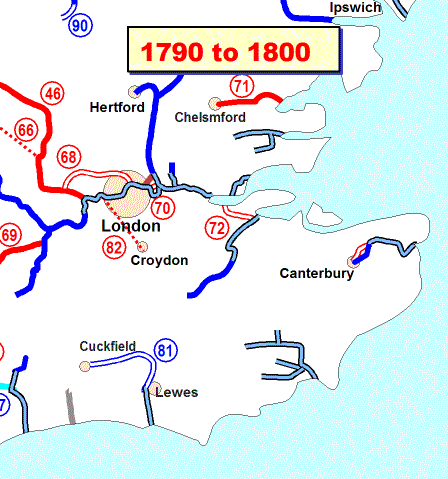
💡A sobering look at AI's 'Big Infrastructure' phase through the lens of historical financial bubbles.
⚡ 30-Second TL;DR
What Changed
Historical infrastructure bubbles share patterns of over-investment and debt-fueled expansion.
Why It Matters
AI practitioners should be cautious of the sustainability of current capital-intensive AI models and focus on tangible ROI rather than just infrastructure scale.
What To Do Next
Evaluate your AI project's unit economics to ensure it can survive a potential contraction in infrastructure funding.
Key Points
- •Historical infrastructure bubbles share patterns of over-investment and debt-fueled expansion.
- •Technological adoption often benefits end-users more than initial capital investors.
- •The transition from equity to debt financing increases systemic risk in tech cycles.
🧠 Deep Insight
AI-generated analysis for this event — not the original article.
🔑 Enhanced Key Takeaways
- •The 'deployment age' concept, popularized by economist Carlota Perez, suggests that the current AI phase is transitioning from the 'installation period' (characterized by financial bubbles) to a 'deployment period' where real-world productivity gains materialize.
- •Recent data indicates that while AI capital expenditure (CapEx) by hyperscalers has reached record highs, the 'revenue gap'—the discrepancy between infrastructure spend and immediate AI-driven software revenue—is widening compared to the 1990s internet boom.
- •Energy constraints have emerged as a unique bottleneck in the current AI cycle, with power grid capacity and data center cooling requirements acting as physical limits that did not constrain the software-centric telecom boom of the early 2000s.
- •Institutional investors are increasingly shifting focus from 'model performance' metrics (like MMLU scores) to 'unit economics' and 'inference cost per token,' signaling a maturation of the investment thesis toward profitability.
- •Historical analysis of the 1840s 'Railway Mania' shows that while most railway companies went bankrupt, the underlying infrastructure created a permanent reduction in transportation costs that fueled the Industrial Revolution, mirroring the potential for AI to permanently lower the cost of cognitive labor.
🔮 Future ImplicationsAI analysis grounded in cited sources
⏳ Timeline
Weekly AI Recap
Read this week's curated digest of top AI events →
👉Related Updates



AI-curated news aggregator. All content rights belong to original publishers.
Original source: 虎嗅 ↗
This is a summary, not the original. Read the source, or get the weekly briefing.
The weekly digest
One email a week. Unsubscribe anytime.