AI in Design/Analysis: Survey on Reality & Challenges
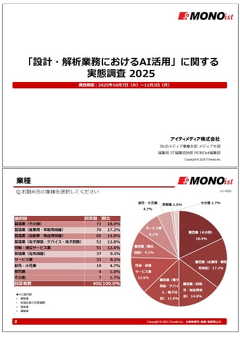
💡406 engineers reveal AI hurdles in design tasks—key for tool builders targeting CAD/CAE.
⚡ 30-Second TL;DR
What Changed
Survey period: October 7–November 3, 2025
Why It Matters
Highlights adoption barriers in engineering sectors, guiding AI tool developers on unmet needs. Helps enterprises assess AI readiness in design workflows.
What To Do Next
Download the MONOist survey report to analyze AI adoption gaps in your design tools.
Key Points
- •Survey period: October 7–November 3, 2025
- •406 valid responses from industry professionals
- •Focuses on realities and challenges of AI in design/analysis tasks
- •Conducted by MONOist/TechFactory編集部
🧠 Deep Insight
Background and context from public sources — not the original article. 6 sources cited.
🔑 Enhanced Key Takeaways
- •Japan's graphic design market reached USD 2,653.41 million in 2024 and is projected to grow at a CAGR of 5.85% through 2030, driven by increased investment in AI-enhanced design services and interactive technologies[1]
- •92% of Japanese AI users in their twenties do not fully trust AI-generated responses, with over 70% turning to Google Search for verification when answers feel incomplete, indicating significant adoption barriers in design workflows[3]
- •Japan prioritizes reliability and long product lifecycles in AI adoption across engineering disciplines, with process automation (42%), predictive maintenance (28%), and fault detection (28%) as top applications in design and analysis tasks[2]
- •Talent scarcity in IT and Data skills reached 24% in Japan according to ManpowerGroup's 2025 survey, with 77% of Japanese companies reporting difficulty finding skilled professionals—creating demand for AI-assisted design and analysis tools[4]
- •AI agents in product development require user-centric design with faster iteration cycles and human-in-the-loop interaction; eval-driven development has become the standard methodology for validating AI performance in engineering applications[6]
🛠️ Technical Deep Dive
• Multi-AI agent platforms combining large language models with autonomous task execution for design workflows, as demonstrated by Fujitsu's platform using the 'Takane' LLM[4] • Eval-driven development methodology where evaluation frameworks define core use cases and requirements; model selection varies by subtask (Claude Sonnet: 65% accuracy, Gemini 3.0 Pro: 62% accuracy for design agents)[6] • Interactive design technologies including AR/VR, 3D visualization, motion graphics, and gamified content enabling immersive digital experiences in e-commerce and engineering visualization[1] • Autonomous agents handling requirement definition, source code generation, manufacturing specifications, and testing with external quality auditing agents that understand tacit organizational knowledge[4] • User preference for fast-response agents with logical transparency over long-running autonomous background tasks; exploratory analysis users reject 30-minute wait times in favor of iterative interaction[6]
🔮 Future ImplicationsAI analysis grounded in cited sources
The convergence of talent scarcity (77% of Japanese companies), growing design market value (projected USD 3.8 billion by 2030), and low user trust in AI outputs (92% distrust rate) suggests Japan's design and analysis sector will experience significant transformation through hybrid human-AI workflows rather than full automation. Organizations will need to invest in eval-driven development practices and interactive AI agents that maintain human oversight, positioning reliability-focused AI solutions as competitive differentiators in Japan's sophisticated digital marketplace. The gap between AI promise and user trust creates opportunities for design tools that emphasize transparency, verification capabilities, and integration with traditional search and validation methods.
⏳ Timeline
📎 Sources (6)
Factual claims are grounded in the sources below. Forward-looking analysis is AI-generated interpretation.
Weekly AI Recap
Read this week's curated digest of top AI events →
👉Related Updates
AI-curated news aggregator. All content rights belong to original publishers.
Original source: ITmedia AI+ (日本) ↗
This is a summary, not the original. Read the source, or get the weekly briefing.
Weekly AI briefing
One email a week. Unsubscribe anytime.