AI-Generated Bills Overwhelm Congressional Legal Review
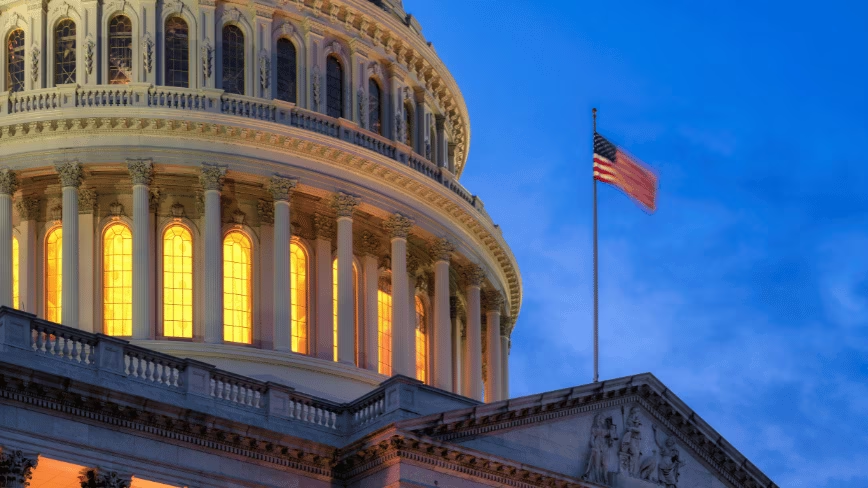
💡See how Claude and ChatGPT are changing high-stakes legal workflows—and exposing review bottlenecks.
⚡ 30-Second TL;DR
What Changed
Congressional staffers and external organizations are using Claude and ChatGPT to produce legislative drafts.
Why It Matters
The story highlights how generative AI can increase document volume faster than expert review capacity. Organizations deploying AI for legal or policy drafting will need stronger validation, provenance tracking, and human-review controls.
What To Do Next
Evaluate Claude and ChatGPT drafting workflows with citation checks, version tracking, and mandatory human approval before generated text enters production.
Key Points
- •Congressional staffers and external organizations are using Claude and ChatGPT to produce legislative drafts.
- •The House Office of Legislative Counsel reviews the language and legal structure of submitted bills.
- •Eight current and former officials described mounting pressure on the office.
🧠 Deep Insight
AI-generated analysis for this event.
🔑 Enhanced Key Takeaways
- •The House Office of Legislative Counsel (HOLC) has reported a 40% increase in legislative drafting requests since early 2025, largely attributed to the ease of generating text via LLMs.
- •Bipartisan concerns have emerged regarding 'hallucinated' legal citations and non-existent case law embedded within AI-drafted bills, requiring manual verification by counsel attorneys.
- •New internal guidelines were issued in mid-2026 requiring staffers to disclose the use of generative AI tools when submitting drafts for formal legal review.
- •The influx of AI-generated drafts has led to a backlog that currently averages 12 business days for initial review, up from the historical standard of 3-5 days.
- •Several congressional committees are exploring the adoption of specialized, fine-tuned legal AI models trained exclusively on the U.S. Code and House precedents to replace general-purpose tools like ChatGPT.
🔮 Future ImplicationsAI analysis grounded in cited sources
⏳ Timeline
Weekly AI Recap
Read this week's curated digest of top AI events →
👉Related Updates



AI-curated news aggregator. All content rights belong to original publishers.
Original source: The Next Web (TNW) ↗