AI Flight Attendants Are Fueling Romance Scams
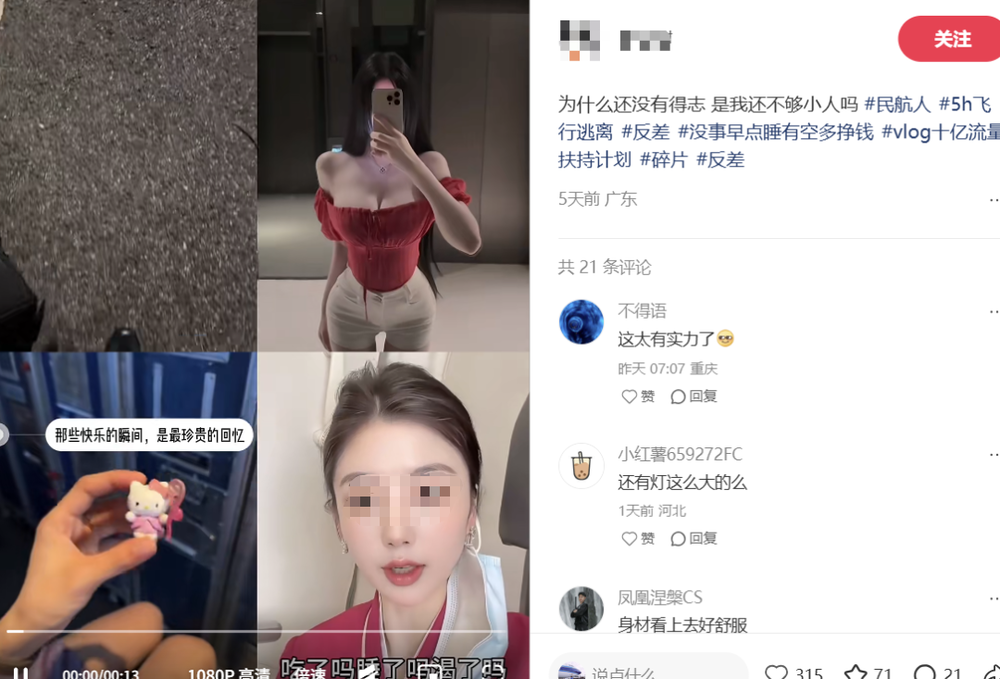
💡Synthetic faces and lip-sync now make fake airline identities believable enough to support high-volume micro-payment sca
⚡ 30-Second TL;DR
What Changed
The suspected fake account combines airline-employee imagery, cabin scenes, and suggestive content to attract attention and private messages.
Why It Matters
Synthetic identity scams lower the cost of impersonation and weaken visual authenticity as a trust signal. Airlines, social platforms, and fraud-prevention teams may need stronger provenance checks, identity verification, and escalation processes for branded uniforms and employee personas.
What To Do Next
Add a deepfake-risk test set containing branded uniforms, logos, and employee impersonation scenarios to your content-moderation evaluation pipeline.
Key Points
- •The suspected fake account combines airline-employee imagery, cabin scenes, and suggestive content to attract attention and private messages.
- •AI can generate a face, cabin, uniform, and synchronized speech without hiring a real person or filming in an actual aircraft.
- •Scammers may use flight schedules and aviation work details to explain delayed replies and avoid meeting victims.
- •The described model relies on many victims sending relatively small amounts for drinks, rides, meals, or entertainment.
- •Airlines could report impersonation, request takedowns, and pursue legal action over unauthorized use of uniforms, logos, and staff identities.
🧠 Deep Insight
AI-generated analysis for this event.
🔑 Enhanced Key Takeaways
- •Cybersecurity researchers have identified that these scams often utilize 'Deepfake-as-a-Service' (DaaS) platforms, which allow non-technical users to generate high-fidelity, real-time video avatars for as little as $10 per month.
- •The use of 'pig butchering' (Sha Zhu Pan) tactics has evolved to incorporate AI-generated flight attendant personas, specifically targeting lonely demographics by exploiting the perceived prestige and travel-heavy lifestyle associated with aviation careers.
- •Major social media platforms are increasingly deploying 'AI-content watermarking' requirements, yet scammers are bypassing these by using decentralized, encrypted messaging apps to conduct the final stages of the fraud.
- •Aviation industry associations have begun lobbying for 'Digital Identity Verification' standards for employees to ensure that official social media accounts can be cryptographically verified by the public.
- •Financial institutions have noted a rise in 'micro-transaction fraud' patterns, where AI-impersonators request small, frequent payments via non-reversible digital assets or gift cards to avoid triggering standard anti-money laundering (AML) alerts.
🛠️ Technical Deep Dive
- Scammers utilize Generative Adversarial Networks (GANs) to create hyper-realistic faces that do not exist in real life, preventing reverse-image search detection.
- Real-time lip-syncing is achieved through Audio-to-Video (A2V) models like Wav2Lip or similar architectures that map phonemes from a pre-recorded or AI-generated voice track to the facial landmarks of the avatar.
- Deepfake video streams are often injected into mobile device camera feeds using virtual camera drivers, allowing the scammer to 'go live' on video calls while maintaining the AI persona.
- LLMs (Large Language Models) are fine-tuned on datasets of aviation terminology and flight attendant jargon to maintain consistent, professional-sounding dialogue during extended interactions.
🔮 Future ImplicationsAI analysis grounded in cited sources
⏳ Timeline
Weekly AI Recap
Read this week's curated digest of top AI events →
👉Related Updates
AI-curated news aggregator. All content rights belong to original publishers.
Original source: 虎嗅 ↗