AI Disrupts China's Journalism Hiring Trends
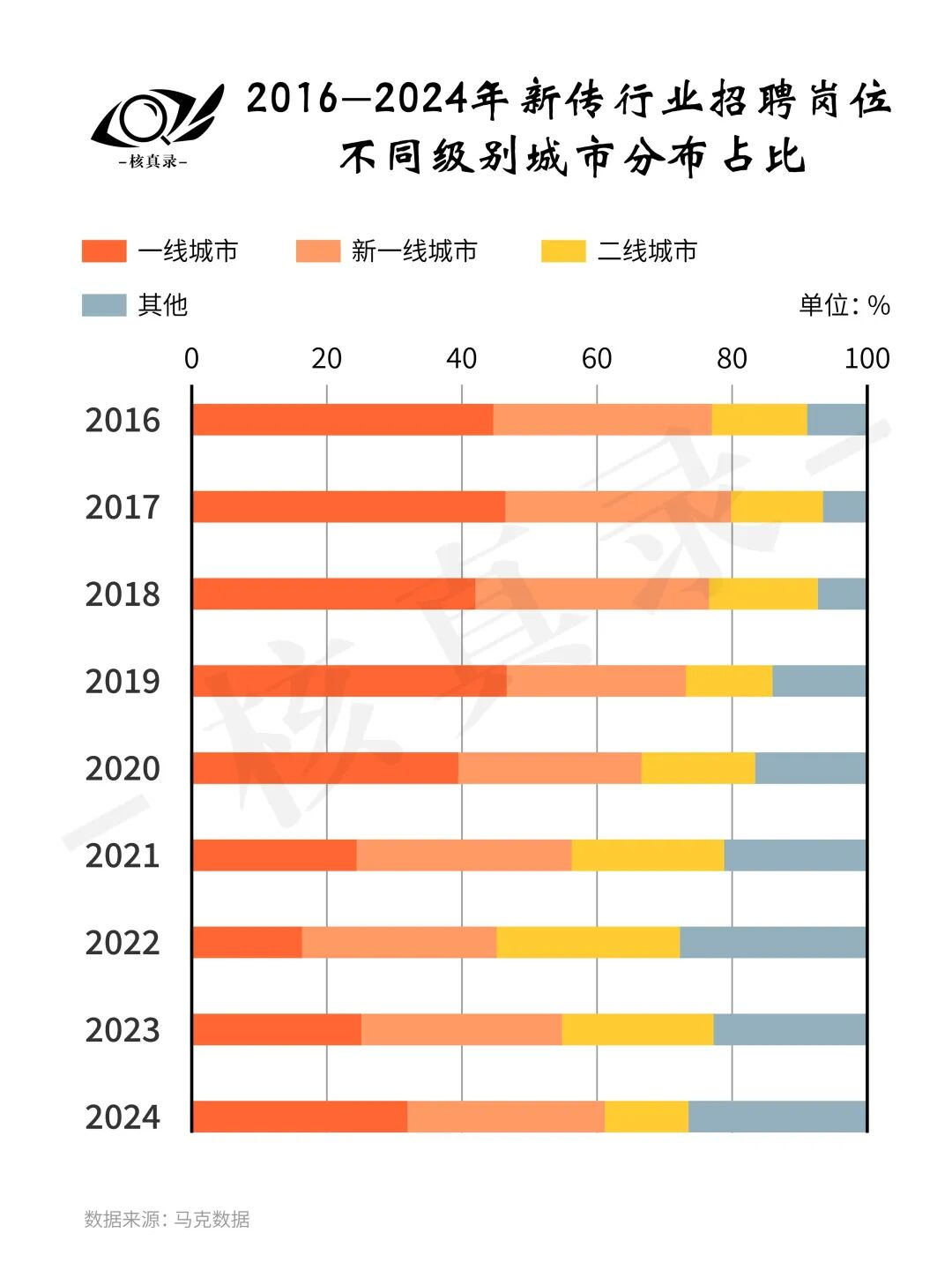
💡AI kills 28% drafting jobs; data/soft skills now pay 75% more in new media
⚡ 30-Second TL;DR
What Changed
Tier-1 cities' job share fell from 46.7% (2017) to 16.6% (2022), rebounding slightly to 32.2% (2024)
Why It Matters
AI automation is eroding traditional journalism roles, pushing new media pros toward hybrid skills in data, tech, and business. This signals broader content industry shifts where AI tools replace rote tasks, favoring versatile talent.
What To Do Next
Benchmark AIGC tools against declining writing demands to build hybrid content ops platforms for new media hiring.
Key Points
- •Tier-1 cities' job share fell from 46.7% (2017) to 16.6% (2022), rebounding slightly to 32.2% (2024)
- •Operational roles top hiring volume but average lower salaries than others
- •Writing skill requirements dropped post-2023 due to AI; data/multimedia skills rising
- •Soft/adaptive skills like communication and leadership command highest pay
- •Niche skills (e.g., programming, product management) yield top salaries despite low frequency
🧠 Deep Insight
AI-generated analysis for this event.
🔑 Enhanced Key Takeaways
- •The shift toward lower-tier cities is driven by the 'cost-optimization' strategy of Chinese media firms, which are increasingly outsourcing content production to regions with lower labor costs while retaining high-level strategic roles in hubs like Beijing and Shanghai.
- •The decline in demand for traditional writing skills is directly correlated with the widespread adoption of Large Language Models (LLMs) like Kimi (Moonshot AI) and DeepSeek, which have automated routine copywriting and basic news aggregation tasks.
- •There is a growing 'skills polarization' in the Chinese media job market, where entry-level content creation roles are being commoditized, while roles requiring 'AI-human hybrid' workflows—such as prompt engineering for content and AI-assisted data journalism—are seeing significant salary premiums.
🔮 Future ImplicationsAI analysis grounded in cited sources
⏳ Timeline
Weekly AI Recap
Read this week's curated digest of top AI events →
👉Related Updates


AI-curated news aggregator. All content rights belong to original publishers.
Original source: 虎嗅 ↗