AI Detects Explosive Ocean Floating Algae Growth
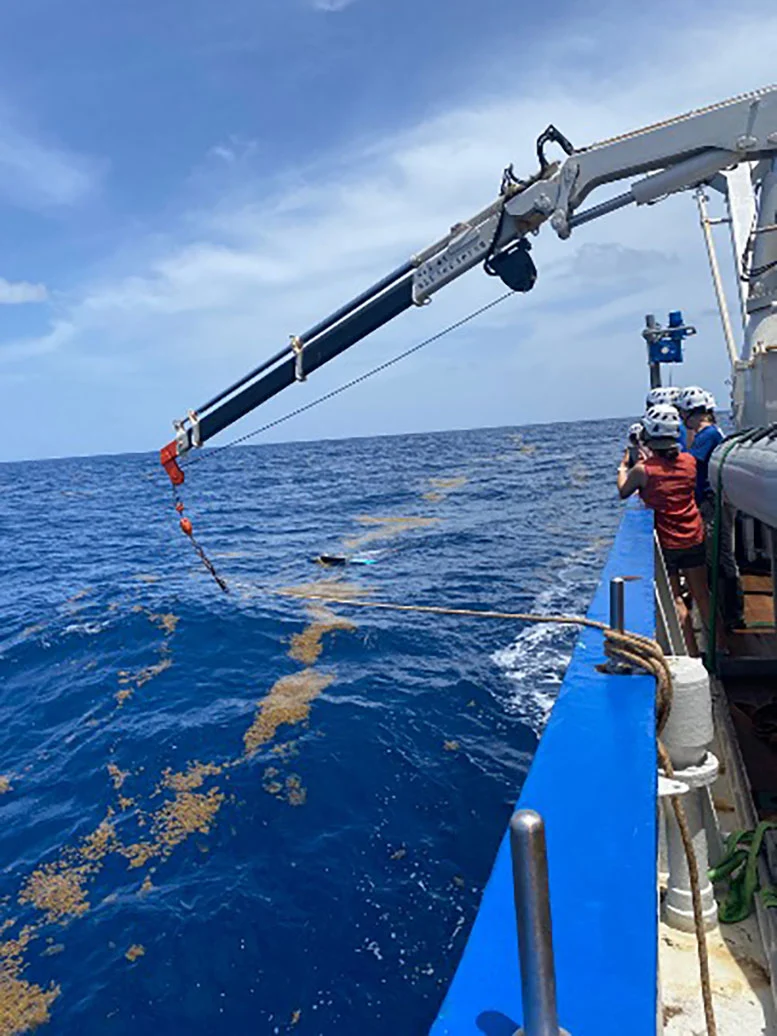
💡AI breakthrough in ocean monitoring unlocks env ML apps for researchers
⚡ 30-Second TL;DR
What Changed
AI processes global telemetry data for floating algae tracking
Why It Matters
Signals need for AI in environmental monitoring amid climate shifts. Could reshape coastal industries and biodiversity strategies.
What To Do Next
Download NOAA ocean datasets to benchmark your remote sensing ML models.
Key Points
- •AI processes global telemetry data for floating algae tracking
- •Rapid expansion tied to temperature, currents, and nutrients
- •Potential impacts on marine ecology, tourism, and coastal economies
- •Study led by University of South Florida and NOAA
🧠 Deep Insight
AI-generated analysis for this event — not the original article.
🔑 Enhanced Key Takeaways
- •The research specifically utilizes the 'Great Atlantic Sargassum Belt' (GASB) as a primary case study, identifying it as the world's largest macroalgal bloom, which has shown unprecedented growth patterns since 2011.
- •The AI framework integrates multi-sensor satellite data, specifically leveraging the Moderate Resolution Imaging Spectroradiometer (MODIS) aboard NASA's Terra and Aqua satellites to overcome cloud cover limitations.
- •Beyond ecological impacts, the study quantifies the economic burden of 'beachings,' where decomposing algae release hydrogen sulfide, necessitating multi-million dollar cleanup operations for coastal tourism-dependent municipalities.
🛠️ Technical Deep Dive
- •Architecture: Employs a Convolutional Neural Network (CNN) specifically trained for pixel-level classification of ocean color imagery to distinguish Sargassum spectral signatures from open water.
- •Data Fusion: Implements a 'Sargassum Index' (SI) algorithm that calculates the difference between near-infrared and red-band reflectance to isolate floating vegetation.
- •Processing Pipeline: Utilizes high-performance computing clusters to ingest daily global telemetry, applying atmospheric correction algorithms to remove aerosol interference before AI-based feature extraction.
🔮 Future ImplicationsAI analysis grounded in cited sources
⏳ Timeline
Weekly AI Recap
Read this week's curated digest of top AI events →
👉Related Updates
AI-curated news aggregator. All content rights belong to original publishers.
Original source: cnBeta (Full RSS) ↗
This is a summary, not the original. Read the source, or get the weekly briefing.
The weekly digest
One email a week. Unsubscribe anytime.