🐯虎嗅•Stalecollected in 24m
AI Designs Viable 19-Amino-Acid Life
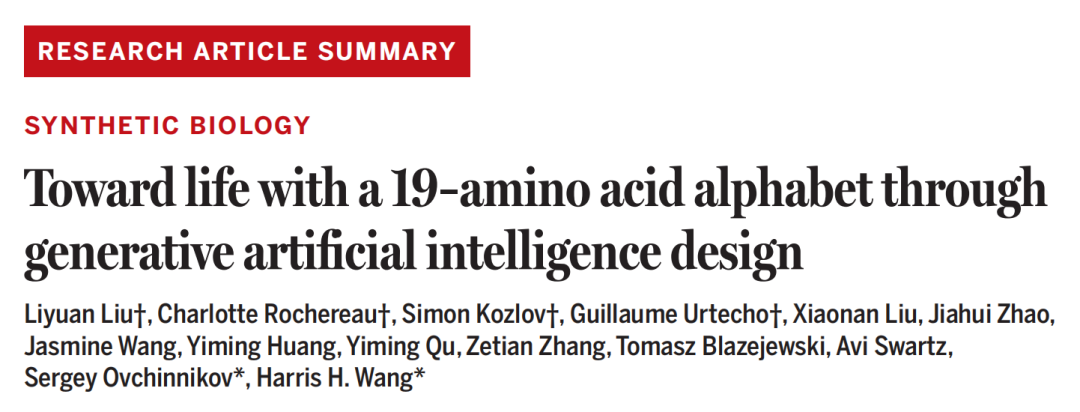
💡Breakthrough: AI creates first stable 19-aa organism, blueprint for synth bio.
⚡ 30-Second TL;DR
What Changed
Replaced all 382 Ile in 52 ribosomal proteins using AI-generated variants.
Why It Matters
Paves way for synthetic cells with custom capabilities beyond natural evolution. Demonstrates AI's power in rewriting core biological machinery. Enables simpler building blocks for engineered life.
What To Do Next
Test ProteinMPNN on your protein redesign tasks for Ile substitutions.
Who should care:Researchers & Academics
Key Points
- •Replaced all 382 Ile in 52 ribosomal proteins using AI-generated variants.
- •Integrated 21 redesigned subunits into genome; stable over 450 generations.
- •AI models (ESM2, ProteinMPNN, AlphaFold2) proposed compensatory mutations for stability.
🧠 Deep Insight
AI-generated analysis for this event.
🔑 Enhanced Key Takeaways
- •The research, led by Harris Wang at Columbia University, utilized a 'genome-wide recoding' strategy that required the deletion of the isoleucine tRNA and the corresponding aminoacyl-tRNA synthetase to force the cell to rely exclusively on the AI-designed variants.
- •The study demonstrates that the genetic code is more plastic than previously assumed, as the 19-amino-acid organism maintained growth rates comparable to wild-type E. coli despite the massive structural overhaul of its translational machinery.
- •This achievement serves as a proof-of-concept for 'xenobiology,' providing a platform to incorporate non-canonical amino acids into the proteome by freeing up codons previously occupied by isoleucine.
🛠️ Technical Deep Dive
- •Design Pipeline: Utilized a hierarchical approach where ProteinMPNN was used to design sequences for target structures, followed by AlphaFold2 to predict the folding stability of the redesigned ribosomal subunits.
- •Compensatory Mutations: ESM2 (Evolutionary Scale Modeling) was employed to predict the fitness effects of mutations, ensuring that the redesigned proteins could maintain complex protein-protein interactions within the ribosome complex.
- •Genome Engineering: The team employed MAGE (Multiplex Automated Genome Engineering) to introduce the 382 specific mutations across the 52 ribosomal protein genes simultaneously.
- •Selection Pressure: The strain was evolved in a chemostat for over 450 generations to select for compensatory mutations that stabilized the ribosome assembly process in the absence of isoleucine.
🔮 Future ImplicationsAI analysis grounded in cited sources
Synthetic organisms with expanded genetic alphabets will be used for high-yield production of therapeutic proteins containing non-canonical amino acids.
By successfully removing a standard amino acid, the researchers have created a 'blank' codon space that can be repurposed for synthetic building blocks.
This methodology will lead to the creation of 'biocontained' synthetic life forms that cannot survive outside of laboratory-defined nutrient environments.
The dependence on a non-natural genetic code makes these organisms unable to exchange genetic material or survive in the wild, providing a robust biosafety mechanism.
⏳ Timeline
2023-07
Initial publication of ProteinMPNN for protein sequence design.
2024-02
Columbia University team initiates large-scale ribosomal recoding project.
2026-04
Successful stabilization of the 19-amino-acid E. coli strain (Ec19) reported.
📰
Weekly AI Recap
Read this week's curated digest of top AI events →
👉Related Updates




AI-curated news aggregator. All content rights belong to original publishers.
Original source: 虎嗅 ↗