AI demand triggers supply bottleneck for essential MLCC components
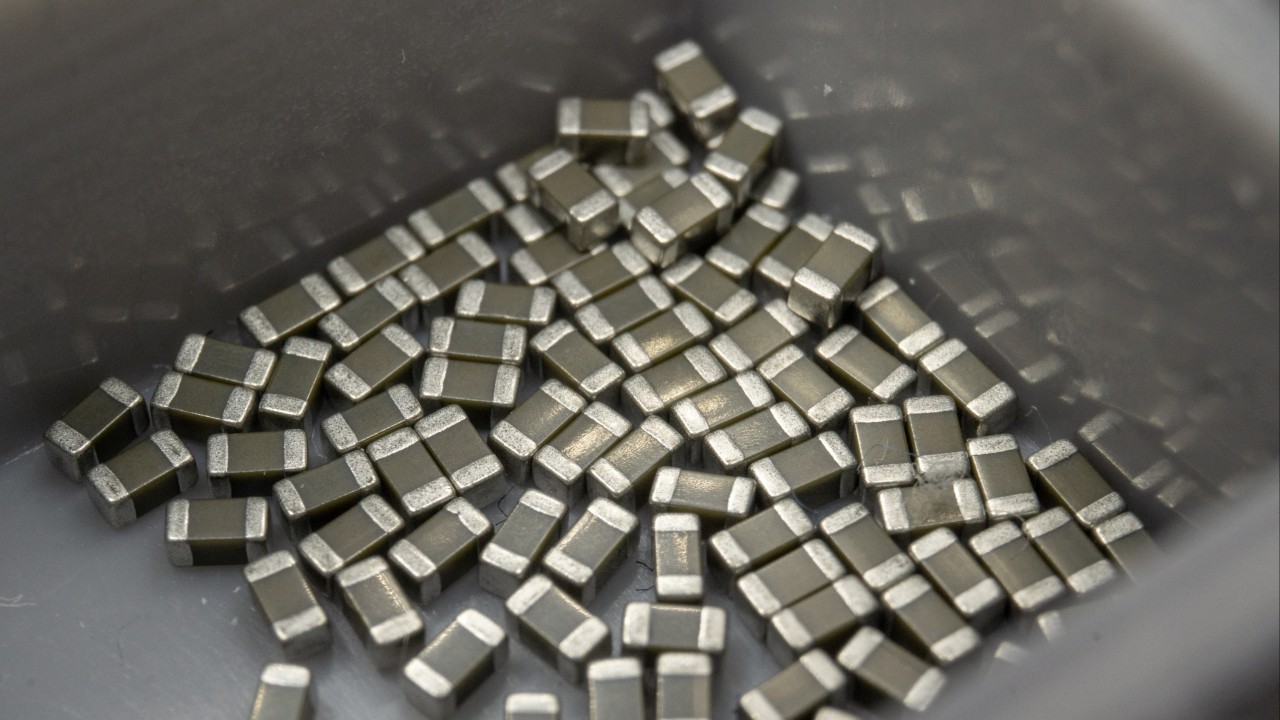
💡AI infrastructure growth is hitting a physical supply wall; learn how MLCC shortages could impact your hardware roadmap.
⚡ 30-Second TL;DR
What Changed
MLCCs are critical, high-volume components used in everything from smartphones to AI-powered data centers.
Why It Matters
Hardware-focused AI companies may face increased lead times and higher costs for critical components. This bottleneck could slow the deployment of new server infrastructure if supply cannot keep pace with demand.
What To Do Next
Review your hardware supply chain and secure long-term agreements for critical passive components to mitigate potential production delays.
Key Points
- •MLCCs are critical, high-volume components used in everything from smartphones to AI-powered data centers.
- •Taiyo Yuden CEO Katsuya Sase describes the current AI-driven demand surge as 'scary'.
- •The bottleneck threatens the production scaling of hardware required for large-scale AI infrastructure.
🧠 Deep Insight
Background and context from public sources — not the original article. 19 sources cited.
🔑 Enhanced Key Takeaways
- •AI servers require substantially more MLCCs, with a single AI server needing up to 28,000 MLCCs (a 13-fold increase from a standard setup) and Nvidia's next-generation Rubin architecture using 12,000 MLCCs on a single board (up from 6,500 on the current GB200 platform).
- •The demand surge is primarily for ultra-high-capacitance MLCCs, which are significantly harder to manufacture and consume four to seven times more effective production capacity than standard consumer-grade products.
- •MLCCs have become the third-largest cost item on an AI server's bill of materials, behind only GPUs and memory chips, with high-end MLCC prices predicted to have 100-150% upside potential.
- •Major MLCC manufacturers, including Murata Manufacturing and Samsung Electro-Mechanics, are strategically reallocating production capacity towards higher-margin AI and automotive MLCCs, leading to tighter supply and price increases for lower-end consumer and industrial MLCCs.
- •The current supply-demand imbalance for high-end MLCCs is projected to persist until at least 2027, with some forecasts extending to 2030, due to rigid annual capacity growth (around 10%) significantly lagging AI demand growth (estimated 34% compound annual growth rate for AI server MLCCs).
📊 Competitor Analysis▸ Show
| Feature | Murata Manufacturing | Samsung Electro-Mechanics | Taiyo Yuden |
|---|---|---|---|
| Global MLCC Market Share | ~40% | 20-25% | 8-10% |
| AI Server MLCC Market Share | 45-70% | 39-40% | Significant, high-purity focus |
| Key Focus (AI/Automotive) | High-reliability, ultra-miniature, high-capacitance MLCCs for AI servers, EVs, advanced electronics | Ultra-small, high-capacitance MLCCs for AI servers, xEVs, ADAS, autonomous driving | High-end capacitors, especially for AI servers, highest purity MLCCs |
| Recent Price Actions | Announced 15-35% price increase for AI server high-capacitance MLCCs and automotive-grade products (effective April 2026) | Evaluating 5-10% increase across select MLCC product lines (May 2026) | Raised prices for low-to-mid capacitance consumer and automotive MLCCs by 6-13% (effective May 2026) |
🛠️ Technical Deep Dive
- MLCCs are crucial for stabilizing voltage and instantaneously supplying electricity next to semiconductors in AI servers.
- They serve as the primary line of defense for decoupling, bypassing, and filtering high-frequency noise close to the processor core and within the primary/secondary stages of the power supply.
- AI server environments present challenges such as extreme thermal load and high-frequency ripple, necessitating MLCCs with exceptionally low Equivalent Series Resistance (ESR) and Equivalent Series Inductance (ESL) to reduce power loss and heat generation.
- There is a demand for ultra-high capacitance density in compact packages (e.g., 0402, 0603) to conserve PCB space and enhance power efficiency in AI server power modules.
- Class II dielectrics like X7R or X6S are mandatory for AI power supplies due to their predictable capacitance variation (within ±15%) across a broad temperature range (-55°C to +125°C), ensuring stable filtering performance under heavy server workloads. X8R dielectrics are also used for wider temperature tolerance.
- MLCCs are increasingly replacing aluminum polymer capacitors in servers due to their smaller size, superior stability, and longer lifespan on high-density computing boards.
- Embeddable MLCCs are being developed to be placed closer to ICs, minimizing circuit loss and noise in advanced information processing devices.
- Silicon capacitors are emerging as complementary components for near-die decoupling around GPUs, ASICs, and HBMs within advanced packages, offering advantages like thin profiles, low ESL, and stable high-frequency characteristics.
🔮 Future ImplicationsAI analysis grounded in cited sources
⏳ Timeline
📎 Sources (19)
Factual claims are grounded in the sources below. Forward-looking analysis is AI-generated interpretation.
Weekly AI Recap
Read this week's curated digest of top AI events →
👉Related Updates
AI-curated news aggregator. All content rights belong to original publishers.
Original source: SCMP Technology ↗
This is a summary, not the original. Read the source, or get the weekly briefing.
The weekly digest
One email a week. Unsubscribe anytime.