AI Demand Surge Stalls at Silicon Wafer Suppliers
💡Understand the hidden supply chain bottlenecks that could impact future AI hardware availability and costs.
⚡ 30-Second TL;DR
What Changed
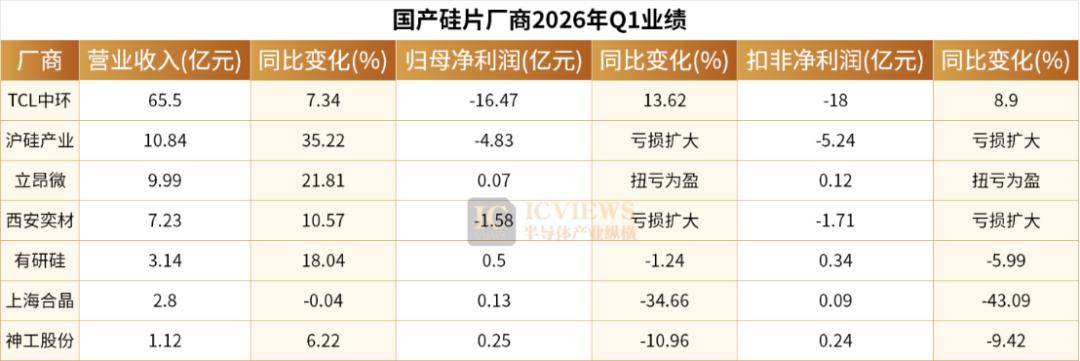
AI chip demand is not translating into proportional growth for silicon wafer suppliers.
Why It Matters
This signals potential volatility in the AI hardware supply chain, suggesting that investors and builders should monitor upstream inventory levels closely.
What To Do Next
Monitor quarterly earnings reports of major wafer suppliers like Shin-Etsu or SUMCO to gauge real-world AI hardware demand.
Key Points
- •AI chip demand is not translating into proportional growth for silicon wafer suppliers.
- •Inventory gluts and supply chain bottlenecks are impacting upstream profitability.
- •The 'last mile' of the AI hardware supply chain is currently experiencing a disconnect.
- •Market expectations for wafer manufacturers remain cautious despite the AI boom.
🧠 Deep Insight
Web-grounded analysis with 26 cited sources.
🔑 Enhanced Key Takeaways
- •The disconnect stems from a divergent demand landscape, where robust AI-driven demand for advanced 300mm wafers (especially for logic and High-Bandwidth Memory) contrasts with a slower recovery and inventory corrections in traditional semiconductor segments like smartphones, PCs, industrial, and automotive, leading to uneven growth across wafer types.
- •The intense demand for High-Bandwidth Memory (HBM) for AI accelerators is causing a significant reallocation of DRAM wafer capacity away from conventional DRAM, resulting in tighter supply and rising prices for consumer memory, which in turn impacts smartphone and PC shipments.
- •A critical bottleneck in the 'last mile' of the AI hardware supply chain is the persistent shortage in advanced 2.5D and 3D packaging capacity, which is essential for integrating complex AI chips and can take 18-24 months to expand.
- •Geopolitical factors are influencing the silicon wafer market, with China accelerating its drive for self-sufficiency, aiming to meet approximately 40% of its domestic 12-inch wafer demand by 2026, which could reshape global supply chains and intensify competition.
🛠️ Technical Deep Dive
- Wafer Types and Sizes: Strong demand for 300mm wafers, particularly advanced epitaxial wafers for logic and polished wafers for High-Bandwidth Memory (HBM), is crucial for AI applications.
- Process Nodes: The industry is seeing increased adoption of sub-3nm processes, with leading-edge capacity for 5nm nodes and under expected to grow significantly, driven by generative AI.
- High-Bandwidth Memory (HBM): HBM is a stacked DRAM technology specifically designed for AI accelerators to meet high bandwidth and capacity requirements.
- Advanced Packaging: Technologies such as 2.5D interposers and 3D stacking are critical for achieving the necessary bandwidth, latency, and power efficiency for AI training and inference workloads.
- Packaging Evolution: There is a notable shift from traditional wafer-level to panel-level advanced packaging to achieve higher throughput and lower manufacturing costs for fan-out and heterogeneous packages.
- Design Co-optimization: Co-optimization between chip, package, and system design is becoming standard to address the complexities of heterogeneous packages and ensure optimal performance.
🔮 Future ImplicationsAI analysis grounded in cited sources
⏳ Timeline
📎 Sources (26)
Factual claims are grounded in the sources below. Forward-looking analysis is AI-generated interpretation.
- Google Search Source
- Google Search Source
- Google Search Source
- Google Search Source
- Google Search Source
- Google Search Source
- Google Search Source
- Google Search Source
- Google Search Source
- Google Search Source
- Google Search Source
- Google Search Source
- Google Search Source
- Google Search Source
- Google Search Source
- Google Search Source
- Google Search Source
- Google Search Source
- Google Search Source
- Google Search Source
- Google Search Source
- Google Search Source
- Google Search Source
- Google Search Source
- Google Search Source
- Google Search Source
Weekly AI Recap
Read this week's curated digest of top AI events →
👉Related Updates



AI-curated news aggregator. All content rights belong to original publishers.
Original source: 钛媒体 ↗