AI CRM 2.0 Collapses Subscription Pricing?
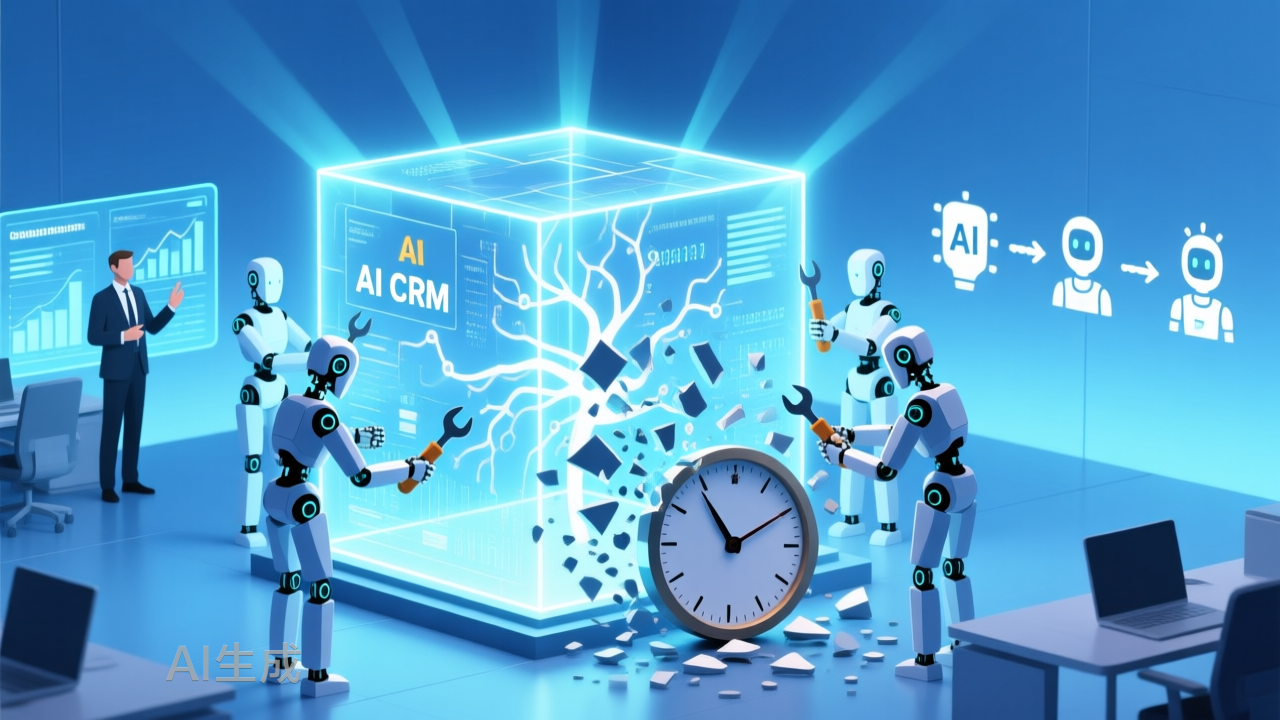
💡AI agents exploding CRM costs—rethink pricing before enterprise rollout.
⚡ 30-Second TL;DR
What Changed
High-frequency agent operations drive uncontrollable compute consumption
Why It Matters
AI SaaS firms may pivot to usage-based billing to manage agent costs. Enterprises must optimize agent deployments to avoid budget overruns.
What To Do Next
Benchmark compute costs of agentic workflows in your CRM prototype using cloud GPU pricing calculators.
Key Points
- •High-frequency agent operations drive uncontrollable compute consumption
- •Subscription pricing model faces collapse from cost pressures
- •Enterprise-grade agents poised to redefine CRM industry rules
🧠 Deep Insight
AI-generated analysis for this event — not the original article.
🔑 Enhanced Key Takeaways
- •The shift toward 'outcome-based' or 'consumption-based' pricing is gaining traction as a replacement for flat-rate subscriptions, directly linking vendor revenue to the specific business value or tasks completed by AI agents.
- •Enterprises are increasingly implementing 'compute-budgeting' middleware to cap agentic spending, as unconstrained API calls to LLMs have led to unexpected 'bill shock' in pilot deployments.
- •The industry is moving toward 'hybrid-inference' architectures, where lightweight, local models handle routine CRM data processing to minimize reliance on expensive, high-latency cloud-based frontier models.
📊 Competitor Analysis▸ Show
| Feature | Traditional SaaS CRM | AI Agentic CRM (2.0) | Pricing Model |
|---|---|---|---|
| Compute Cost | Fixed/Predictable | Variable/High | Per-seat vs. Per-task |
| Latency | Low | High (Chain-of-Thought) | Subscription vs. Consumption |
| Scalability | Linear | Exponential | Flat vs. Usage-based |
🛠️ Technical Deep Dive
- •Agentic CRM 2.0 utilizes Multi-Agent Orchestration (MAO) frameworks where specialized agents (e.g., lead qualification, data enrichment, sentiment analysis) interact via asynchronous message queues.
- •Implementation often involves Retrieval-Augmented Generation (RAG) pipelines integrated with vector databases (e.g., Pinecone, Milvus) to maintain long-term customer context, significantly increasing token consumption per interaction.
- •Transitioning from synchronous API calls to streaming architectures to manage high-frequency agentic loops, though this complicates state management and cost tracking.
🔮 Future ImplicationsAI analysis grounded in cited sources
⏳ Timeline
Weekly AI Recap
Read this week's curated digest of top AI events →
👉Related Updates



AI-curated news aggregator. All content rights belong to original publishers.
Original source: 钛媒体 ↗
This is a summary, not the original. Read the source, or get the weekly briefing.
Weekly AI briefing
One email a week. Unsubscribe anytime.