AI Content Production: From Personalization to Emotional Insight
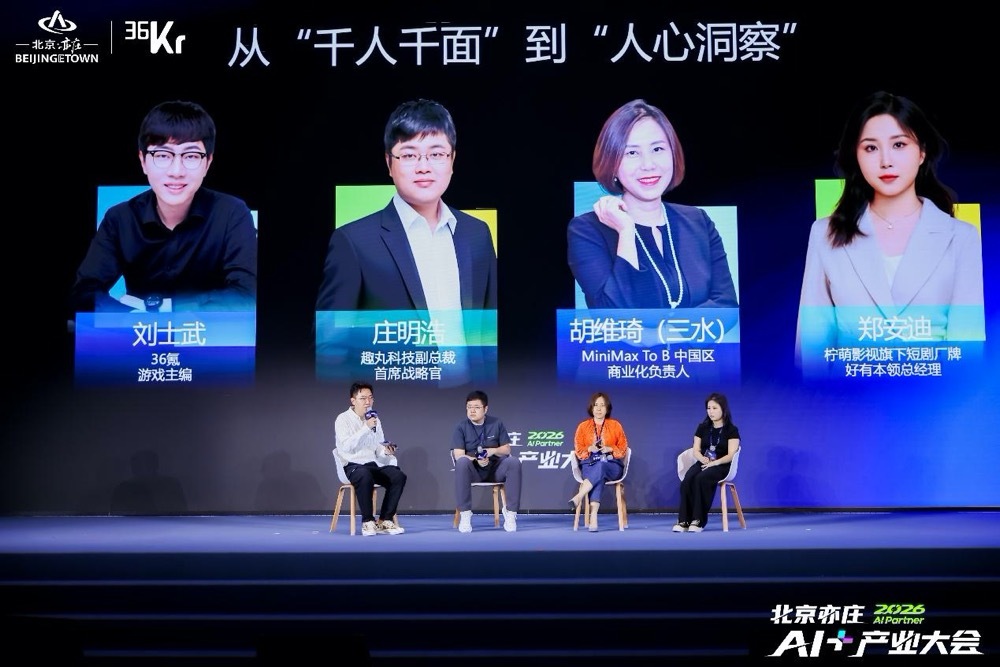
💡Insights on how AI is fundamentally changing organizational structures and creative workflows in the media industry.
⚡ 30-Second TL;DR
What Changed
Traditional long-cycle product development is being replaced by high-frequency, agile AI-driven iterations.
Why It Matters
The shift toward AI-integrated production is forcing media companies to restructure their teams, moving away from rigid KPIs toward rapid experimentation and model-based workflows.
What To Do Next
Adopt a 'high-frequency release' strategy for AI projects, prioritizing rapid iteration over perfect initial launches.
Key Points
- •Traditional long-cycle product development is being replaced by high-frequency, agile AI-driven iterations.
- •B2B AI adoption is shifting from simple content generation to achieving 'film-grade' quality and production efficiency.
- •Legal and copyright compliance in AI training remains a critical constraint for commercial content producers.
- •The role of human creators is evolving to focus on 'hand-crafted' aesthetics and meaning beyond technical output.
🧠 Deep Insight
Web-grounded analysis with 25 cited sources.
🔑 Enhanced Key Takeaways
- •The creative industry is entering a "Hybrid Creative" era, where human-in-the-loop (HITL) methodologies are becoming standard, demonstrating that professionals using AI as a collaborative partner significantly outperform those working in isolation, leading to faster and higher-quality creative outputs.
- •AI is increasingly driving "Emotion-Driven Optimization" in content strategy, where systems analyze audience emotional reactions in real-time to refine content tone, making emotional resonance a primary ranking signal for engagement.
- •The legal landscape for AI-generated content is clarifying globally, with jurisdictions like the U.S. requiring substantial human creative contribution for copyright protection, distinguishing between unprotectable purely AI-generated works and protectable AI-assisted works.
- •AI is democratizing high-end content creation, enabling smaller teams and significantly reduced budgets to produce feature-length films and complex visual effects, thereby accelerating production timelines and expanding creative possibilities.
- •Beyond content generation, AI is now crucial for content optimization and discovery in an AI-first world, requiring content to be structured for AI selection, summarization, and performance across AI-driven search experiences and generative platforms.
🛠️ Technical Deep Dive
- Emotional Insight Generation: Large Language Models (LLMs) can develop "functional emotions" by encoding abstract emotion concepts in their internal representations, which then causally influence the model's outputs to mimic human emotional behavior. Additionally, sentiment analysis algorithms are employed to interpret the emotional tone of AI-generated images and content.
- Film-Grade Quality AIGC: Generative Adversarial Networks (GANs) are utilized for creating hyper-realistic images, crucial for film production. Diffusion models also play a significant role in transforming random pixel patterns into coherent and high-quality visual works. Specialized AI video generators like Google Veo, Runway, and Kling AI focus on achieving cinematic consistency, photorealistic human generation, and a deep understanding of cinematic terms from natural language prompts.
- Agile AI Development in Creative Workflows: While not detailing agile AI model development, the application of AI enables agile creative workflows. Techniques like Low-Rank Adaptation (LoRA) in generative AI are used for rapid, targeted adjustments in design, allowing for efficient iteration and refinement of AI-generated outputs.
- Human-in-the-Loop (HITL) Systems: These systems are fundamental, where human designers provide structural guidance (e.g., sketches or detailed prompts), and AI executes the rendering or generation process, ensuring human intent directs computational power.
🔮 Future ImplicationsAI analysis grounded in cited sources
⏳ Timeline
📎 Sources (25)
Factual claims are grounded in the sources below. Forward-looking analysis is AI-generated interpretation.
- binus.ac.id
- smythos.com
- xcubelabs.com
- columbia.edu
- spintadigital.com
- garrettham.com
- aimultiple.com
- dlapiper.com
- morganlewis.com
- thesceneproject.eu
- minutemirror.com.pk
- mckinsey.com
- altois.com
- creaitor.ai
- transformer-circuits.pub
- nih.gov
- dekkofoundation.org
- medium.com
- foam.org
- tmff.net
- monday.com
- zapier.com
- manus.im
- mdpi.com
- arj.no
Weekly AI Recap
Read this week's curated digest of top AI events →
👉Related Updates
AI-curated news aggregator. All content rights belong to original publishers.
Original source: 36氪 ↗