AI Compute Demand Drives Up Automotive Costs
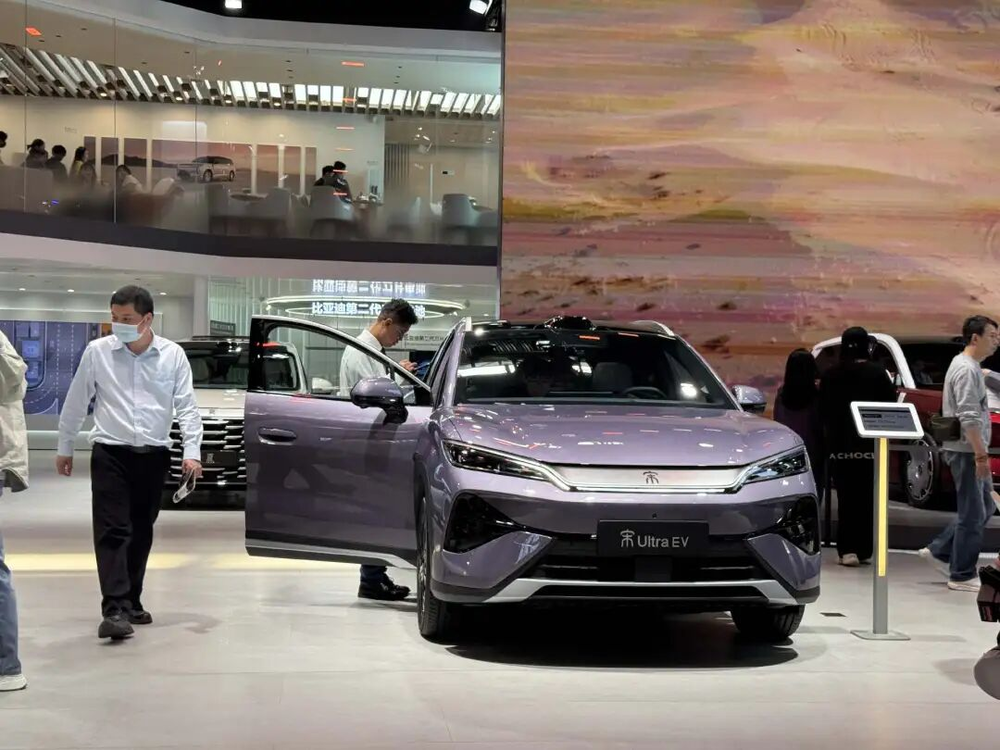
💡AI compute demand is causing a 180% price hike in DRAM, impacting hardware costs across the entire tech ecosystem.
⚡ 30-Second TL;DR
What Changed
Automakers are facing significant cost pressure due to global AI compute centers consuming storage chip capacity.
Why It Matters
The AI infrastructure boom is creating supply chain externalities that directly impact hardware costs in non-AI sectors like automotive.
What To Do Next
If building hardware-integrated AI products, secure your supply chain for specialized memory and compute components early to avoid price spikes.
Key Points
- •Automakers are facing significant cost pressure due to global AI compute centers consuming storage chip capacity.
- •Automotive-grade DRAM prices have surged by 180% in the last three months.
- •Car companies are cautiously passing costs to consumers, often bundling price hikes with feature upgrades to maintain competitiveness.
- •The automotive industry's low bargaining power in the chip supply chain makes it vulnerable to AI-driven market volatility.
🧠 Deep Insight
Web-grounded analysis with 16 cited sources.
🔑 Enhanced Key Takeaways
- •The current automotive memory chip shortage (2025-2026) is a structural issue, distinct from the 2021-2024 pandemic-driven shortage, as AI data centers are projected to consume 70% of all memory chips produced by 2026, prioritizing high-margin advanced chips over the automotive sector's foundational chips.
- •Automakers' reliance on older, less profitable 'foundational' chips (comprising about 95% of vehicle chips) makes them vulnerable, as foundries pivot investment towards advanced AI chips, risking capacity for these legacy nodes.
- •Analysts forecast that up to 600,000 fewer vehicles may be built in 2026 due to chip scarcity, with potential disruptions escalating into significant production halts and model-year delays in 2027 and 2028.
- •The surge in AI demand has led to 'memflation,' causing DRAM prices to nearly double each quarter and increasing the cost to build a premium smart electric car by approximately $880 to $1,470.
- •Major DRAM manufacturers like Samsung, SK Hynix, and Micron, controlling over 90% of global DRAM production, are prioritizing High Bandwidth Memory (HBM) for AI data centers, thereby reducing the availability and increasing the cost of automotive-grade DRAM and NAND.
🛠️ Technical Deep Dive
- Automotive-grade DRAM includes LPDDR4, LPDDR5, LPDDR5X, DDR4, and DDR5 variants, which are often AEC-Q100 Grade 2 and Grade 1 qualified to ensure high quality and reliability in harsh environments.
- AI applications, particularly in data centers, primarily rely on more advanced memory generations like DDR5 and High Bandwidth Memory (HBM), which consume more wafer area than standard DRAM chips used in vehicles.
- Modern connected cars in 2026 require approximately 278 gigabytes of memory to support up to 100 million lines of code, with Level 3 or 4 self-driving features demanding over 300 gigabytes of DRAM alone.
- Automotive memory components must undergo stringent AEC-Q100 tests to ensure functionality across extreme temperatures and vibrations, a certification process that can take up to two years, hindering rapid adoption of alternative supplies.
- The rise of edge AI in automotive is driving increased demand for specialized hardware such as neural processing units (NPUs) and modular system-on-chip (SoC) architectures for onboard model execution.
- Power discrete components, such as MOSFETs and IGBTs, are increasingly critical for AI data center power supply units and cooling systems, leading to packaging bottlenecks that also impact the automotive sector's supply.
🔮 Future ImplicationsAI analysis grounded in cited sources
⏳ Timeline
📎 Sources (16)
Factual claims are grounded in the sources below. Forward-looking analysis is AI-generated interpretation.
Weekly AI Recap
Read this week's curated digest of top AI events →
👉Related Updates



AI-curated news aggregator. All content rights belong to original publishers.
Original source: 虎嗅 ↗