Source虎嗅•Stalecollected in 8m
AI Chip Surge Drives EV Price Hikes
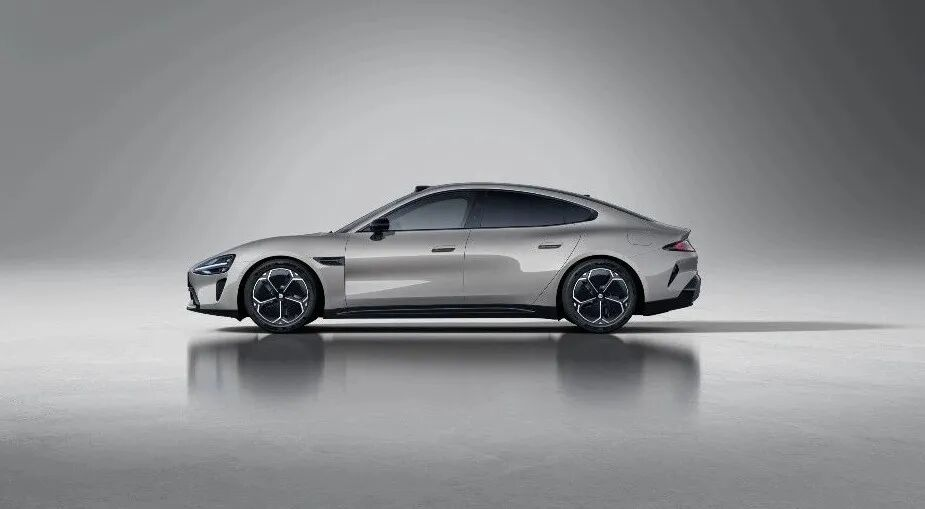
#chip-supply#ev-pricing#oil-crisis小米su7xiaomi-su7tesla-model-y
💡AI demand spikes EV chips 300%, hikes Xiaomi SU7 costs 20k RMB
⚡ 30-Second TL;DR
What Changed
China charging piles exceed 21M, fast charge 5-30min from 10-20% to 80%.
Why It Matters
AI infrastructure boom indirectly inflates EV costs via chip scarcity, challenging consumer adoption amid energy transitions.
What To Do Next
Track AI-driven chip price APIs like from TrendForce for hardware budgeting.
Who should care:Founders & Product Leaders
Key Points
- •China charging piles exceed 21M, fast charge 5-30min from 10-20% to 80%.
- •Lithium carbonate from 75k to 174k RMB/ton; chips double-triple on AI demand.
- •Xiaomi SU7, Tesla Model Y prices up 4k-20k RMB; mid-large SUVs 20-30万级.
- •EV registrations near 50% of new cars in 2025.
🧠 Deep Insight
AI-generated analysis for this event — not the original article.
🔑 Enhanced Key Takeaways
- •The surge in AI chip demand is primarily driven by the integration of advanced autonomous driving stacks (AD) and large language model (LLM) cockpits, which require high-performance SoCs like NVIDIA Orin-X or domestic equivalents, creating a supply bottleneck for standard automotive microcontrollers.
- •The Chinese government has initiated a strategic review of the automotive semiconductor supply chain to mitigate the impact of AI-driven chip inflation, focusing on accelerating the localization of power semiconductors and high-compute AI chips to stabilize EV production costs.
- •Beyond raw material costs, the 'AI compute war' has forced manufacturers to shift from centralized electronic architectures to zonal architectures to optimize chip utilization, which has temporarily increased R&D and manufacturing complexity, further contributing to the price hikes.
📊 Competitor Analysis▸ Show
| Feature/Metric | Xiaomi SU7 (Max) | Tesla Model Y (Long Range) | BYD Seal (EV) |
|---|---|---|---|
| Compute Platform | Dual NVIDIA Orin-X | Tesla FSD Chip (HW4.0) | Qualcomm Snapdragon Ride |
| Estimated Price (CNY) | 299,900+ | 305,900+ | 239,800+ |
| AI Cockpit Chip | Snapdragon 8295 | AMD Ryzen | Qualcomm 8155/8295 |
| Primary Market Positioning | Tech-focused Performance | Global Benchmark/Utility | Mass-market Efficiency |
🛠️ Technical Deep Dive
- •The price surge is exacerbated by the transition to 5nm and 3nm process nodes for AI-centric SoCs, which are currently prioritized for high-margin AI data center GPUs, squeezing automotive supply.
- •Zonal architecture implementation requires high-speed Ethernet backbones (10Gbps+), increasing the demand for specialized networking chips that are currently seeing a 200% lead-time extension.
- •The integration of LLMs into vehicle cockpits necessitates increased DRAM capacity (up to 32GB per vehicle), which is currently experiencing price volatility due to the broader AI memory market squeeze.
🔮 Future ImplicationsAI analysis grounded in cited sources
EV manufacturers will pivot toward 'compute-efficient' software architectures.
Rising chip costs will force OEMs to optimize AI models to run on lower-cost, legacy-node hardware to maintain vehicle price competitiveness.
Vertical integration of semiconductor design will become a primary competitive moat.
Companies that design their own custom AI accelerators will be less susceptible to the market-wide price volatility of off-the-shelf automotive chips.
⏳ Timeline
2023-12
Xiaomi officially unveils the SU7, highlighting its high-compute AI cockpit and autonomous driving capabilities.
2024-03
Xiaomi SU7 market launch, setting the initial pricing baseline before the subsequent AI-chip-driven cost increases.
2025-06
EV registrations in China reach the 50% market share milestone, signaling a shift in consumer demand dynamics.
2026-01
Global AI compute demand peaks, leading to the reported 300% surge in automotive chip costs.
📰
Weekly AI Recap
Read this week's curated digest of top AI events →
👉Related Updates



AI-curated news aggregator. All content rights belong to original publishers.
Original source: 虎嗅 ↗
This is a summary, not the original. Read the source, or get the weekly briefing.
The weekly digest
One email a week. Unsubscribe anytime.