AI Can't Replace Trade Learning
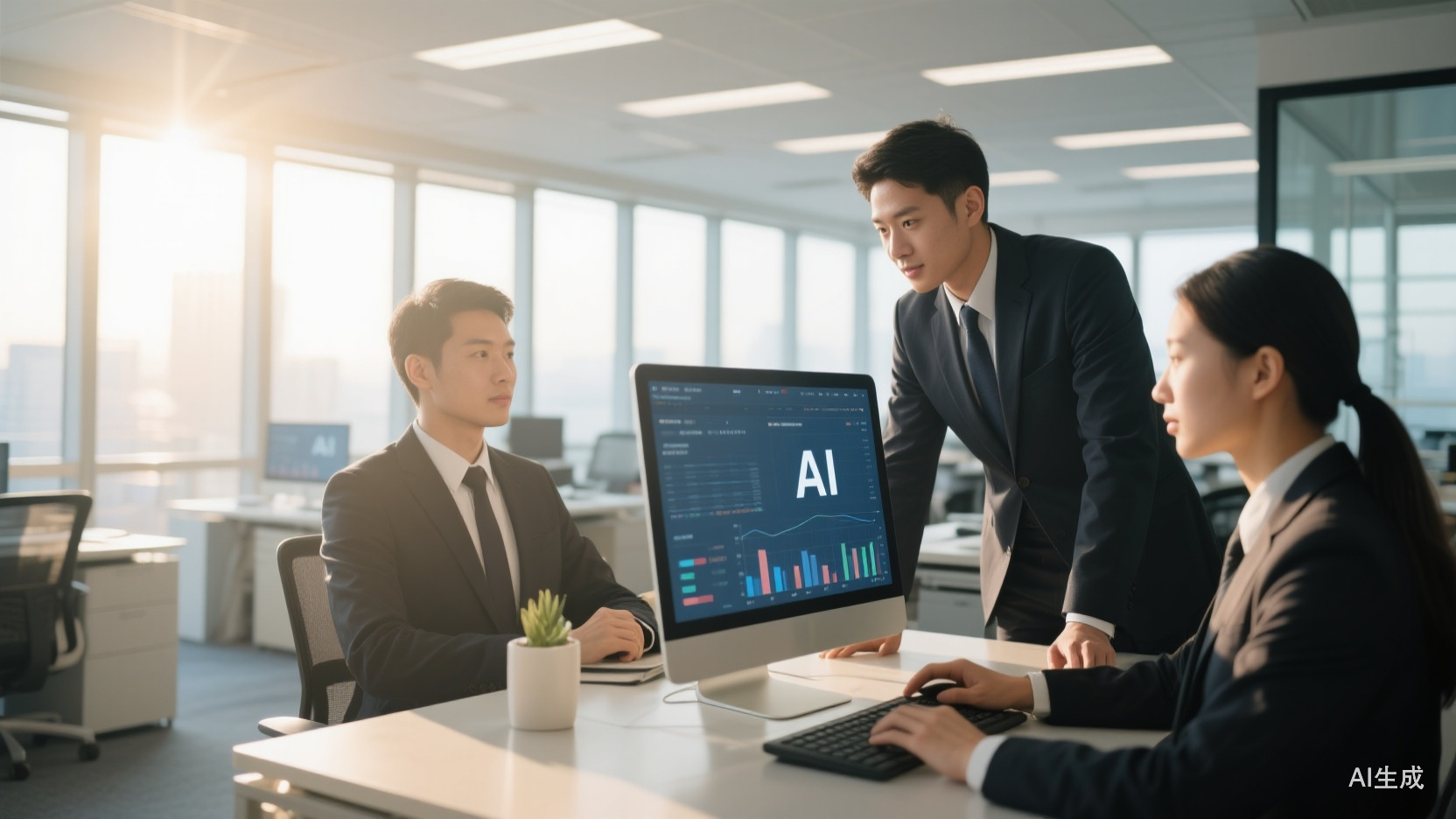
💡Expertise unlocks AI's power in trade—master prompting for real-world gains
⚡ 30-Second TL;DR
What Changed
Trade requires integrated expertise in goods inspection, logistics risks, financial instruments, and human negotiations AI can't replicate
Why It Matters
Emphasizes human-AI synergy for business, urging enterprises to invest in employee upskilling alongside AI tools.
What To Do Next
Craft scenario-specific prompts for supply chain risks using ChatGPT to test AI's business value.
Key Points
- •Trade requires integrated expertise in goods inspection, logistics risks, financial instruments, and human negotiations AI can't replicate
- •SOE mechanisms link weak rewards to performance, suppressing learning motivation
- •AI outputs improve dramatically with detailed, context-specific prompts rooted in user domain knowledge
🧠 Deep Insight
Background and context from public sources — not the original article. 7 sources cited.
🔑 Enhanced Key Takeaways
- •AI trading systems face critical adaptability challenges when market conditions diverge from training data—algorithms trained during stable periods may fail in volatile markets, and those trained in low-inflation environments struggle with inflationary scenarios[1]. This directly supports the article's claim that trade professionals need deep learning beyond AI's pattern-matching capabilities.
- •Supervised machine learning in trading requires narrow guardrails including limits on data sources, trading types, and capital allocation per trade[1]. This technical constraint mirrors the article's assertion that effective AI use demands expert prompting and domain knowledge to set appropriate boundaries.
- •Source data quality and quantity remain the primary risk in maintaining algorithmic trading success—algorithms can operate with only months of historical data but perform best with longer training periods and diverse, reliable data sources[1]. This validates the article's point that AI outputs improve with detailed, context-specific inputs rooted in user expertise.
- •Legal and regulatory frameworks in 2026 increasingly require human-in-the-loop verification for AI tools, with state bars initiating disciplinary action against improper AI use without human oversight[3]. This creates institutional pressure supporting the article's argument that human expertise remains essential in high-stakes domains like trade.
- •AI's evolution toward autonomous agents capable of executing contracts and transactions has exposed liability gaps—courts have not yet issued definitive rulings on whether users or developers bear responsibility for autonomous errors[3]. This regulatory uncertainty reinforces why trade professionals cannot rely solely on AI without human judgment and accountability.
🔮 Future ImplicationsAI analysis grounded in cited sources
📎 Sources (7)
Factual claims are grounded in the sources below. Forward-looking analysis is AI-generated interpretation.
- algosone.ai — The Challenges Limitations and Potential of AI Trading
- federalreserve.gov — The Global Trade Effects of the AI Infrastructure Boom 20260213
- bakerdonelson.com — 2026 AI Legal Forecast From Innovation to Compliance
- goldmansachs.com — What to Expect From AI in 2026 Personal Agents Mega Alliances
- deckerretirementplanning.com — AI Productivity Trade Policy 2026
- library.hbs.edu — AI Trends for 2026 Building Change Fitness and Balancing Trade Offs
- blog.lmfx.com — AI in Stock Trading the 2026 Retail Trader Revolution
Weekly AI Recap
Read this week's curated digest of top AI events →
👉Related Updates

AI-curated news aggregator. All content rights belong to original publishers.
Original source: 虎嗅 ↗
This is a summary, not the original. Read the source, or get the weekly briefing.
Weekly AI briefing
One email a week. Unsubscribe anytime.