AI Boom Fuels PCB Expansion and Shakeout
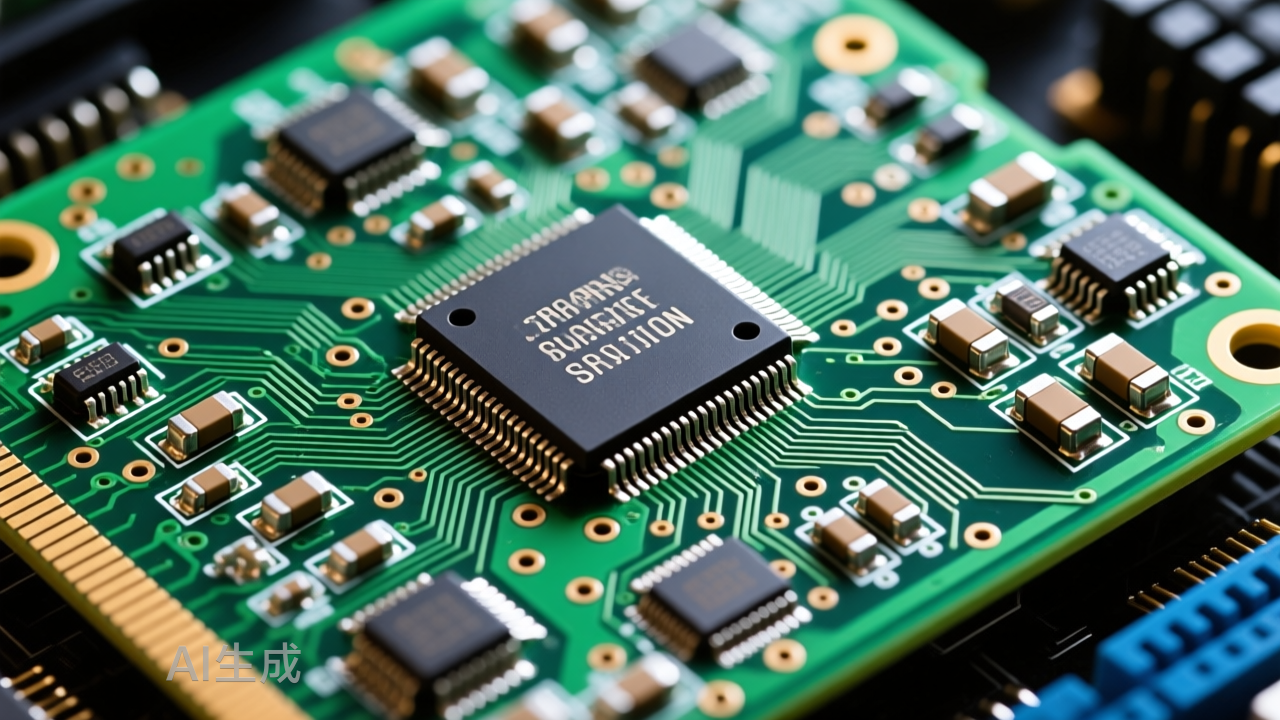
💡AI drives PCB boom—leaders expand fast, small firms falter; key for hardware scaling risks
⚡ 30-Second TL;DR
What Changed
AI computing power demand ignites high-end PCB market boom
Why It Matters
Rising AI infrastructure needs boost high-end PCB suppliers, but may create supply chain bottlenecks for AI hardware scaling. AI practitioners should watch for potential cost increases or delays in server/GPU production.
What To Do Next
Assess PCB suppliers for AI server prototypes to preempt supply shortages.
Key Points
- •AI computing power demand ignites high-end PCB market boom
- •Industry dual trends: strong earnings and aggressive capacity expansions
- •Leaders surge ahead as smaller firms face survival pressures
- •Accelerated differentiation leads to industry consolidation
🧠 Deep Insight
AI-generated analysis for this event — not the original article.
🔑 Enhanced Key Takeaways
- •The surge in high-end PCB demand is specifically driven by the transition to OAM (Open Accelerator Module) and UBB (Universal Baseboard) architectures required for next-generation AI server clusters.
- •Material science shifts are critical, with manufacturers increasingly adopting ultra-low-loss (ULL) and extremely-low-loss (ELL) copper-clad laminates to maintain signal integrity at 800G and 1.6T Ethernet speeds.
- •Supply chain localization efforts in China are intensifying, as domestic PCB manufacturers prioritize securing long-term supply agreements for high-layer-count (HLC) boards to reduce reliance on imported high-frequency materials.
🛠️ Technical Deep Dive
- •Transition to high-layer-count (HLC) designs, often exceeding 20-30 layers, to accommodate complex routing for high-speed AI chipsets.
- •Implementation of advanced HDI (High-Density Interconnect) technologies, including Any-Layer HDI and mSAP (modified Semi-Additive Process) to achieve finer line widths and spacing.
- •Integration of specialized thermal management materials and thicker copper layers to handle the increased power density and heat dissipation requirements of AI accelerators.
- •Utilization of advanced surface finishes such as ENIG (Electroless Nickel Immersion Gold) and ENEPIG (Electroless Nickel Electroless Palladium Immersion Gold) to ensure reliable high-frequency signal transmission.
🔮 Future ImplicationsAI analysis grounded in cited sources
⏳ Timeline
Weekly AI Recap
Read this week's curated digest of top AI events →
👉Related Updates



AI-curated news aggregator. All content rights belong to original publishers.
Original source: 钛媒体 ↗
This is a summary, not the original. Read the source, or get the weekly briefing.
The weekly digest
One email a week. Unsubscribe anytime.