AI Attacks Shrink SOC Response Windows
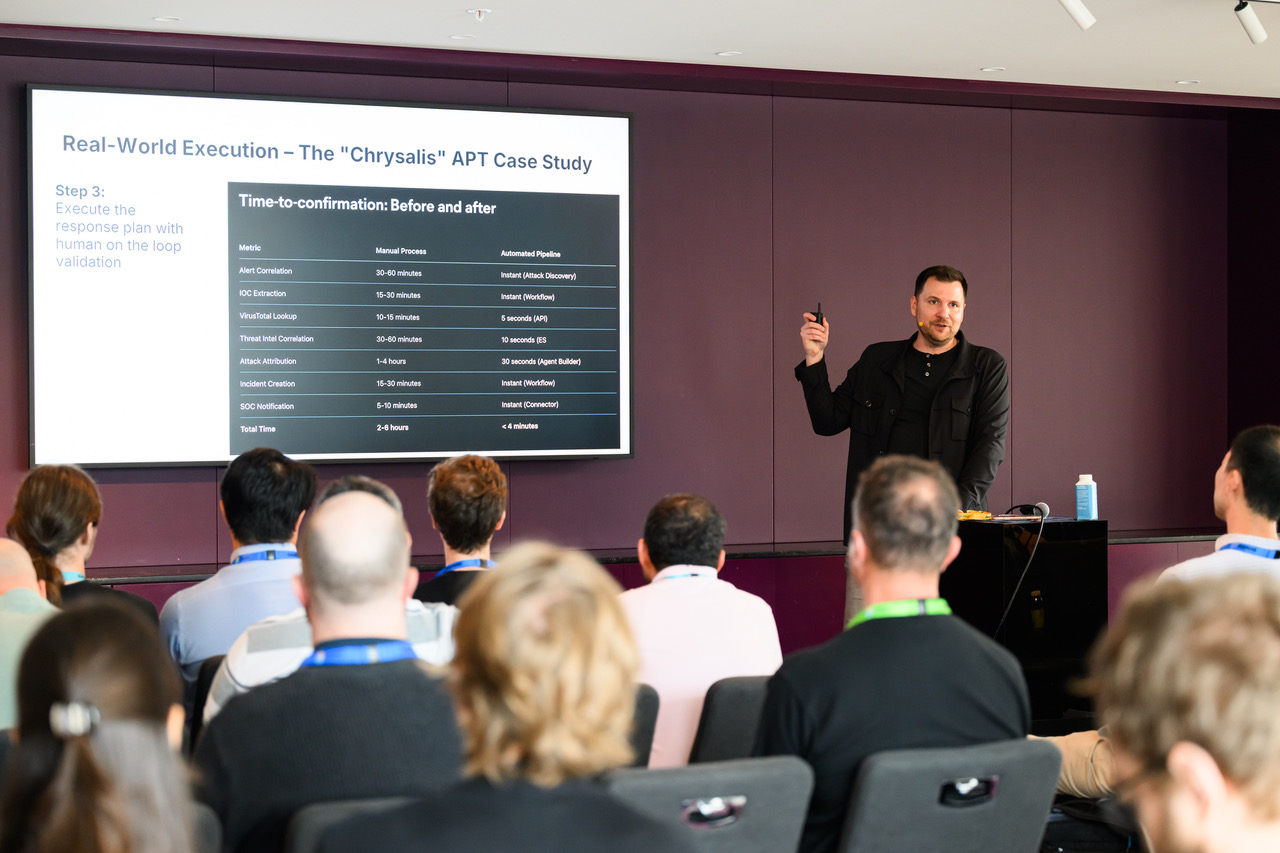
💡AI attacks outpace SOCs—upgrade defenses before response windows vanish
⚡ 30-Second TL;DR
What Changed
AI accelerates speed of cyberattacks
Why It Matters
Pushes AI practitioners toward adopting AI-enhanced security tools to counter evolving threats.
What To Do Next
Test Elastic's AI-powered detection tools for faster SOC threat response.
Key Points
- •AI accelerates speed of cyberattacks
- •Shrinks response window for SOC teams
- •Elastic highlights teams' inability to keep up
🧠 Deep Insight
Background and context from public sources — not the original article. 8 sources cited.
🔑 Enhanced Key Takeaways
- •Organizations faced an average of 1,968 cyber attacks per week in 2025, a 70% increase from 2023, with AI enabling attackers to automate reconnaissance and vulnerability discovery in real time[2].
- •IBM X-Force observed a 44% increase in attacks exploiting public-facing applications, driven by missing authentication controls and AI-enabled vulnerability scanning that bypasses human intervention[1].
- •87% of organizations identified AI-related vulnerabilities as the fastest-growing cyber risk in 2025, while 77% have adopted AI for cybersecurity defense—creating an asymmetric arms race between offensive and defensive capabilities[3].
- •The ransomware ecosystem has decentralized into smaller, specialized groups with a 49-53% year-over-year increase in active operators, accelerated by leaked tooling and AI automation that lowers barriers to entry[1][2].
🔮 Future ImplicationsAI analysis grounded in cited sources
⏳ Timeline
📎 Sources (8)
Factual claims are grounded in the sources below. Forward-looking analysis is AI-generated interpretation.
- newsroom.ibm.com — 2026 02 25 Ibm 2026 X Force Threat Index AI Driven Attacks Are Escalating As Basic Security Gaps Leave Enterprises Exposed
- maintworld.com — Cyber Attacks Hit Record Highs As AI Reshapes the Threat Landscape
- industrialcyber.co — Wef Global Cybersecurity Outlook 2026 Flags AI Acceleration Geopolitical Fractures Calls for Shared Responsibility
- convergencenetworks.com — Top Cyber Threats for 2026
- weforum.org — Geopolitics AI Fraud Global Cyber Cybersecurity 2026
- vistage.com — AI Driven Cybersecurity Threats Ceos 2026
- developmentaid.org — AI Driven Cyberattacks Are Accelerating
- securityweek.com — Cyber Insights 2026 Malware and Cyberattacks in the Age of AI
Weekly AI Recap
Read this week's curated digest of top AI events →
👉Related Updates
AI-curated news aggregator. All content rights belong to original publishers.
Original source: iTNews Australia ↗
This is a summary, not the original. Read the source, or get the weekly briefing.
Weekly AI briefing
One email a week. Unsubscribe anytime.