AI Assistants Finally Start Charging for the Checkout
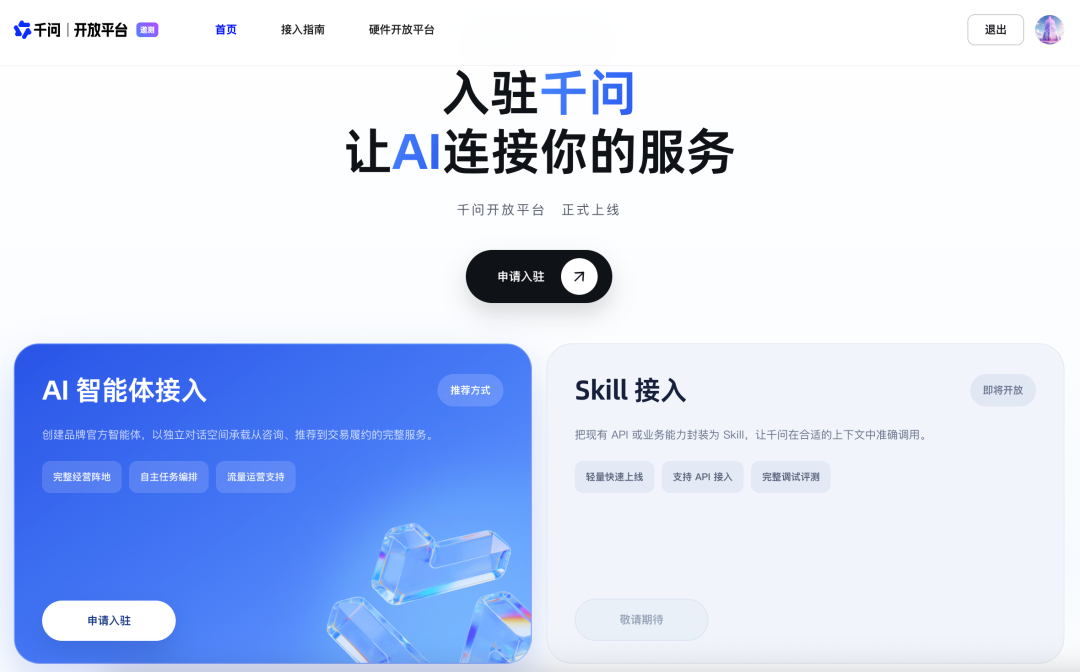
💡Doubao prices AI referrals at 12%, while Qwen opens an agent marketplace—two blueprints for AI monetization.
⚡ 30-Second TL;DR
What Changed
Doubao’s 12% fee consists of an 11.4% software service fee and a 0.6% payment fee.
Why It Matters
The updates suggest AI assistants are moving from free discovery tools toward monetized decision and transaction layers. For AI builders, distribution, trust, attribution, and post-recommendation conversion may matter as much as model quality.
What To Do Next
Prototype one Qwen Open Platform agent with authenticated order execution and measure recommendation-to-purchase conversion against a conventional search flow.
Key Points
- •Doubao’s 12% fee consists of an 11.4% software service fee and a 0.6% payment fee.
- •The new pricing separates Doubao-originated bookings from Douyin’s prior 8% natural-traffic settlement rate.
- •Qwen Open Platform lets partners such as SF Express, Ziroom, and E Fund deploy AI agents across phones, PCs, and AI glasses.
- •Users can still leave AI recommendations to verify or purchase through established OTA platforms, limiting conversion.
🧠 Deep Insight
AI-generated analysis for this event.
🔑 Enhanced Key Takeaways
- •Doubao's monetization strategy marks a shift from pure user-growth metrics to 'Agent-to-Transaction' (A2T) revenue models, aiming to capture value directly from the AI-driven decision-making process.
- •The 12% commission structure aligns Doubao more closely with traditional OTA (Online Travel Agency) take rates, which typically range from 10% to 20% in the Chinese market.
- •Alibaba's Qwen Open Platform strategy focuses on 'Agent-as-a-Service' (AaaS), prioritizing ecosystem expansion and API call volume over immediate direct transaction commissions.
- •Industry analysts note that Doubao's move creates a 'walled garden' risk, where AI recommendations may prioritize merchants willing to pay the higher commission over those offering better user value.
- •The integration of AI agents into hardware like AI glasses, as seen with Qwen's partners, indicates a strategic pivot toward 'ambient computing' where the AI agent acts as a persistent interface for commerce.
📊 Competitor Analysis▸ Show
| Feature | Doubao (ByteDance) | Qwen (Alibaba) | Baidu (Ernie) |
|---|---|---|---|
| Monetization Model | Closed-loop transaction commission (12%) | API/Distribution layer fees | Hybrid (Ads + Cloud/API) |
| Primary Focus | Consumer-facing AI agents | Enterprise/Developer ecosystem | Search-integrated AI agents |
| Ecosystem | Douyin/Life Services | Taobao/DingTalk/Cloud | Baidu Search/Apollo |
🛠️ Technical Deep Dive
- Doubao utilizes a multi-modal architecture optimized for real-time inference in mobile environments, specifically tuned for the Douyin recommendation engine pipeline.
- Qwen Open Platform leverages a distributed agent framework that supports cross-platform deployment via a unified API gateway, allowing agents to maintain state across mobile, PC, and IoT devices.
- The transaction-linking mechanism in Doubao relies on a proprietary 'AI-to-Order' attribution model that tracks user intent from the initial prompt through to the final payment confirmation in the Life Services ecosystem.
🔮 Future ImplicationsAI analysis grounded in cited sources
⏳ Timeline
Weekly AI Recap
Read this week's curated digest of top AI events →
👉Related Updates


AI-curated news aggregator. All content rights belong to original publishers.
Original source: 虎嗅 ↗