Adaptive Biotech Cofounder Raises $15M for Science AI
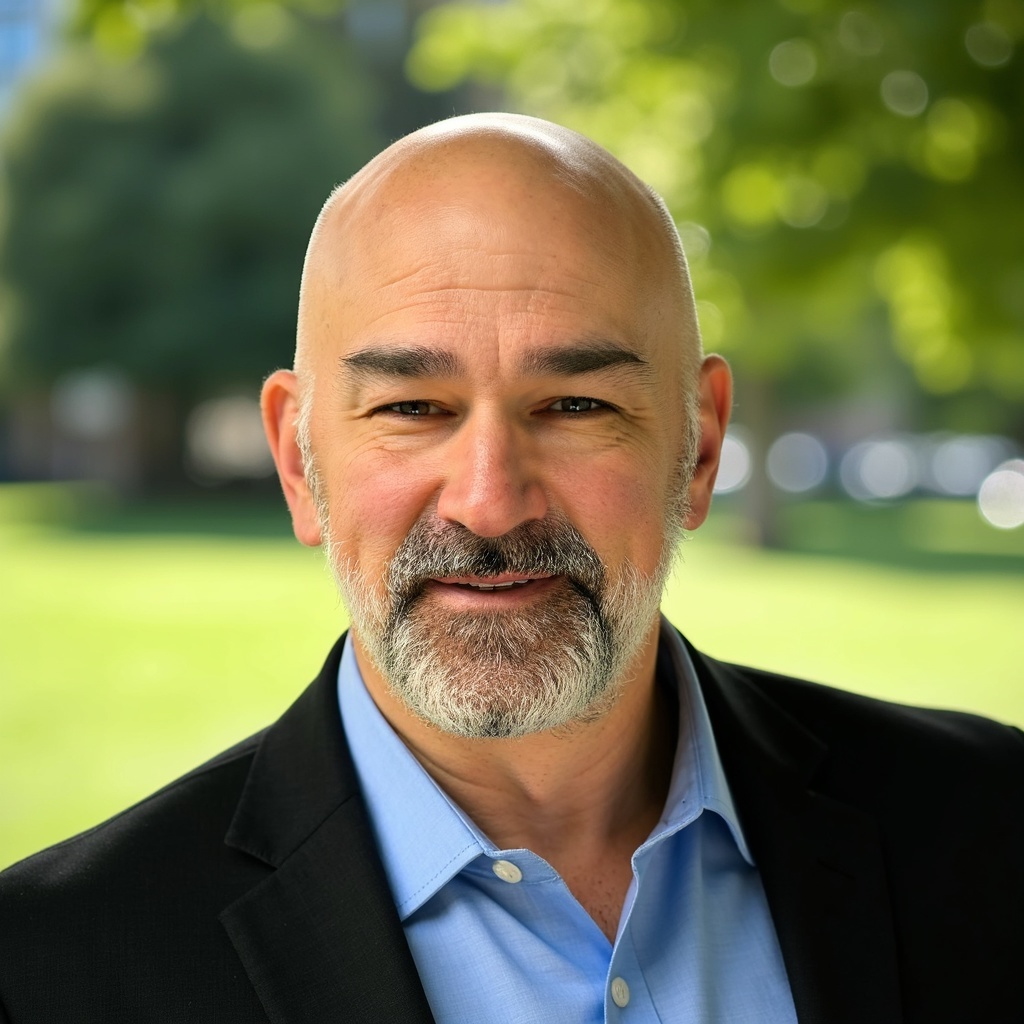
💡A $15M bet on rebuilding how AI learns from complex scientific data.
⚡ 30-Second TL;DR
What Changed
Harlan Robins previously co-founded Adaptive Biotechnologies and served as its chief scientific officer.
Why It Matters
The funding signals continued investor interest in AI infrastructure and methodologies tailored to scientific domains. If successful, the startup could influence how researchers curate, represent, and train models on complex scientific datasets.
What To Do Next
Track the startup’s future technical announcements and evaluate whether its scientific data-training approach could improve your organization’s dataset curation or model-training pipeline.
Key Points
- •Harlan Robins previously co-founded Adaptive Biotechnologies and served as its chief scientific officer.
- •The unnamed startup has raised $15 million in funding.
- •Its core focus is rethinking AI training methods for scientific data and applications.
- •Robins brings experience building massive datasets for biological decoding and research.
🧠 Deep Insight
AI-generated analysis for this event.
🔑 Enhanced Key Takeaways
- •The startup is named 'Theory' and is based in Seattle, Washington.
- •Theory is specifically targeting the development of 'foundation models' for biology, aiming to move beyond simple predictive models to generative systems that understand biological principles.
- •The $15 million seed round was led by Andreessen Horowitz (a16z), highlighting significant venture capital interest in the intersection of generative AI and life sciences.
- •Harlan Robins is joined by co-founder and CEO David Perry, who previously served as the CEO of Better Therapeutics.
- •The company plans to utilize proprietary datasets, potentially leveraging Robins' expertise in immune repertoire sequencing to train models that can predict how biological systems respond to various perturbations.
📊 Competitor Analysis▸ Show
| Feature | Theory | Isomorphic Labs | EvolutionaryScale |
|---|---|---|---|
| Primary Focus | General biological foundation models | Drug discovery (Alphabet) | Protein design/genomics |
| Funding Stage | Seed ($15M) | Subsidiary of Alphabet | Series A ($142M) |
| Key Differentiator | Immune system data expertise | DeepMind's AlphaFold integration | Large-scale protein language models |
🛠️ Technical Deep Dive
- Theory aims to build foundation models trained on high-dimensional biological data, likely incorporating immune repertoire sequencing data which captures the diversity of T-cell and B-cell receptors.
- The architecture focuses on 'biological decoding,' which involves mapping complex genomic and proteomic sequences to functional outcomes.
- The approach emphasizes moving away from task-specific AI models toward generalized models capable of zero-shot inference on biological systems.
- The training methodology involves integrating multi-modal biological data to create a latent space representation of cellular states.
🔮 Future ImplicationsAI analysis grounded in cited sources
⏳ Timeline
Weekly AI Recap
Read this week's curated digest of top AI events →
👉Related Updates
AI-curated news aggregator. All content rights belong to original publishers.
Original source: GeekWire ↗