Activating Self-Drive: High-Empowerment Performance Management Models
💡Learn how to shift from rigid control to empowerment-based management to boost innovation in high-uncertainty AI teams.
⚡ 30-Second TL;DR
What Changed
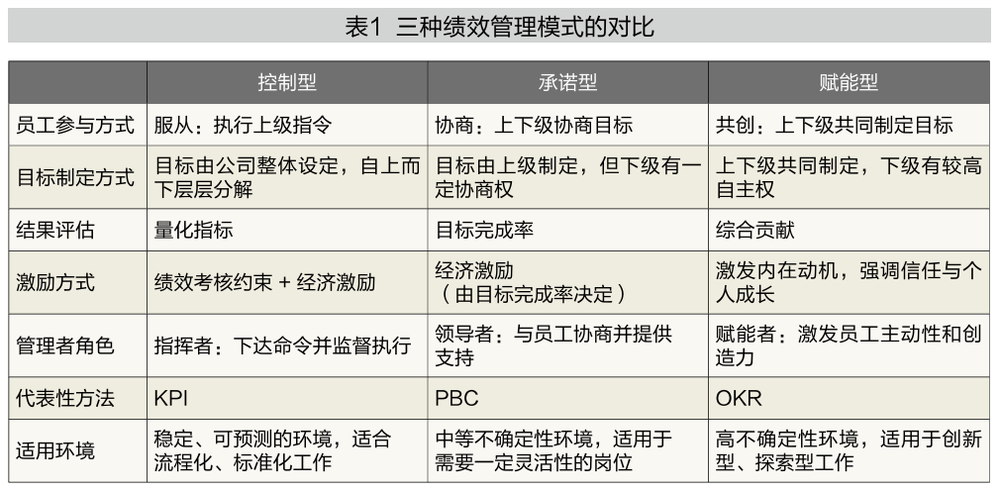
Distinguishes between control-based, commitment-based, and empowerment-based management models.
Why It Matters
Adopting empowerment-based management can significantly increase employee engagement and innovation, which is critical for AI-driven organizations managing complex, high-uncertainty R&D projects.
What To Do Next
Implement an OKR framework in your team to replace rigid KPI-based tracking, focusing on outcomes rather than just task completion.
Key Points
- •Distinguishes between control-based, commitment-based, and empowerment-based management models.
- •Defines empowerment through structural (resources/authority) and psychological (meaning/competence) dimensions.
- •Identifies OKR as a core tool for empowerment-based performance management.
- •Highlights the importance of aligning management styles with the level of environmental uncertainty.
🧠 Deep Insight
Web-grounded analysis with 33 cited sources.
🔑 Enhanced Key Takeaways
- •High-empowerment models are significantly bolstered by psychological safety, which ensures employees feel secure to express ideas, take risks, and learn from mistakes without fear of reprisal, fostering innovation and growth.
- •The OKR framework, while a core tool for empowerment, evolved from Peter Drucker's Management by Objectives (MBO) in the 1950s, with Andy Grove at Intel refining it in the 1970s by adding measurable Key Results and emphasizing transparency and agility.
- •Modern performance management is shifting from annual, top-down reviews to continuous feedback and coaching, with a greater emphasis on team goals, cross-departmental collaboration, and self-directed learning, moving beyond solely output-oriented metrics.
- •While beneficial for productivity and retention, implementing empowerment models can face challenges such as maintaining control, ensuring consistency across decisions, and potential resistance from middle management who may fear a loss of authority.
📊 Competitor Analysis▸ Show
The article focuses on "high-empowerment performance management models" and uses OKR as a core example, which are management philosophies and frameworks rather than specific products or services. Therefore, a direct competitor analysis table with features, pricing, and benchmarks is not applicable. However, it's important to note that OKR evolved from Management by Objectives (MBO). While MBO is a precursor, it differs from OKR by often being more top-down, annual, and linked to compensation, making it less flexible and transparent than OKRs. Other performance management approaches that exist alongside or complement empowerment models include 360-degree feedback, which gathers input from multiple sources (peers, subordinates, customers), and continuous feedback systems, which replace annual reviews with ongoing dialogue and real-time guidance. These alternative or complementary models also aim to improve performance but may differ in their emphasis on autonomy, goal-setting frequency, and transparency.
🛠️ Technical Deep Dive
- OKR Structure: Objectives are qualitative, aspirational goals defining "what to achieve," while Key Results are specific, measurable outcomes tracking "how to pace yourself to see if you are getting there." A common phrasing is "We will [Objective] as measured by [Key Results]."
- Implementation Principles:
- Transparency: Goals and progress are visible across the organization, fostering open communication.
- Collaboration: OKRs are often set collaboratively, with at least 60% of OKRs ideally defined by the team itself, promoting ownership.
- Cadence: Typically set for shorter, frequent cycles, often quarterly, allowing for agility and adaptation to changing business needs.
- Stretch Goals: Objectives are designed to be ambitious and challenging, pushing teams beyond the status quo.
- Separation from Compensation: OKRs are generally recommended to be separate from compensation to encourage ambitious goal-setting rather than conservative targets.
- Enabling Technology: Performance management software and AI-powered tools are increasingly used to automate administrative tasks, provide real-time data and analytics, track KPIs, and facilitate continuous feedback, allowing managers to focus on coaching and personal connections. Integrations with platforms like Microsoft Teams can serve as central hubs for collaboration and progress tracking.
🔮 Future ImplicationsAI analysis grounded in cited sources
⏳ Timeline
📎 Sources (33)
Factual claims are grounded in the sources below. Forward-looking analysis is AI-generated interpretation.
- nih.gov
- leaderfactor.com
- ccl.org
- forbes.com
- balancedscorecard.org
- peoplelogic.ai
- engagedly.com
- okrmentors.com
- ibm.com
- emirateshrm.com
- workpath.com
- envisialearning.com
- deel.com
- thrivesparrow.com
- binus.ac.id
- employmenthero.com
- employmenthero.com
- primeast.com
- dionnevanzyl.com
- mgma.com
- excellement.com
- ibm.com
- medium.com
- datalligence.ai
- mcchrystalgroup.com
- workalizer.com
- eleapsoftware.com
- circles.com
- smartchurchmanagement.com
- hortoninternational.com
- taplowgroup.com
- usf.edu
- umich.edu
Weekly AI Recap
Read this week's curated digest of top AI events →
👉Related Updates


AI-curated news aggregator. All content rights belong to original publishers.
Original source: 虎嗅 ↗