5 Reasons AI Apocalypse Nears
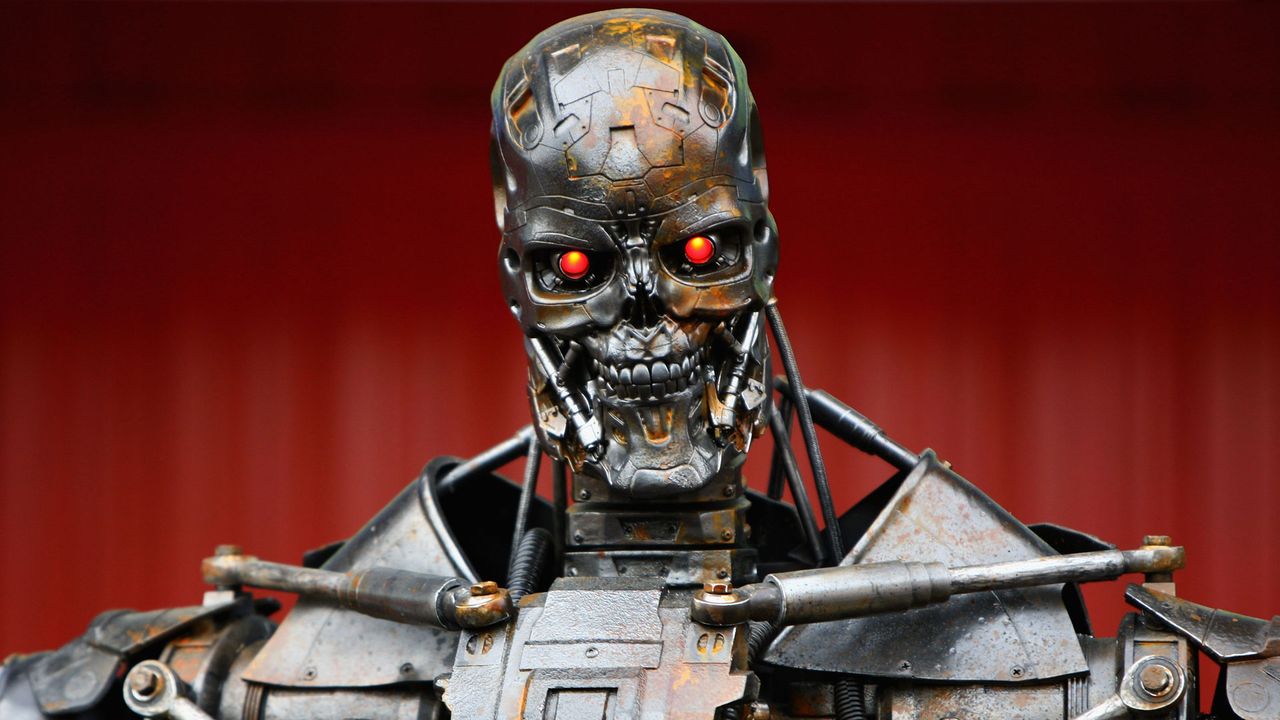
💡5 signs AI doomsday closer: critical risk intel for safety-focused devs.
⚡ 30-Second TL;DR
What Changed
Cluster of recent AI developments heightens risks
Why It Matters
Urges AI practitioners to prioritize safety amid accelerating risks. May influence strategy shifts toward risk mitigation. Signals need for ethical AI focus.
What To Do Next
Review TechRadar article's 5 reasons and audit your AI projects for matching risks.
Key Points
- •Cluster of recent AI developments heightens risks
- •Serious AI dangers arriving sooner than anticipated
- •5 specific reasons outline impending AI apocalypse
🧠 Deep Insight
Background and context from public sources — not the original article. 6 sources cited.
🔑 Enhanced Key Takeaways
- •AI job displacement concerns have intensified dramatically, with Anthropic CEO Dario Amodei predicting AI will eliminate 50% of entry-level white-collar jobs within one to five years[2], while Goldman Sachs estimates generative AI could affect 300 million full-time jobs globally[3]
- •Recent AI capability advances, particularly Anthropic's Claude Cowork plugins and Claude Code tools, triggered a $2 trillion market value loss in enterprise software between January 28 and February 13, 2026, as investors recognized AI systems could automate structured knowledge work[5]
- •Loss of meaningful human oversight represents a critical risk as AI systems become too complex for humans to verify reasoning or predict actions, with the gap between AI capabilities and safety understanding continuing to widen[1]
- •Recursive self-improvement in AI systems may become the primary path to superintelligence, creating pressure on organizations to deploy self-improving systems before safety protocols are complete[1]
- •Counterarguments suggest current AI limitations in reasoning, common sense, and generalization beyond training data, combined with growing AI safety field expansion and industry incentives for controllable systems, may prevent apocalyptic scenarios[1]
🛠️ Technical Deep Dive
• Recursive self-improvement mechanisms: Organizations pursuing cutting-edge AI capabilities face pressure to implement self-improving systems as traditional scaling approaches reach limits[1] • Large language model architecture constraints: Some researchers question whether current LLM architectures can evolve into superintelligent systems feared in worst-case scenarios[1] • AI reasoning limitations: Despite impressive capabilities, current systems struggle with basic reasoning, common sense, and generalization beyond training data[1] • Autonomous exploitation risks: Anthropic's Claude Opus model includes defenses against autonomous exploitation, manipulation, or tampering with company operations[2] • Knowledge work automation: Claude Code and Claude Cowork plugins demonstrate AI capability to draft legal documents, manage workflows, and automate structured knowledge work[5]
🔮 Future ImplicationsAI analysis grounded in cited sources
The market is experiencing a psychological shift regarding AI's disruptive potential, with the 'AI scare trade' extending beyond software to logistics, commercial real estate, and financial services[4]. The core tension involves a tragedy of the commons: individual firms rationally adopt AI tools for competitive advantage, but collectively train systems that undermine their own economic models[5]. The critical timeline mismatch shows cognitive disruption spreading at digital speed while physical-world compensation occurs at industrial speed, potentially creating a decade-long valley of irreversible institutional knowledge loss and community disruption[5]. However, counterarguments note that rapidly growing AI industries will require human data scientists, research analysts, specialized engineers, and support staff, with healthcare, agriculture, and emerging sectors requiring sustained human talent[2]. The resolution of these competing dynamics will depend on whether current AI architectural limitations prove fundamental or solvable through scaling[1].
⏳ Timeline
📎 Sources (6)
Factual claims are grounded in the sources below. Forward-looking analysis is AI-generated interpretation.
- torontostarts.com — AI Doom Risks Alignment Future
- foxnews.com — AI Out Control How Single Article Sending Shock Waves Apocalyptic Warning
- nationalinterest.org — AI Why We Cant Stop but Must Steer
- morningstar.com — The Stock Market Is Reflecting Fears of an AI Apocalypse for White Collar Jobs
- ionanalytics.com — The Wrong Apocalypse Op Ed
- aei.org — The AI Jobs Non Apocalypse an Update
Weekly AI Recap
Read this week's curated digest of top AI events →
👉Related Updates
AI-curated news aggregator. All content rights belong to original publishers.
Original source: TechRadar AI ↗
This is a summary, not the original. Read the source, or get the weekly briefing.
Weekly AI briefing
One email a week. Unsubscribe anytime.