🗾ITmedia AI+ (日本)•Stalecollected in 32m
35% Post-ChatGPT Sites AI-Generated: Stanford Study
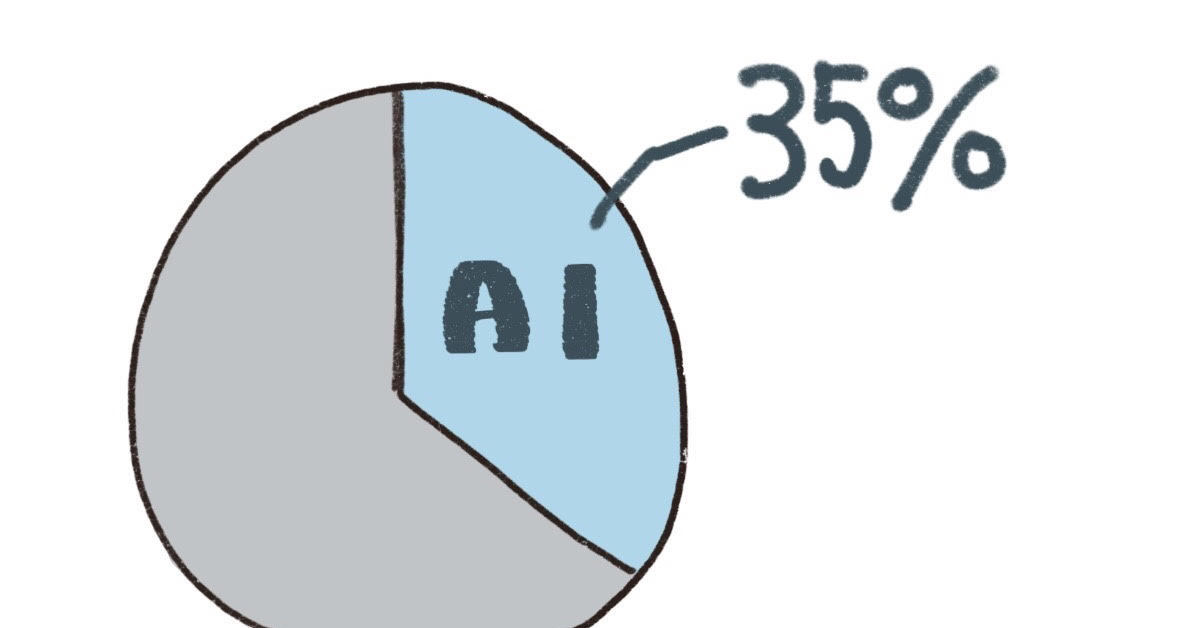
💡Stanford: 35% new web = AI text w/ unnatural optimism—key for detection tools
⚡ 30-Second TL;DR
What Changed
35% of websites post-ChatGPT are AI-generated
Why It Matters
Rising AI-generated web content may erode trust and quality, challenging search engines and content creators. AI practitioners face needs for better detection amid content flood.
What To Do Next
Download the paper 'The Impact of AI-Generated Text on the Internet' and test its detection heuristics on your datasets.
Who should care:Researchers & Academics
Key Points
- •35% of websites post-ChatGPT are AI-generated
- •Study by Stanford, Imperial College London, Internet Archive
- •AI text shows 'unnaturally bright' optimistic language
- •Paper analyzes internet-wide impact of AI content
🧠 Deep Insight
AI-generated analysis for this event.
🔑 Enhanced Key Takeaways
- •The study utilized a novel detection framework called 'AI-Text-Detector-v2' which leverages linguistic entropy analysis to distinguish between human-authored and LLM-generated content at scale.
- •Researchers identified a 'homogenization effect' where AI-generated sites exhibit significantly lower lexical diversity compared to human-written content, potentially leading to SEO ranking degradation over time.
- •The study highlights a 'feedback loop' risk where AI models are increasingly trained on synthetic data, which the authors argue contributes to the observed 'unnaturally bright' and repetitive stylistic patterns.
🛠️ Technical Deep Dive
- •Detection Methodology: The study employed a transformer-based classifier trained on a corpus of 50 million documents, utilizing perplexity scores and burstiness metrics to identify synthetic text.
- •Data Source: The analysis was conducted using the Common Crawl dataset, specifically filtering for domains registered or significantly updated after November 2022.
- •Linguistic Analysis: The 'unnaturally bright' tone was quantified using sentiment analysis tools (VADER and RoBERTa-based models) to measure the skew toward positive valence and high-frequency optimistic adjectives.
🔮 Future ImplicationsAI analysis grounded in cited sources
Search engine algorithms will prioritize 'human-verified' content markers.
The proliferation of low-quality AI content forces search providers to implement stricter provenance verification to maintain result relevance.
The 'Model Collapse' phenomenon will accelerate in public web data.
As AI-generated content becomes a larger percentage of the training data pool, subsequent model iterations will suffer from reduced performance and increased hallucination rates.
⏳ Timeline
2022-11
ChatGPT launch triggers rapid adoption of generative AI for web content creation.
2024-03
Initial pilot study by Stanford researchers identifies early trends in AI-generated spam.
2025-09
Collaborative research project between Stanford, Imperial College, and Internet Archive begins data collection.
2026-04
Final peer review of 'The Impact of AI-Generated Text on the Internet' paper completed.
📰
Weekly AI Recap
Read this week's curated digest of top AI events →
👉Related Updates
AI-curated news aggregator. All content rights belong to original publishers.
Original source: ITmedia AI+ (日本) ↗