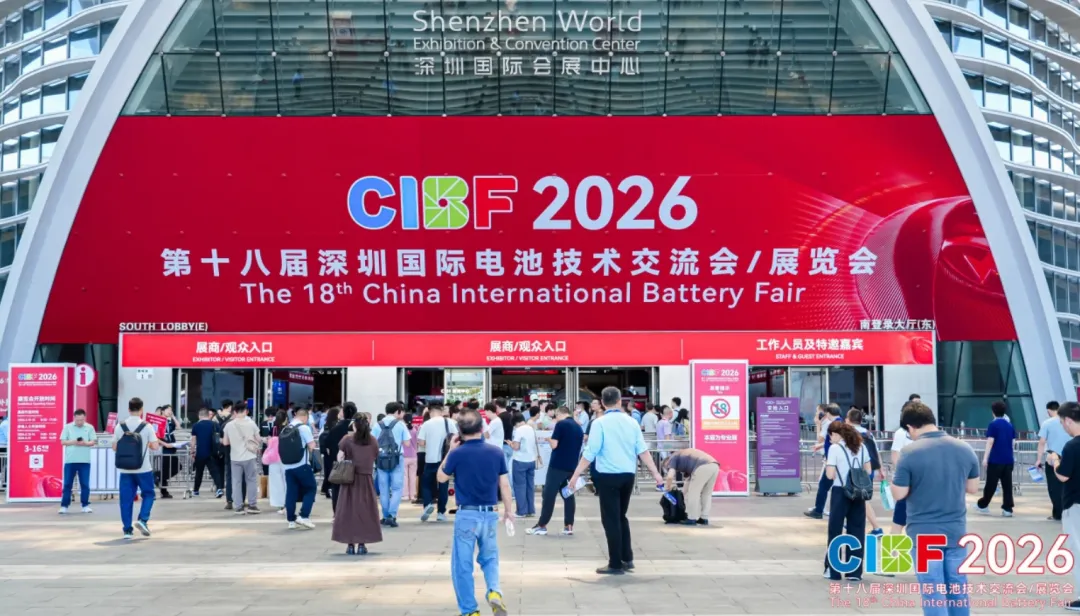
2026 CIBF: Battery Industry Shifts Beyond Overcapacity
💡Understand the next material frontier in battery tech as the industry moves beyond capacity wars.
⚡ 30-Second TL;DR
What Changed
Battery industry is moving past the phase of pure overcapacity
Why It Matters
This shift suggests that battery manufacturers will prioritize material science R&D over pure scale expansion. AI practitioners in material informatics should focus on hard carbon optimization.
What To Do Next
Incorporate hard carbon material properties into your battery performance simulation datasets to stay ahead of industry trends.
Key Points
- •Battery industry is moving past the phase of pure overcapacity
- •Upstream resource management is becoming a strategic priority
- •Hard carbon is emerging as a critical material to watch for future battery performance
🧠 Deep Insight
Web-grounded analysis with 19 cited sources.
🔑 Enhanced Key Takeaways
- •The battery industry's shift beyond overcapacity is characterized by a transition from pure volume expansion to quality-driven growth, emphasizing high-value manufacturing, technological advancements, and sustainable practices, particularly evident in China's leading role in battery exports.
- •Upstream resource management has evolved into a strategic priority, driving efforts towards domestic sourcing, comprehensive recycling initiatives, and vertical integration by both raw material suppliers and battery manufacturers to enhance supply chain security and reduce geopolitical dependencies.
- •Hard carbon is emerging as a critical material not only for its potential to enable ultra-fast charging in next-generation lithium-ion batteries but also as the most mature and currently commercially viable anode material for sodium-ion batteries, often utilizing sustainable biomass precursors like coconut shells.
- •Battery demand is significantly diversifying beyond electric vehicles, with substantial growth projected from grid-scale energy storage systems and the rapidly expanding need for backup power in AI data centers, placing additional stress on critical mineral supply chains.
🛠️ Technical Deep Dive
- Hard carbon possesses an amorphous or chaotic layer structure, featuring numerous micropores and defects that increase its specific surface area and provide diverse sites for lithium-ion adsorption and storage.
- It demonstrates notable advantages in high-rate charging and discharging, maintaining high capacity retention even under elevated current densities.
- Hard carbon offers a higher theoretical specific capacity, typically exceeding 500 mAh/g and in some studies approaching 1000 mAh/g, compared to graphite's 340-370 mAh/g.
- For sodium-ion batteries (SIBs), hard carbon is particularly well-suited due to its spacious pores that readily accommodate sodium ions, contributing to higher specific capacity, improved cycle stability, and lower material costs.
- Conversely, hard carbon generally exhibits lower electrical conductivity and compaction density when compared to graphite.
- It also presents challenges in terms of cycle life and a higher initial irreversible capacity loss during the first cycle, attributed to the reconfiguration of the solid electrolyte interphase (SEI) film and structural changes over prolonged cycling.
- Graphite, in contrast, features a highly ordered layered crystal structure, facilitating superior electrical conductivity and stable electrochemical properties with flatter voltage platforms during charge and discharge.
🔮 Future ImplicationsAI analysis grounded in cited sources
⏳ Timeline
📎 Sources (19)
Factual claims are grounded in the sources below. Forward-looking analysis is AI-generated interpretation.
- prnewswire.com
- devdiscourse.com
- startus-insights.com
- gray.com
- batterycouncil.org
- fastcompany.com
- africanminingmarket.com
- acs.org
- graphite-corp.com
- motorindiaonline.in
- indiatimes.com
- batterybusinessclub.com
- energyindustryreview.com
- carboncredits.com
- aotbattery.com
- youtube.com
- takomabattery.com
- researchgate.net
- iestbattery.com
Weekly AI Recap
Read this week's curated digest of top AI events →
👉Related Updates

AI-curated news aggregator. All content rights belong to original publishers.
Original source: 钛媒体 ↗