2026 Beijing Auto Show Smart Cars Boom
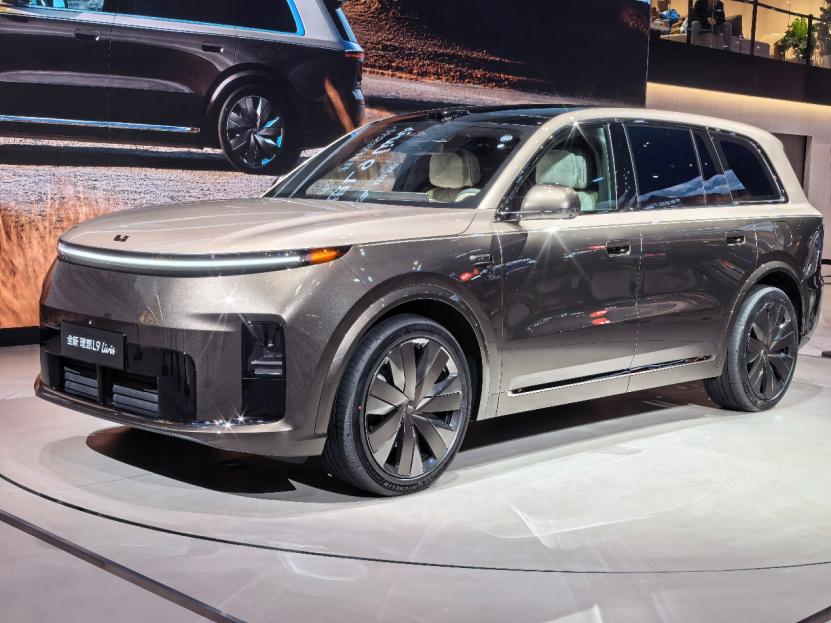
Affordable L4 smart cars explode at 2026 Beijing show – vital for embodied AI builders.
30-Second TL;DR
What Changed
Visual guide to new smart driving vehicles at 2026 Beijing Auto Show
Why It Matters
Accelerates China's dominance in affordable autonomous tech, challenging Western incumbents. Boosts demand for AI chips, sensors, and software in vehicles. Signals shift toward L4 in consumer markets.
What To Do Next
Benchmark your computer vision models against L4 vehicles in the Beijing Auto Show catalog.
Key Points
- •Visual guide to new smart driving vehicles at 2026 Beijing Auto Show
- •Price range from 100k RMB entry-level to advanced L4 systems
- •Indicates mass-market rollout and full-scale adoption of autonomy
Deep Insight
AI-generated analysis for this event — not the original article.
Enhanced Key Takeaways
- •The 2026 Beijing Auto Show marks a pivotal shift toward 'End-to-End' neural network architectures, moving away from modular perception-planning stacks in mass-market vehicles.
- •Regulatory frameworks in China have been updated as of early 2026 to allow for localized L4 robotaxi testing in designated zones, directly influencing the commercial viability of the high-end models showcased.
- •A significant trend observed is the integration of 'AI-native' cockpits, where large language models (LLMs) are deeply embedded into the vehicle's OS for real-time, context-aware driving assistance and cabin control.
Competitor Analysis
- Entry-Level Smart EV (100k RMB)
- Vision-only (Cameras)
- Mid-Range Autonomous (250k-350k RMB)
- Fusion (LiDAR + Cameras)
- L4 Robotaxi/Flagship (>500k RMB)
- Multi-modal (LiDAR + Radar + Cameras)
- Entry-Level Smart EV (100k RMB)
- 50-100 TOPS
- Mid-Range Autonomous (250k-350k RMB)
- 250-500 TOPS
- L4 Robotaxi/Flagship (>500k RMB)
- 1000+ TOPS
- Entry-Level Smart EV (100k RMB)
- L2+ (Highway Pilot)
- Mid-Range Autonomous (250k-350k RMB)
- L2++ (Urban NOA)
- L4 Robotaxi/Flagship (>500k RMB)
- L4 (Geofenced)
- Entry-Level Smart EV (100k RMB)
- BYD, Geely (Entry lines)
- Mid-Range Autonomous (250k-350k RMB)
- Xiaomi, XPeng, Li Auto
- L4 Robotaxi/Flagship (>500k RMB)
- Baidu Apollo, Pony.ai, Huawei ADS
| Feature | Entry-Level Smart EV (100k RMB) | Mid-Range Autonomous (250k-350k RMB) | L4 Robotaxi/Flagship (>500k RMB) |
|---|---|---|---|
| Perception | Vision-only (Cameras) | Fusion (LiDAR + Cameras) | Multi-modal (LiDAR + Radar + Cameras) |
| Compute | 50-100 TOPS | 250-500 TOPS | 1000+ TOPS |
| Autonomy Level | L2+ (Highway Pilot) | L2++ (Urban NOA) | L4 (Geofenced) |
| Key Players | BYD, Geely (Entry lines) | Xiaomi, XPeng, Li Auto | Baidu Apollo, Pony.ai, Huawei ADS |
Technical Deep Dive
- Transition to Transformer-based 'End-to-End' models: Replacing traditional rule-based planning with unified neural networks that map sensor inputs directly to control outputs.
- Compute Architecture: Widespread adoption of 3nm and 5nm automotive-grade SoCs (System-on-Chips) to handle the increased computational load of real-time generative AI in-cabin.
- Sensor Fusion: Shift toward 'BEV + Transformer' (Bird's Eye View) perception, allowing for better spatial reasoning in complex urban environments compared to previous 2D-based systems.
Future ImplicationsAI analysis grounded in cited sources
Timeline
- 2024-04Beijing Auto Show highlights initial shift toward urban NOA and mass-market LiDAR adoption.
- 2025-01Chinese regulators release updated guidelines for L3/L4 autonomous vehicle testing on public roads.
- 2025-10Major OEMs begin mass-production of vehicles featuring integrated LLM-based voice assistants.
- 2026-042026 Beijing International Auto Show opens, showcasing the first wave of affordable L4-ready hardware.
Weekly AI Recap
Read this week's curated digest of top AI events →
AI-curated news aggregator. All content rights belong to original publishers.
Original source: 钛媒体 ↗
This is a summary, not the original. Read the source, or get the weekly briefing.
The weekly digest
One email a week. Unsubscribe anytime.