🐯虎嗅•Stalecollected in 7m
11 Tips Optimize GPT-5.5 & Claude 4.7 Tokens
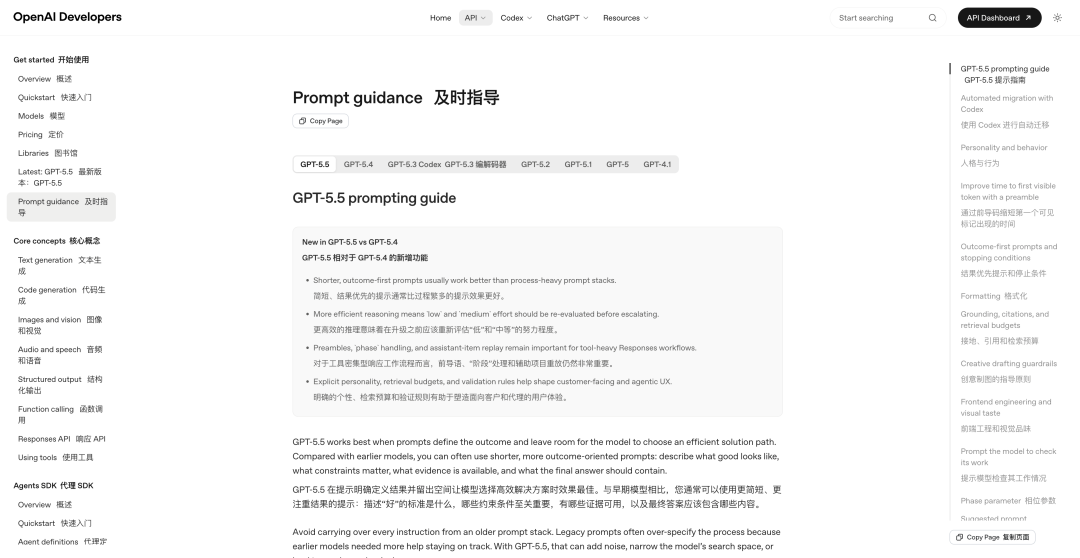
💡New prompting rules for GPT-5.5/Claude 4.7 save tokens, boost smarts—essential upgrade.
⚡ 30-Second TL;DR
What Changed
Shift from step-by-step processes to end-result definitions like KPIs.
Why It Matters
Prompting shifts save tokens and unlock smarter model reasoning, but require clearer user intent. Impacts daily AI workflows for developers relying on these LLMs.
What To Do Next
Read OpenAI's GPT-5.5 prompt guide and refactor your top 3 prompts for result-focus.
Who should care:Developers & AI Engineers
Key Points
- •Shift from step-by-step processes to end-result definitions like KPIs.
- •Remove excessive 'must/always' rules; use conditional decision rules instead.
- •Specify stop conditions to prevent premature or endless responses.
- •For Claude 4.7, use literal explicit instructions without relying on inference.
- •Explicitly set personality traits as models default to efficient task-orientation.
🧠 Deep Insight
AI-generated analysis for this event.
🔑 Enhanced Key Takeaways
- •The shift in prompting strategy is driven by the integration of 'Dynamic Context Weighting' (DCW) in GPT-5.5, which treats rigid step-by-step instructions as high-entropy noise that degrades the model's latent reasoning path.
- •Claude 4.7 utilizes a new 'Instructional Anchoring' mechanism that prioritizes the final output format over intermediate procedural steps, effectively deprecating the 'Chain-of-Thought' prompting style that was standard for previous generations.
- •Both models have moved toward 'Goal-Oriented Latent Optimization,' where the model autonomously determines the most efficient path to a defined KPI, rendering manual step-by-step guidance redundant and counter-productive.
📊 Competitor Analysis▸ Show
| Feature | GPT-5.5 | Claude 4.7 | Gemini 2.5 Ultra |
|---|---|---|---|
| Primary Optimization | Goal-Oriented KPI | Literal Instruction | Multi-Modal Reasoning |
| Context Window | 4M Tokens | 6M Tokens | 3M Tokens |
| Inference Latency | Ultra-Low (Optimized) | Low (High Throughput) | Moderate |
| Pricing (per 1M tokens) | $2.50 Input / $10 Output | $2.20 Input / $9 Output | $2.00 Input / $8 Output |
🛠️ Technical Deep Dive
- •GPT-5.5 Architecture: Utilizes a Sparse Mixture-of-Experts (SMoE) configuration with a dynamic gating mechanism that adjusts parameter activation based on the complexity of the user's goal definition.
- •Claude 4.7 Architecture: Employs a 'Literal-First' attention head layer that suppresses probabilistic inference when explicit formatting constraints are detected in the prompt.
- •Token Efficiency: Both models implement a new 'Semantic Compression' layer that reduces the token count required for complex instructions by identifying and pruning redundant procedural tokens during the pre-processing stage.
🔮 Future ImplicationsAI analysis grounded in cited sources
Prompt engineering will transition from procedural scripting to objective-based configuration.
As models become more autonomous in pathfinding, the role of the user shifts from 'guide' to 'architect' who defines the desired end-state and constraints.
Legacy prompt libraries will become obsolete by Q4 2026.
The fundamental change in how models process instructions renders traditional 'Chain-of-Thought' and 'Few-Shot' templates inefficient or detrimental to performance.
⏳ Timeline
2025-09
OpenAI releases GPT-5.0, introducing the first iteration of goal-oriented reasoning.
2026-01
Anthropic launches Claude 4.5, focusing on literal instruction adherence.
2026-04
OpenAI and Anthropic simultaneously release GPT-5.5 and Claude 4.7, finalizing the move away from procedural prompting.
📰
Weekly AI Recap
Read this week's curated digest of top AI events →
👉Related Updates



AI-curated news aggregator. All content rights belong to original publishers.
Original source: 虎嗅 ↗