10 Open Source Projects Transforming Game Development
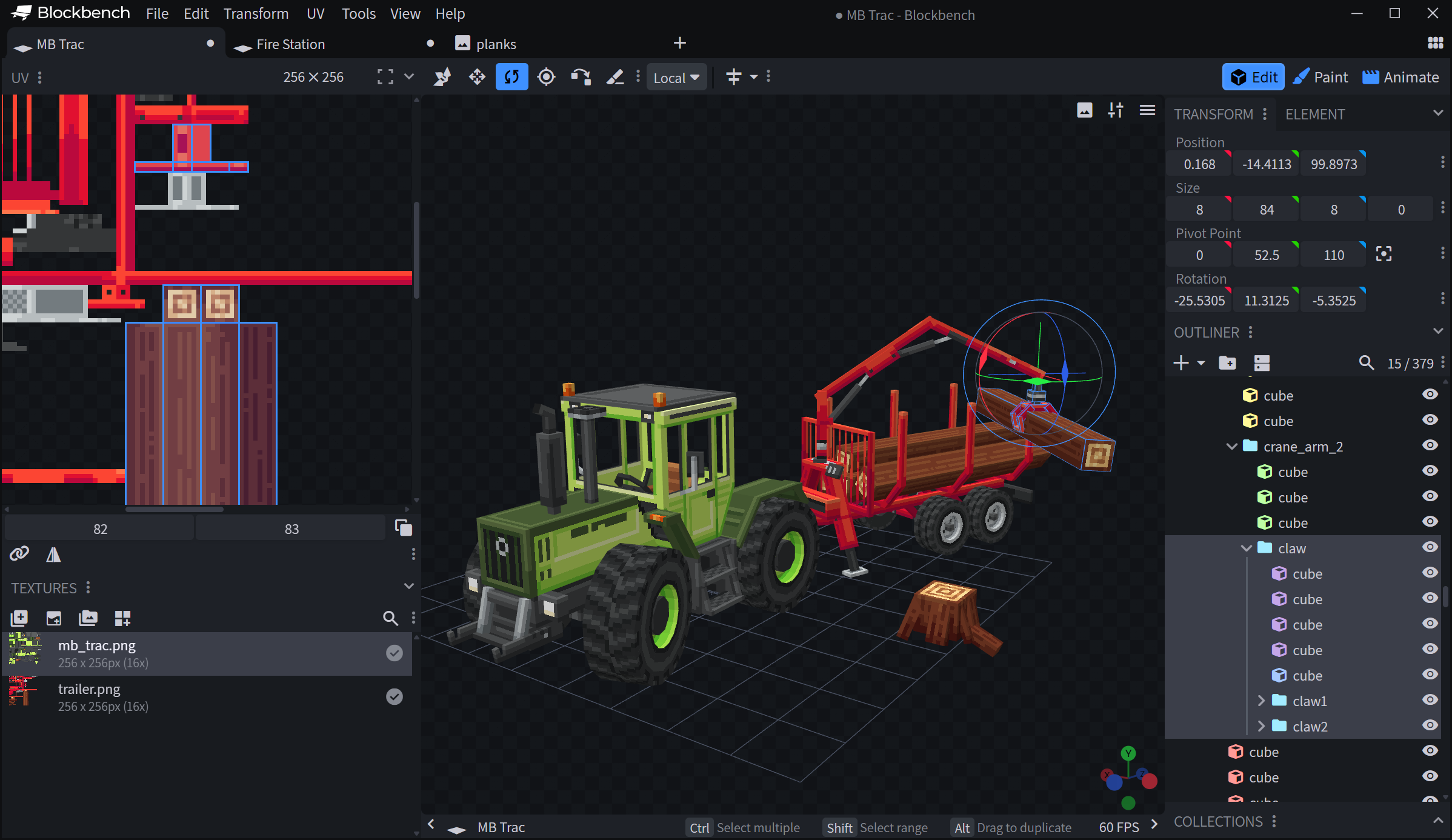
💡Discover 10 essential open source tools to optimize your game development pipeline and reduce production overhead.
⚡ 30-Second TL;DR
What Changed
Curated list of 10 open source tools for game development workflows
Why It Matters
These tools lower the barrier to entry for independent game developers by providing high-quality, free alternatives to expensive proprietary software. Integrating these into pipelines can significantly reduce production costs and time-to-market.
What To Do Next
Review the GitHub blog post to identify which of these 10 tools can replace or augment your current asset pipeline to improve workflow efficiency.
Key Points
- •Curated list of 10 open source tools for game development workflows
- •Tools cover diverse areas including art, animation, audio, and UI debugging
- •Focus on creating engine-ready assets to reduce development friction
🧠 Deep Insight
Web-grounded analysis with 29 cited sources.
🔑 Enhanced Key Takeaways
- •Open-source tools are democratizing game development, making it more accessible to beginners and independent developers by lowering financial barriers and providing learning opportunities through transparent codebases.
- •The open-source ecosystem fosters significant community collaboration, leading to faster innovation, bug fixes, and a broader range of specialized tools and features developed by a global network of contributors.
- •Beyond engines, open-source projects offer unparalleled flexibility and customization, allowing developers to modify source code, integrate tools into existing pipelines, and tailor workflows to their exact needs, reducing vendor lock-in.
- •Prominent open-source tools like Godot Engine, Blender, Krita, and Audacity provide comprehensive solutions for various aspects of game development, from 2D/3D game creation to asset modeling, digital painting, and audio editing.
- •The rise of open-source tools is particularly beneficial for indie and small studios, offering cost-effective alternatives to proprietary software without royalties or licensing fees, enabling them to compete with larger entities.
📊 Competitor Analysis▸ Show
Open Source vs. Proprietary Game Development Tools
| Feature/Category | Open Source Tools (e.g., Godot, Blender, Krita, Audacity) | Proprietary Tools (e.g., Unity, Unreal Engine) |
|---|---|---|
| Features | - Full source code access, high customizability, community-driven development. |
- Godot: Comprehensive 2D/3D engine, versatile scripting (GDScript, C#, C++).
- Blender: Robust 3D modeling, animation, VFX, real-time viewport (Eevee).
- Krita: Digital painting, texture creation, sprite editing, vector brushes, layering.
- Audacity: Audio editing, post-production, effects, format conversion. | - Polished user experience, dedicated support, extensive asset marketplaces.
- Unity: Versatile for 2D/3D, mobile, VR/AR, strong for indie/mid-sized studios.
- Unreal Engine: Cutting-edge graphics, AAA development, visual scripting (Blueprints), high-end visuals. | | Pricing | - Completely free to use, no royalties, licensing fees, or hidden costs. | - Unity: Free for small developers (under $200K revenue), Pro at $2,200/year.
- Unreal Engine: Free to use until $1M revenue, then 5% royalty applies.
- Subscription models or royalty-based. | | Benchmarks/Limitations | - Smaller community and asset marketplace compared to major proprietary engines.
- Documentation and tooling can vary, especially for newer projects.
- Performance optimization may require deep engine knowledge.
- Audacity is primarily for post-production, not ideal for complex sound generation from scratch.
- Blender's integrated game engine was deprecated in 2019. | - Can be expensive, especially for scaling teams or high-revenue projects.
- Limited customization options, potential for vendor lock-in.
- Steeper learning curve and higher system requirements for advanced engines like Unreal.
- Reliance on vendor for updates, security, and support. |
🛠️ Technical Deep Dive
- Godot Engine: Features a layered architecture comprising a Scene layer (for building applications/games with nodes), a Server layer (implementing subsystems like rendering, audio, physics), and a Drivers/Platform Interface layer (abstracting low-level platform details). The Core contains essential functionalities and data structures. It supports GDScript (its own Python-like language), C#, C++, and VisualScript, and uses SCons for building from source.
- Blender: Written in C++ and Python, offering a Python scripting API for advanced control and automation. It uses OpenGL for graphics rendering and features non-destructive modeling tools and modifiers. The Eevee real-time viewport allows for immediate evaluation of models and textures. Blender supports exports to formats like glTF, OBJ, FBX, and Alembic, including custom object properties.
- Krita: Utilizes a vector brush engine for precise and scalable artwork, a robust layering system for complex compositions, and a built-in asset manager. It includes a 3D painting engine for models, textures, and materials, a sprite editor, and a UI kit. Krita also features a real-time seamless tile mode (wrap-around mode) for efficient texture creation.
- Audacity: Functions as a post-production sound editor, allowing users to convert sample and bit rates, adjust volume/gain, and apply various effects like reverb and delay. It supports converting stereo tracks to mono and provides tools for basic audio editing tasks.
🔮 Future ImplicationsAI analysis grounded in cited sources
⏳ Timeline
📎 Sources (29)
Factual claims are grounded in the sources below. Forward-looking analysis is AI-generated interpretation.
- fossgames.com
- bairesdev.com
- refine.dev
- github.com
- reddit.com
- worklenz.com
- medium.com
- gamedesignskills.com
- pubnub.com
- krita.org
- medium.com
- gameburp.com
- github.blog
- dev.to
- medium.com
- jetbrains.com
- upskillist.com
- blender.org
- audacityteam.org
- wikipedia.org
- fandom.com
- godotengine.org
- godotengine.org
- gitbooks.io
- youtube.com
- themindstudios.com
- devopsschool.com
- wikipedia.org
- dev.to
Weekly AI Recap
Read this week's curated digest of top AI events →
👉Related Updates
AI-curated news aggregator. All content rights belong to original publishers.
Original source: GitHub Blog ↗