Vibe Coding 已過時?「Agentic Engineering」克服極限
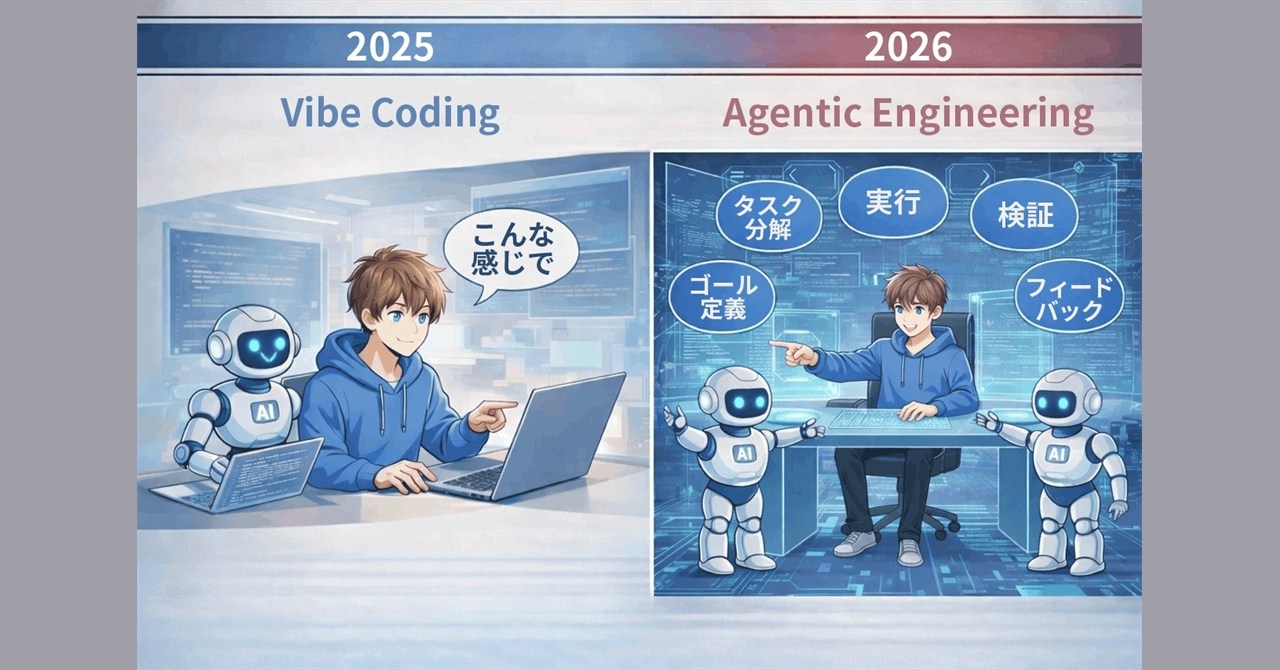
💡New paradigm 'agentic engineering' replaces vibe coding—essential shift for AI devs tackling complex tasks
⚡ 30-Second TL;DR
有什麼變化
Vibe Coding 概念誕生一年前
為什麼重要
促使 AI 從直覺 Vibe Coding 轉向結構化 Agentic 工作流程,可能提升複雜專案效率。鼓勵在工程中採用自主 AI 代理。
下一步行動
Experiment with agentic AI frameworks like LangChain to build autonomous coding agents beyond vibe coding.
關鍵要點
- •Vibe Coding 概念誕生一年前
- •Agentic Engineering 克服 Vibe Coding 極限
- •AI 開發風格演變的新名稱
- •解釋 Agentic 方法及當前必要性
🧠 深度解析
背景與延伸:來自公開資料,非原文內容。引用 8 個來源。
🔑 增強重點摘要
- •Vibe coding, coined by Andrej Karpathy approximately one year ago, described a 'gleefully reckless' approach where developers prompt AI, accept outputs without review, and iterate on errors—suitable for quick prototypes but unsuitable for production systems[3]
- •Agentic engineering represents a disciplined evolution where AI agents autonomously plan, execute, and test complex tasks while humans maintain ownership of architecture, quality, and correctness[3][6]
- •The critical differentiator between vibe coding and agentic engineering is comprehensive testing; solid test suites enable AI agents to iterate reliably until tests pass, transforming unreliable agents into dependable systems[3]
- •Agentic systems employ structured memory management and long-running process coordination across specialized agent teams (frontend, backend, testing, documentation), executing work in parallel rather than reactive single-prompt interactions[2][5]
- •The terminology shift from 'vibe coding' to 'agentic engineering' carries professional legitimacy, enabling integration into job descriptions, team practices, and enterprise software development workflows where compliance and consistency are mandatory[4]
🛠️ 技術深入
- Agentic Architecture: Multi-agent systems with specialized roles (frontend, backend, testing, documentation agents) that work in parallel while tracking dependencies and coordinating execution[2]
- Memory Management: Structured memory systems that retain context across extended interactions, preventing context window degradation that occurs in traditional vibe coding workflows[5]
- Autonomous Planning: AI agents generate design documents, break work into well-defined tasks, and propose architecture before execution—a critical distinction from reactive prompt-response cycles[3]
- Test-Driven Execution: Agents iterate against comprehensive test suites until all tests pass, providing high confidence in code correctness without human line-by-line review[3]
- Specification-Driven Development: Clear architectural specifications and design documents guide agent behavior, enabling agents to maintain system-level reasoning rather than addressing only immediate prompts[5]
- Workflow Pattern: Define intent → discuss plan with agent → confirm direction → AI team executes → human reviews architecture and results → merge[2]
🔮 前景展望AI analysis grounded in cited sources
Agentic engineering is reshaping developer roles from code writers to system orchestrators and architects, with senior developers focusing on architecture validation, quality assurance, and strategic direction rather than manual implementation[6]. This shift enables enterprise adoption of AI-assisted development while maintaining production-grade quality standards, potentially accelerating software delivery cycles from 'a few sprints' to 'a few hours' for complex tasks[2]. The professionalization of agentic terminology signals industry maturation, moving AI-assisted development from experimental weekend projects into mainstream enterprise software engineering practices[4]. However, this requires developers to adopt disciplined practices including upfront planning, comprehensive testing, and continuous architectural oversight—skills that differentiate agentic engineering from its chaotic predecessor[3].
⏳ 時間線
📎 來源 (8)
Factual claims are grounded in the sources below. Forward-looking analysis is AI-generated interpretation.
- rocket.new — Vibe Coding vs Agentic Coding a Shift in Developer Mindset
- yu-wenhao.com — Agentic Coding
- addyosmani.com — Agentic Engineering
- observer.com — Andrej Karpathy New Term AI Coding
- youtube.com — Watch
- mkennedy.codes — Its Not Vibe Coding Agentic Engineering
- youtube.com — Watch
- oreateai.com — 37f14996a071aba21cd64310bb96153d
AI 週報
閱讀本週精選 AI 大事摘要 →
👉相關動態
AI 策展新聞聚合。所有內容版權歸原始發布者所有。
原始來源: ITmedia AI+ (日本) ↗
每週 AI 簡報
每週一封,可隨時退訂。