Vercel 將 WebStreams 加速 10 倍
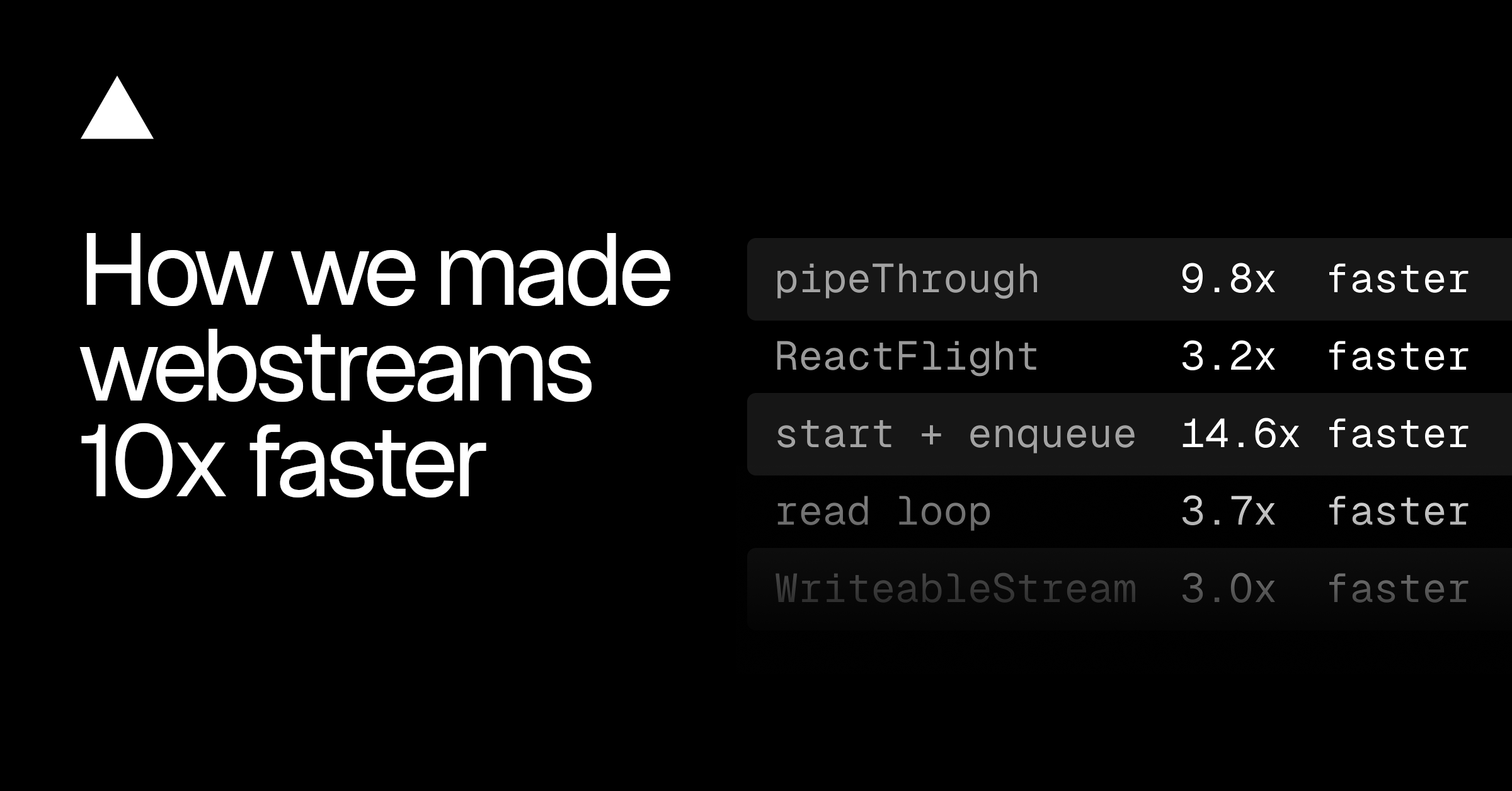
💡10x faster WebStreams for Next.js SSR – vital for scalable AI streaming apps.
⚡ 30-Second TL;DR
有什麼變化
WebStreams 在 Next.js SSR 火焰圖中佔主導,因 Promise 和分配開銷
為什麼重要
提升 Next.js 和 React SSR 的串流效能,對即時 AI 應用如聊天介面至關重要。減少框架開銷,正如基準測試所強調。在規模化時實現更快伺服器回應。
下一步行動
Benchmark fast-webstreams in your Next.js SSR pipeline for 10x streaming gains.
關鍵要點
- •WebStreams 在 Next.js SSR 火焰圖中佔主導,因 Promise 和分配開銷
- •Node.js 原生 WebStreams 比舊版 streams 慢 12 倍:630 MB/s 對 7,900 MB/s
- •fast-webstreams 符合 WHATWG API,但以 Node.js streams 快路徑後端
- •AI 驅動的測試導向伺服器端再實作
- •透過 Matteo Collina 的 PR 上游至 Node.js
🧠 深度解析
背景與延伸:來自公開資料,非原文內容。引用 7 個來源。
🔑 增強重點摘要
- •Vercel identified WebStreams as a critical performance bottleneck in Next.js server-side rendering, with Promise chains and memory allocations causing significant overhead in flamegraphs[1]
- •Native Node.js WebStreams implementation achieves only 630 MB/s throughput compared to 7,900 MB/s with legacy Node.js streams, representing a 12x performance gap[1]
- •Vercel's fast-webstreams library maintains full WHATWG Streams API compatibility while leveraging optimized Node.js streams backend for superior performance[1]
- •Edge Runtime optimization is critical for AI applications, with streaming reducing perceived latency by delivering responses incrementally rather than waiting for complete generation[2]
- •The performance improvements are being upstreamed to Node.js core through contributions, indicating industry-wide recognition of WebStreams overhead issues[1]
🛠️ 技術深入
• WebStreams implementation uses Promise-based architecture that introduces allocation overhead unsuitable for high-throughput server scenarios • fast-webstreams reimplements WHATWG Streams specification while delegating to Node.js native streams for actual I/O operations • The optimization targets the server-side rendering path in Next.js where streaming is essential for progressive HTML delivery • Edge Runtime environments (V8 Isolates) are optimized for streaming without full Node.js overhead, enabling zero cold starts and native HTTP stream handling[2] • Streaming text responses in AI applications reduce perceived latency by delivering tokens incrementally rather than waiting for complete LLM generation[2] • Implementation considerations include handling asynchronous generators correctly with for await...of patterns and managing serverless function timeouts during long-running streams[2]
🔮 前景展望AI analysis grounded in cited sources
This optimization addresses a fundamental bottleneck in modern web frameworks handling AI-generated content and real-time data. As AI applications become standard in production systems, streaming performance directly impacts user experience and infrastructure costs. The upstreaming to Node.js core suggests this will become a baseline improvement for the entire Node.js ecosystem. Organizations using Next.js with AI features (LLMs, real-time APIs) will benefit from reduced latency and improved throughput without code changes. Edge Runtime adoption will likely accelerate as streaming performance becomes a competitive differentiator for serverless platforms.
⏳ 時間線
📎 來源 (7)
Factual claims are grounded in the sources below. Forward-looking analysis is AI-generated interpretation.
AI 週報
閱讀本週精選 AI 大事摘要 →
👉相關動態
AI 策展新聞聚合。所有內容版權歸原始發布者所有。
原始來源: Vercel News ↗
每週 AI 簡報
每週一封,可隨時退訂。