來源The Next Web (TNW)•較早收集於 28m
Uber 轉向遊說機器人計程車法規
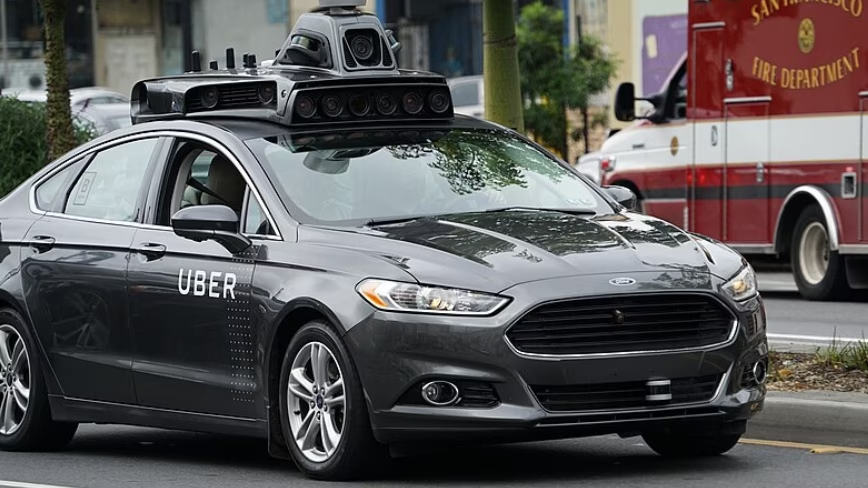
#robotaxi#autonomous-vehicles#lobbyinguber-robotaxiuber
💡了解 Uber 如何試圖透過政策與平台控制,而非研發來主導機器人計程車市場。
⚡ 30 秒速覽
有什麼變化
Uber 正遊說立法,強制將機器人計程車整合至其 App
為什麼重要
此轉變標誌著自動駕駛市場進入整合階段,平台聚合商的影響力可能超越技術開發商本身。
下一步行動
若您正在開發自動駕駛系統,請優先建立開放的 API 標準,以確保與未來叫車聚合平台的相容性。
誰應關注:Founders & Product Leaders
關鍵要點
- •Uber 正遊說立法,強制將機器人計程車整合至其 App
- •公司策略從自行研發轉向平台整合
- •Uber 旨在透過控制部署介面來維持市場主導地位
🧠 深度解析
本篇為 AI 生成分析,非原文內容。
🔑 增強重點摘要
- •Uber has established strategic partnerships with autonomous vehicle developers like Waymo and Aurora to facilitate the integration of their fleets into the Uber network.
- •The lobbying efforts specifically target 'open access' legislation, which would prevent robotaxi operators from creating walled-garden ecosystems that exclude third-party ride-hailing platforms.
- •Uber's shift follows the 2020 divestment of its Advanced Technologies Group (ATG) to Aurora, marking the formal end of its internal self-driving hardware development.
- •Regulatory filings indicate Uber is advocating for standardized data-sharing protocols between autonomous fleet operators and ride-hailing platforms to ensure safety and traffic management compliance.
- •The company is leveraging its massive existing user base and demand-prediction algorithms as a 'liquidity moat' to incentivize autonomous operators to prioritize the Uber platform over their own standalone apps.
📊 競品分析▸ Show
| Feature | Uber (Platform Orchestrator) | Waymo (Vertically Integrated) | Lyft (Hybrid/Partner) |
|---|---|---|---|
| Business Model | Aggregator/Marketplace | Fleet Operator/Owner | Aggregator/Partner |
| Hardware Control | None (Third-party) | Full (In-house) | None (Third-party) |
| Market Strategy | Platform Dominance | Service Quality/Safety | Regional Partnerships |
| Pricing Power | High (Dynamic/Surge) | Moderate (Fleet-limited) | Moderate (Dynamic) |
🛠️ 技術深入
- Uber's integration architecture utilizes a standardized API layer designed to ingest real-time telemetry, vehicle availability, and safety status from heterogeneous autonomous fleets.
- The platform employs a multi-objective optimization engine that balances rider wait times, vehicle battery/fuel status, and autonomous system health metrics.
- Integration requires compliance with Uber's 'Safety Data Exchange' protocol, which mandates the transmission of disengagement logs and sensor-based incident reports to a centralized compliance dashboard.
- The routing engine has been updated to include 'AV-friendly' navigation parameters, accounting for autonomous vehicle limitations such as restricted turn types, loading zone requirements, and weather-based operational domain constraints.
🔮 前景展望基於引用來源的 AI 分析
Uber will achieve a higher profit margin per ride by eliminating driver incentives and shifting to a commission-based model for autonomous fleet operators.
By removing the human driver, Uber transitions from a labor-intensive model to a software-as-a-service (SaaS) model where it collects a percentage of the fare for providing the demand-side interface.
Autonomous vehicle developers will face increased pressure to adopt Uber's API standards to maintain access to the largest pool of ride-hailing demand.
As Uber captures the majority of consumer ride-hailing traffic, standalone robotaxi apps will struggle to achieve the necessary utilization rates to remain profitable without integrating into the Uber ecosystem.
⏳ 時間線
2016-09
Uber launches its first public self-driving pilot in Pittsburgh.
2018-03
A fatal collision involving an Uber autonomous test vehicle in Tempe, Arizona, leads to a temporary suspension of testing.
2020-12
Uber sells its Advanced Technologies Group (ATG) to Aurora Innovation, pivoting away from in-house hardware development.
2023-05
Uber and Waymo announce a multi-year partnership to bring Waymo's autonomous vehicles to the Uber platform in Phoenix.
2025-02
Uber initiates formal lobbying efforts at the state level to standardize robotaxi integration requirements.
📰
AI 週報
閱讀本週精選 AI 大事摘要 →
👉相關動態

AI 策展新聞聚合。所有內容版權歸原始發布者所有。
原始來源: The Next Web (TNW) ↗
每週電子報
每週一封,可隨時退訂。