特斯拉Cybercab已取消方向盤中國仍緊握
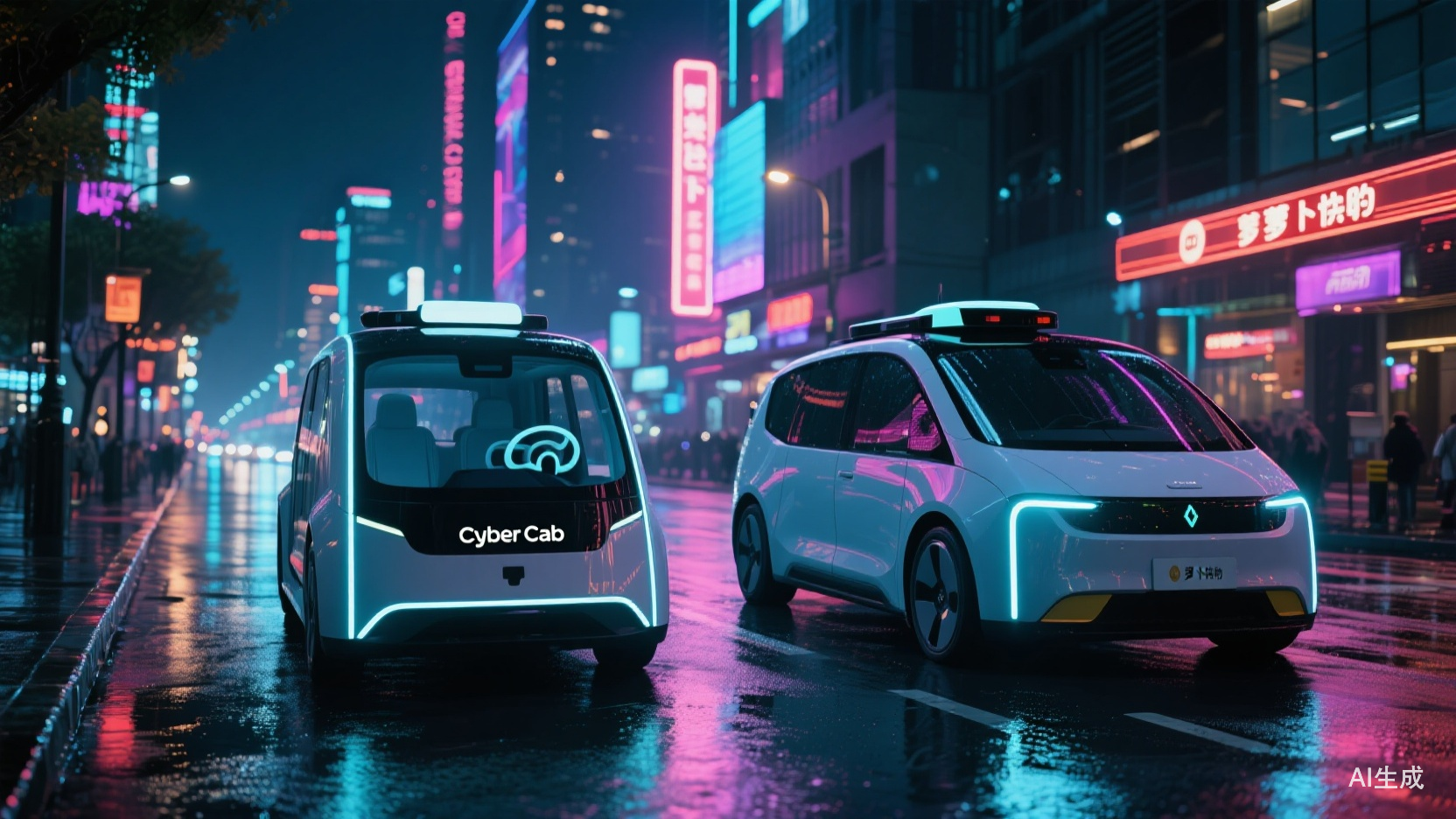
💡Tesla's steerless L5 production vs China regs: critical AV tech/strategy divergence.
⚡ 30-Second TL;DR
有什麼變化
首輛Cybercab於德州超級工廠下線,提前兩個月。
為什麼重要
推動全球Robotaxi競爭;美國創新速度對中國安全優先或決定自動駕駛市場領導者。
下一步行動
Test pure-vision vs multi-sensor fusion in CARLA simulator for AV perception benchmarks.
關鍵要點
- •首輛Cybercab於德州超級工廠下線,提前兩個月。
- •無方向盤/踏板/後視鏡;僅攝像頭端到端神經網路實現L5。
- •美國寬鬆監管對比中國要求人工接管,塑造不同硬體路徑。
🧠 深度解析
背景與延伸:來自公開資料,非原文內容。引用 7 個來源。
🔑 增強重點摘要
- •Tesla's first production Cybercab, a steerless vehicle without pedals or mirrors, rolled off the Gigafactory Texas line on February 17, 2026, two days before the article's date and ahead of the April mass production schedule.[1][2][3]
- •The Cybercab relies entirely on Tesla's Full Self-Driving (FSD) system using pure-vision AI with camera-only end-to-end neural networks for L5 autonomy, with no manual controls or fallback driving option.[1][3]
- •Production uses an innovative 'unboxed' manufacturing process, building vehicle sections in parallel across factory zones for streamlined assembly, targeting high efficiency like consumer electronics.[1]
- •Elon Musk confirmed multiple times since December 2025 that initial Cybercab production starts in April 2026, with early ramp-up expected to be slow following an S-curve due to new parts and processes.[2]
- •Current Tesla Robotaxi operations in Austin show challenges, with crashes at nearly four times the human driver rate and low 19% availability, raising concerns for steerless Cybercab deployment.[3][6]
📊 競品分析▸ Show
| Feature | Tesla Cybercab | Baidu Radish Run |
|---|---|---|
| Controls | No steering wheel/pedals (L5 pure autonomy) | Requires human takeover capability per China regs [article] |
| Sensors | Camera-only vision AI | LiDAR + multi-sensor fusion (implied regulated approach) |
| Operating Model | Unsupervised robotaxi | Controlled taxis with remote oversight |
| Cost Target | $0.2/mile operating, <$30k vehicle by 2027 [article][3][7] | Not specified in results |
🛠️ 技術深入
- Two-passenger vehicle with butterfly doors, 35 kWh battery offering 200 miles range, and inductive charging.[3]
- Designed for exclusive autonomous taxi use with no manual driving fallback; target manufacturing cycle time of one unit every 10 seconds.[3]
- 'Unboxed' process: Parallel assembly of sections in separate factory zones, integrated later, differing from traditional lines.[1]
- Relies on Tesla FSD software, which powers current Model Y robotaxi tests in Austin.[5]
🔮 前景展望AI analysis grounded in cited sources
The early Cybercab rollout highlights Tesla's aggressive push toward steerless L5 robotaxis amid US permissive regulations, potentially accelerating unsupervised ride-hailing if FSD reliability improves, but persistent crash data in Austin operations underscores risks of no-fallback design, contrasting China's cautious mandates and pressuring competitors to match cost and autonomy targets.[3][6]
⏳ 時間線
📎 來源 (7)
Factual claims are grounded in the sources below. Forward-looking analysis is AI-generated interpretation.
- news.cgtn.com — P
- teslarati.com — Elon Musk Doubles Down Tesla Cybercab Timeline Once Again
- electrek.co — Tesla Rolls First Steering Wheel Less Cybercab Unit Off the Line Before Solving Autonomy
- youtube.com — Watch
- whatsuptesla.com — Teslas Cybercab Is Rolling
- techradar.com — Tesla Hails the Arrival of Its First Cybercab Meanwhile Its Robotaxis Are Crashing Four Times More Than Human Drivers
- foxbusiness.com — Elon Musk Reveals Price Teslas Cybercab
AI 週報
閱讀本週精選 AI 大事摘要 →
👉相關動態


AI 策展新聞聚合。所有內容版權歸原始發布者所有。
原始來源: 虎嗅 ↗
每週 AI 簡報
每週一封,可隨時退訂。