來源虎嗅•較早收集於 4m
mRNA 癌症疫苗進化以追趕腫瘤突變
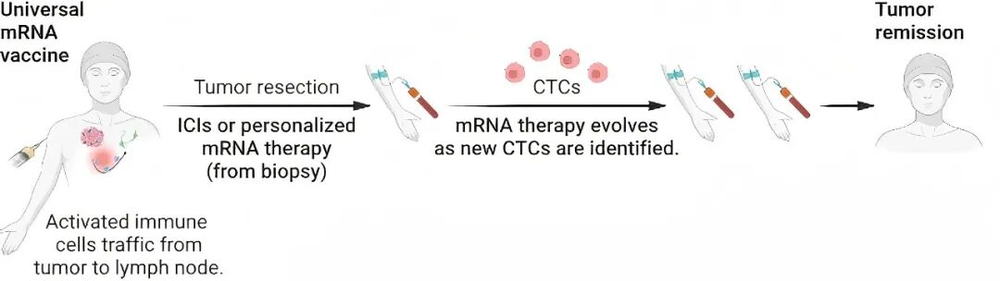
mRNA 疫苗設計的重大突破,利用動態數據更新來超越生物演化速度。
30 秒速覽
有什麼變化
mRNA 疫苗透過模擬病毒感染訊號,無需針對腫瘤特異性抗原即可觸發免疫反應。
為什麼重要
這種範式轉移將癌症治療從靜態的「殺傷」策略轉向動態的免疫啟動,有望提高對傳統療法產生抗藥性患者的存活率。
下一步行動
研究如何將動態、即時的數據回饋迴路(如 CTC 分析)應用於您自己的自適應 AI 模型架構中。
誰應關注:Researchers & Academics
關鍵要點
- •mRNA 疫苗透過模擬病毒感染訊號,無需針對腫瘤特異性抗原即可觸發免疫反應。
- •真實世界數據顯示,COVID-19 mRNA 疫苗顯著提高了接受免疫治療的癌症患者存活率。
- •新型「進化式」療法利用循環腫瘤細胞 (CTC) 即時更新疫苗標靶,以匹配腫瘤的演化。
深度解析
背景與延伸:來自公開資料,非原文內容。引用 29 個來源。
增強重點摘要
- •Non-tumor-specific mRNA vaccines can induce a process called 'epitope spreading,' where the inflammation triggered by the vaccine reveals previously hidden tumor antigens, thereby transforming immunologically 'cold' tumors into inflamed, therapy-responsive microenvironments.
- •The significant survival benefit observed in cancer patients receiving COVID-19 mRNA vaccines while undergoing immunotherapy, particularly for advanced non-small cell lung cancer and metastatic melanoma, has led to the design of a randomized Phase III clinical trial to further investigate this association.
- •Current personalized mRNA cancer vaccines are typically designed by sequencing a patient's resected tumor to identify unique neoantigens, allowing for a tailored immune response against malignant cells, with the entire process from sequencing to vaccine manufacturing potentially completed within a few months.
競品分析
Moderna (mRNA-4157/V940)
- Features
- Personalized lipid nanoparticle mRNA cancer vaccine encoding up to 34 neoantigens; administered via intramuscular injection.
- Benchmarks
- Phase IIb trial showed 44% reduction in recurrence or death risk in Stage 3/4 melanoma patients when combined with pembrolizumab. Phase III trials ongoing for adjuvant melanoma, NSCLC, and cutaneous squamous cell carcinoma.
- Pricing
- Over $100,000 per patient (estimated for personalized vaccines).
BioNTech (autogene cevumeran / BNT122)
- Features
- Individualized mRNA cancer vaccine (iNeST platform) encoding up to 20 patient-specific neoantigens; uses unmodified mRNA formulated into lipoplexes, dosed intravenously.
- Benchmarks
- Demonstrated potent immune responses against patient-specific neoantigens in early-phase studies. Phase II trials for pancreatic ductal adenocarcinoma, melanoma, and colorectal cancer. Showed poly-epitopic neoantigen-specific T-cell response in resected stage II/III CRC patients.
- Pricing
- Over $100,000 per patient (estimated for personalized vaccines).
| Company/Product | Features | Benchmarks | Pricing |
|---|---|---|---|
| Moderna (mRNA-4157/V940) | Personalized lipid nanoparticle mRNA cancer vaccine encoding up to 34 neoantigens; administered via intramuscular injection. | Phase IIb trial showed 44% reduction in recurrence or death risk in Stage 3/4 melanoma patients when combined with pembrolizumab. Phase III trials ongoing for adjuvant melanoma, NSCLC, and cutaneous squamous cell carcinoma. | Over $100,000 per patient (estimated for personalized vaccines). |
| BioNTech (autogene cevumeran / BNT122) | Individualized mRNA cancer vaccine (iNeST platform) encoding up to 20 patient-specific neoantigens; uses unmodified mRNA formulated into lipoplexes, dosed intravenously. | Demonstrated potent immune responses against patient-specific neoantigens in early-phase studies. Phase II trials for pancreatic ductal adenocarcinoma, melanoma, and colorectal cancer. Showed poly-epitopic neoantigen-specific T-cell response in resected stage II/III CRC patients. | Over $100,000 per patient (estimated for personalized vaccines). |
技術深入
- mRNA Vaccine Mechanism: mRNA vaccines deliver antigen-encoding mRNA, often encapsulated in lipid nanoparticles (LNPs), into antigen-presenting cells (APCs) like dendritic cells. These cells then translate the mRNA into foreign proteins (tumor antigens or neoantigens), which are presented to the immune system to stimulate a potent T-cell response crucial for attacking cancer cells.
- Personalization Process: The development of personalized mRNA cancer vaccines involves taking tumor samples from a patient, performing DNA and RNA sequencing to identify unique tumor-specific neoantigens (mutated proteins), selecting the most immunogenic ones, and then designing mRNA sequences to encode these specific antigens.
- Immune Activation Pathways: mRNA vaccines activate both innate and adaptive immune responses. Innate immunity is triggered through pattern recognition receptors (PRRs) like TLR7/8 and RIG-I, leading to broad immune activation. Dendritic cells, specifically cDC1 and cDC2 subsets, play a critical role in priming T cells to recognize and attack cancer cells.
- Delivery Systems: Lipid nanoparticles (LNPs) are essential for protecting the fragile mRNA molecules from degradation and ensuring their efficient delivery into target cells. Advanced LNP formulations, sometimes with internal fat layers, are being developed to enhance mRNA loading and delivery efficiency.
- Adjuvant Strategies: Researchers are exploring mRNA-encoded adjuvants, such as those encoding IRF8 and NIK, which are involved in antigen presentation and can switch immune cells into a more active state, thereby boosting T-cell responses and enhancing tumor eradication, even without a specific tumor antigen.
前景展望基於引用來源的 AI 分析
Personalized mRNA cancer vaccines will become a standard adjuvant therapy for high-risk resected cancers.
Promising Phase IIb/III trial results in melanoma and pancreatic cancer, showing significant reduction in recurrence risk when combined with checkpoint inhibitors, suggest a move towards broader clinical adoption post-surgery.
The cost and manufacturing time for personalized mRNA cancer vaccines will significantly decrease, enabling wider accessibility.
Advances in manufacturing technologies, including continuous processing and potential 'RNA synthesis box' technology for decentralized production, are reducing production complexity and time, which could lower costs.
mRNA vaccines will be increasingly utilized to 'reprogram' the tumor microenvironment, making previously untreatable 'cold' tumors responsive to immunotherapy.
Research shows non-tumor-specific mRNA vaccines can induce epitope spreading and innate immune activation, transforming cold tumors into inflamed, therapy-responsive environments.
時間線
1990
First use of mRNA-encoded proteins for vaccination in mice.
1995
Development of the first mRNA cancer vaccine, encoding a tumor antigen in mice.
2001
First human clinical trial for a therapeutic cancer mRNA vaccine using ex vivo dendritic cells.
2013
Initiation of the first clinical trial for a personalized mRNA-based vaccine against melanoma.
2020
Approval of COVID-19 mRNA vaccines, significantly accelerating research and development in mRNA oncology.
2022-12
Moderna and Merck announced positive Phase IIb trial results for personalized mRNA-4157/V940 in melanoma, showing a 44% reduction in recurrence or death risk.
- 1990First use of mRNA-encoded proteins for vaccination in mice.
- 1995Development of the first mRNA cancer vaccine, encoding a tumor antigen in mice.
- 2001First human clinical trial for a therapeutic cancer mRNA vaccine using ex vivo dendritic cells.
- 2013Initiation of the first clinical trial for a personalized mRNA-based vaccine against melanoma.
- 2020Approval of COVID-19 mRNA vaccines, significantly accelerating research and development in mRNA oncology.
- 2022-12Moderna and Merck announced positive Phase IIb trial results for personalized mRNA-4157/V940 in melanoma, showing a 44% reduction in recurrence or death risk.
來源 (29)
Factual claims are grounded in the sources below. Forward-looking analysis is AI-generated interpretation.
1Google Search Sourcevertexaisearch.cloud.google.com2Google Search Sourcevertexaisearch.cloud.google.com3Google Search Sourcevertexaisearch.cloud.google.com4Google Search Sourcevertexaisearch.cloud.google.com5Google Search Sourcevertexaisearch.cloud.google.com6Google Search Sourcevertexaisearch.cloud.google.com7Google Search Sourcevertexaisearch.cloud.google.com8Google Search Sourcevertexaisearch.cloud.google.com9Google Search Sourcevertexaisearch.cloud.google.com10Google Search Sourcevertexaisearch.cloud.google.com11Google Search Sourcevertexaisearch.cloud.google.com12Google Search Sourcevertexaisearch.cloud.google.com13Google Search Sourcevertexaisearch.cloud.google.com14Google Search Sourcevertexaisearch.cloud.google.com15Google Search Sourcevertexaisearch.cloud.google.com16Google Search Sourcevertexaisearch.cloud.google.com17Google Search Sourcevertexaisearch.cloud.google.com18Google Search Sourcevertexaisearch.cloud.google.com19Google Search Sourcevertexaisearch.cloud.google.com20Google Search Sourcevertexaisearch.cloud.google.com21Google Search Sourcevertexaisearch.cloud.google.com22Google Search Sourcevertexaisearch.cloud.google.com23Google Search Sourcevertexaisearch.cloud.google.com24Google Search Sourcevertexaisearch.cloud.google.com25Google Search Sourcevertexaisearch.cloud.google.com26Google Search Sourcevertexaisearch.cloud.google.com27Google Search Sourcevertexaisearch.cloud.google.com28Google Search Sourcevertexaisearch.cloud.google.com29Google Search Sourcevertexaisearch.cloud.google.com
AI 週報
閱讀本週精選 AI 大事摘要 →
AI 策展新聞聚合。所有內容版權歸原始發布者所有。
原始來源: 虎嗅 ↗
每週電子報
每週一封,可隨時退訂。