來源钛媒体•較早收集於 8m
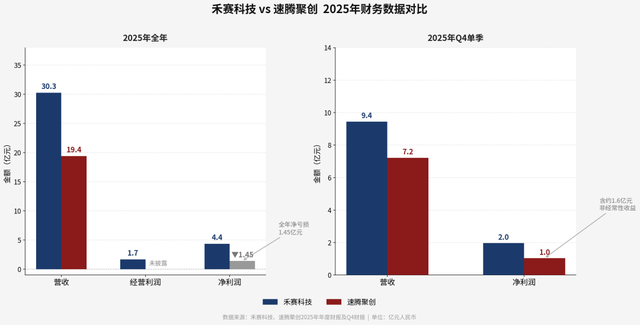
雷射雷達獲利,造車企業虧損
#lidar#av-business#profit-modelhesai-lidarhesairobosense
💡雷射雷達熱潮預示機器人AI基礎設施獲利機會(28字元)
⚡ 30 秒速覽
有什麼變化
造車企業在電動車市場面臨虧損
為什麼重要
凸顯自動駕駛價值鏈轉向感測器,建議投資者青睞雷射雷達而非整車組裝。
下一步行動
基準測試禾賽與速騰雷射雷達規格,用於您的自動駕駛感知堆疊整合。
誰應關注:Founders & Product Leaders
關鍵要點
- •造車企業在電動車市場面臨虧損
- •禾賽等雷射雷達供應商實現高獲利
- •禾賽策略強調保護利潤
- •速騰專注快速擴大規模
🧠 深度解析
本篇為 AI 生成分析,非原文內容。
🔑 增強重點摘要
- •Hesai has successfully transitioned its business model toward high-margin, software-defined LiDAR solutions, leveraging proprietary ASIC chipsets to reduce unit costs while maintaining premium pricing in the luxury EV segment.
- •RoboSense's strategy of aggressive market share acquisition is heavily subsidized by strategic partnerships with major Chinese OEMs, prioritizing volume-based manufacturing efficiencies over immediate bottom-line profitability.
- •The divergence in financial performance is exacerbated by the 'price war' in the Chinese EV market, forcing carmakers to squeeze Tier-1 suppliers, which has led to a market consolidation where only LiDAR vendors with strong vertical integration can sustain operations.
📊 競品分析▸ Show
| Feature | Hesai (AT128/AT512) | RoboSense (M1/M3) | Innovusion (Falcon) |
|---|---|---|---|
| Primary Strategy | High-margin/Premium | Volume/Market Share | OEM-specific integration |
| Core Tech | Proprietary ASIC | Hybrid Solid-State | Fiber Laser/Galvo |
| Pricing Focus | Value-based pricing | Cost-leadership | Project-based pricing |
| Market Position | Global leader in revenue | Leader in shipment volume | Strong in high-speed ADAS |
🛠️ 技術深入
- •Hesai utilizes a 'Vela' and 'AT' series architecture, heavily reliant on in-house developed ASIC chips that integrate signal processing and data acquisition, significantly reducing component count and power consumption.
- •RoboSense employs a modular 'M-Platform' design, which allows for rapid iteration and manufacturing scalability by utilizing a standardized optical path design that can be adapted for different range requirements.
- •Both companies are shifting from 905nm to 1550nm laser wavelengths for long-range detection, though 905nm remains the dominant choice for mass-market ADAS due to lower cost of components.
🔮 前景展望基於引用來源的 AI 分析
LiDAR industry will undergo significant M&A activity by 2027.
The inability of smaller, non-vertically integrated LiDAR startups to compete with the scale and margin-protection strategies of Hesai and RoboSense will force consolidation.
Average Selling Price (ASP) of automotive LiDAR will drop below $300 by 2027.
Intense competition for OEM design wins is driving a race to the bottom in pricing, necessitating further manufacturing automation and chip-level integration.
⏳ 時間線
2023-02
Hesai Group completes its IPO on the Nasdaq, becoming the first Chinese LiDAR company to list in the US.
2024-01
RoboSense officially lists on the Hong Kong Stock Exchange, focusing on rapid production scaling.
2025-06
Hesai reports its first consecutive quarters of positive operating cash flow, signaling a shift to profitability.
📰
AI 週報
閱讀本週精選 AI 大事摘要 →
👉相關動態



AI 策展新聞聚合。所有內容版權歸原始發布者所有。
原始來源: 钛媒体 ↗
每週電子報
每週一封,可隨時退訂。