🐯虎嗅•最新收集於 34m
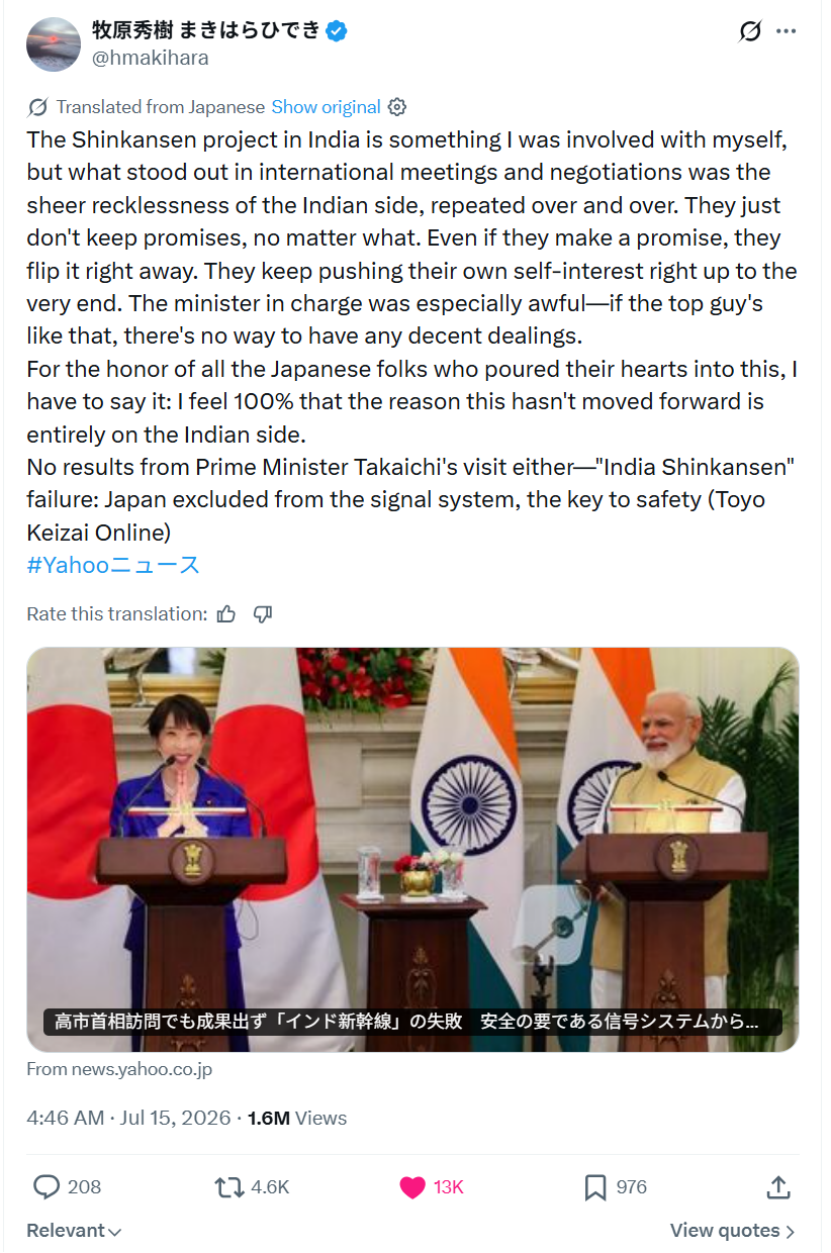
日印高鐵項目面臨重大摩擦
#geopolitics#infrastructure#technology-standardsmumbai-ahmedabad-high-speed-railsiemensindian-railways
💡一個關於技術標準與產業主權如何導致數十億美元國際項目脫軌的案例研究。
⚡ 30-Second TL;DR
有什麼變化
日本提供了巨額低息貸款,但目前已被排除在關鍵信號與車輛系統合同之外。
為什麼重要
這場地緣政治與技術爭端凸顯了當國家產業利益與技術轉讓發生衝突時,國際基礎設施合作的複雜性。
下一步行動
密切關注國際基礎設施採購政策,因為這些政策越來越傾向於本地技術主權,而非進口的統包解決方案。
誰應關注:Enterprise & Security Teams
關鍵要點
- •日本提供了巨額低息貸款,但目前已被排除在關鍵信號與車輛系統合同之外。
- •印度優先考慮本地製造與歐洲信號標準,以減少對日本技術的長期依賴。
- •日本 E10 系列列車的項目時間表已被推遲至 2030 年代,而印度正推進 2027 年的國產列車運營。
🧠 深度解析
AI-generated analysis for this event.
🔑 增強重點摘要
- •印度鐵路部門已啟動『印度製造』(Make in India)倡議,要求高鐵項目中至少 60% 的零部件必須在印度本土生產,這直接導致了與日本新幹線供應鏈的整合困難。
- •日本國際協力機構(JICA)曾對印度單方面更改信號標準表示擔憂,認為這可能影響系統的整體安全性與運營穩定性,並可能導致後續融資條款的重新談判。
- •印度政府正積極推動『Vande Bharat』高鐵列車的國產化升級,旨在將其作為未來高鐵網絡的主力車型,以取代部分原定引進的日本 E5 系列技術。
- •由於信號系統標準的轉換,印度與歐洲鐵路供應商(如阿爾斯通、西門子)的接觸日益頻繁,這被視為印度試圖在多個國際技術標準間尋求平衡的戰略舉措。
- •孟買-艾哈邁達巴德高鐵(MAHSR)項目的徵地問題雖已基本解決,但因技術標準爭議導致的設計變更,使得項目總預算較最初估計增加了約 30% 以上。
🛠️ 技術深入
- 日本新幹線系統:基於專有的數位自動列車控制系統(DS-ATC),強調高密度運營下的極致安全性與準點率。
- 歐洲 ETCS-L2 標準:歐洲列車控制系統(European Train Control System)Level 2,採用無線傳輸(GSM-R/LTE-R)進行信號傳輸,具備更高的互操作性與靈活性。
- 系統兼容性挑戰:日本 DS-ATC 與歐洲 ETCS-L2 在信號傳輸協議、故障安全邏輯及軌道電路處理上存在根本性差異,強制轉換需重新進行全線信號系統的驗證與測試。
🔮 前景展望AI analysis grounded in cited sources
日印高鐵項目將面臨長期運營維護成本上升的風險。
混合使用日本基礎設施與歐洲信號系統將導致供應鏈碎片化,增加系統集成與後期維護的複雜度。
印度將在未來五年內減少對單一國家高鐵技術的依賴。
印度政府通過強制本地化與標準多元化,旨在建立自主的高鐵技術生態系統。
⏳ 時間線
2015-12
日印兩國簽署孟買-艾哈邁達巴德高鐵(MAHSR)項目合作備忘錄。
2017-09
印度總理莫迪與日本首相安倍晉三正式為高鐵項目奠基。
2021-01
印度鐵路公司開始進行高鐵項目的關鍵土建工程招標。
2023-08
印度官方首次公開討論在高鐵項目中引入歐洲信號標準的可行性。
2025-05
印度宣佈將加速國產高鐵列車的研發,並調整部分信號系統採購策略。
📰
AI 週報
閱讀本週精選 AI 大事摘要 →
👉相關動態


AI 策展新聞聚合。所有內容版權歸原始發布者所有。
原始來源: 虎嗅 ↗