谷歌發行百年AI融資債券
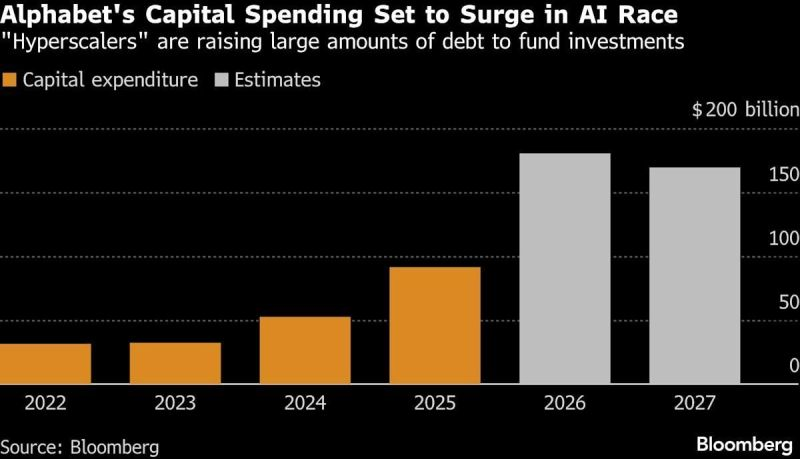
💡Reveals AI capex exploding to $185B/yr—tech giants turn to century bonds; benchmark your funding strategy.
⚡ 30-Second TL;DR
有什麼變化
Alphabet發行315億美元多幣種債券,包括10億英鎊百年瑪土撒拉債,收益率6.125%
為什麼重要
顯示AI基礎設施軍備競賽促使科技巨頭轉向長期債務,鎖定低利率但引發公司存續不確定風險。可能啟發新創探索債務融資應對高資本支出的AI建設。
下一步行動
Model your AI startup's 3-year capex forecast against Alphabet's $175B benchmark to assess debt needs.
關鍵要點
- •Alphabet發行315億美元多幣種債券,包括10億英鎊百年瑪土撒拉債,收益率6.125%
- •2026資本支出預計1750-1850億美元,是2025年的兩倍,用於AI/數據中心
- •2025年五大雲巨頭發債1210億美元;2026年初已450億美元推動AI競賽
- •保險公司/養老基金購買匹配長期負債;認購需求達10倍
🧠 深度解析
背景與延伸:來自公開資料,非原文內容。引用 3 個來源。
🔑 增強重點摘要
- •Alphabet raised $20 billion in its largest bond sale ever on Monday (February 10, 2026), exceeding its initial $15 billion target, signaling strong investor appetite for tech debt despite AI capex concerns[1]
- •The 100-year bond carries a 6.125% coupon and is denominated in British sterling, representing the first century bond issued by a tech company since Motorola in 1997, marking a structural shift in how mega-cap tech firms access capital[1][2]
- •Alphabet's $175-185 billion 2026 capex forecast for AI infrastructure now exceeds free cash flow, forcing the company to tap debt markets—a reversal from the cash-rich era when tech giants had excess balance sheet capacity[1]
- •The century bond allows Alphabet to lock in long-term capital at a known cost while eliminating refinancing risk for 100 years, positioning the company as a sovereign-like borrower in ultra-long debt markets[2]
- •Institutional buyers including pension funds and insurers are matching ultra-long liabilities with Alphabet's century bond, betting on the company's durability as a multi-decade institution despite technology disruption risks[2]
📊 競品分析▸ Show
| Company | 2025 AI Debt Issuance | 2026 Capex Guidance | Capital Strategy | Debt Maturity Profile |
|---|---|---|---|---|
| Alphabet | Part of $121B tech sector total | $175-185B | $20B+ bond sales; 100-year sterling bond | Ultra-long (100-year) + traditional |
| Meta | Included in $121B sector total | Comparable scale | Similar capex-driven borrowing | Traditional (not disclosed as century bonds) |
| Amazon | Included in $121B sector total | Comparable scale | Similar capex-driven borrowing | Traditional (not disclosed as century bonds) |
| Microsoft | Included in $121B sector total | Comparable scale | Similar capex-driven borrowing | Traditional (not disclosed as century bonds) |
🛠️ 技術深入
• Alphabet's 100-year bond structure: 6.125% coupon, denominated in British pounds sterling (£1 billion equivalent), matures in 2126[2] • Bond mechanics: Locks in capital cost for a century, eliminating refinancing risk beyond any conventional planning horizon; investors benefit from price appreciation if long-term interest rates decline[2] • Demand profile: 10x oversubscribed according to article summary; institutional buyers (pension funds, insurers) match ultra-long liabilities with the bond's 100-year duration[1][2] • Market context: Alphabet initially targeted $15 billion in U.S. bond sales but raised $20 billion, indicating strong demand; the company is raising approximately $32 billion across multiple bond deals in multiple currencies[1][3] • Investor thesis: Buyers wager on two factors: (1) long-term interest rates eventually drift lower, generating price appreciation on extreme duration; (2) Alphabet remains a durable institution for decades[2]
🔮 前景展望AI analysis grounded in cited sources
Alphabet's entry into the century-bond market signals a structural transformation in how mega-cap technology firms access capital. The deal demonstrates that leading tech platforms can now access sovereign-like maturities, diversifying capital structures and reducing medium-term funding pressure as AI capex needs soar[2]. However, if AI-driven capital needs force more tech firms into ultra-long issuance, supply could rise faster than specialized demand, potentially pressuring prices and limiting secondary-market liquidity for these niche securities[2]. The precedent set by Alphabet may encourage competitors (Meta, Amazon, Microsoft) to explore similar ultra-long debt instruments, fundamentally reshaping the technology sector's capital structure from equity-heavy to debt-inclusive models. This shift reflects investor confidence in tech durability but also signals that the AI infrastructure buildout will require sustained, multi-decade capital commitments rather than near-term cash generation.
⏳ 時間線
📎 來源 (3)
Factual claims are grounded in the sources below. Forward-looking analysis is AI-generated interpretation.
AI 週報
閱讀本週精選 AI 大事摘要 →
👉相關動態

AI 策展新聞聚合。所有內容版權歸原始發布者所有。
原始來源: 虎嗅 ↗
每週 AI 簡報
每週一封,可隨時退訂。