來源Pandaily•較早收集於 3h
中國商業航太達成火箭回收里程碑
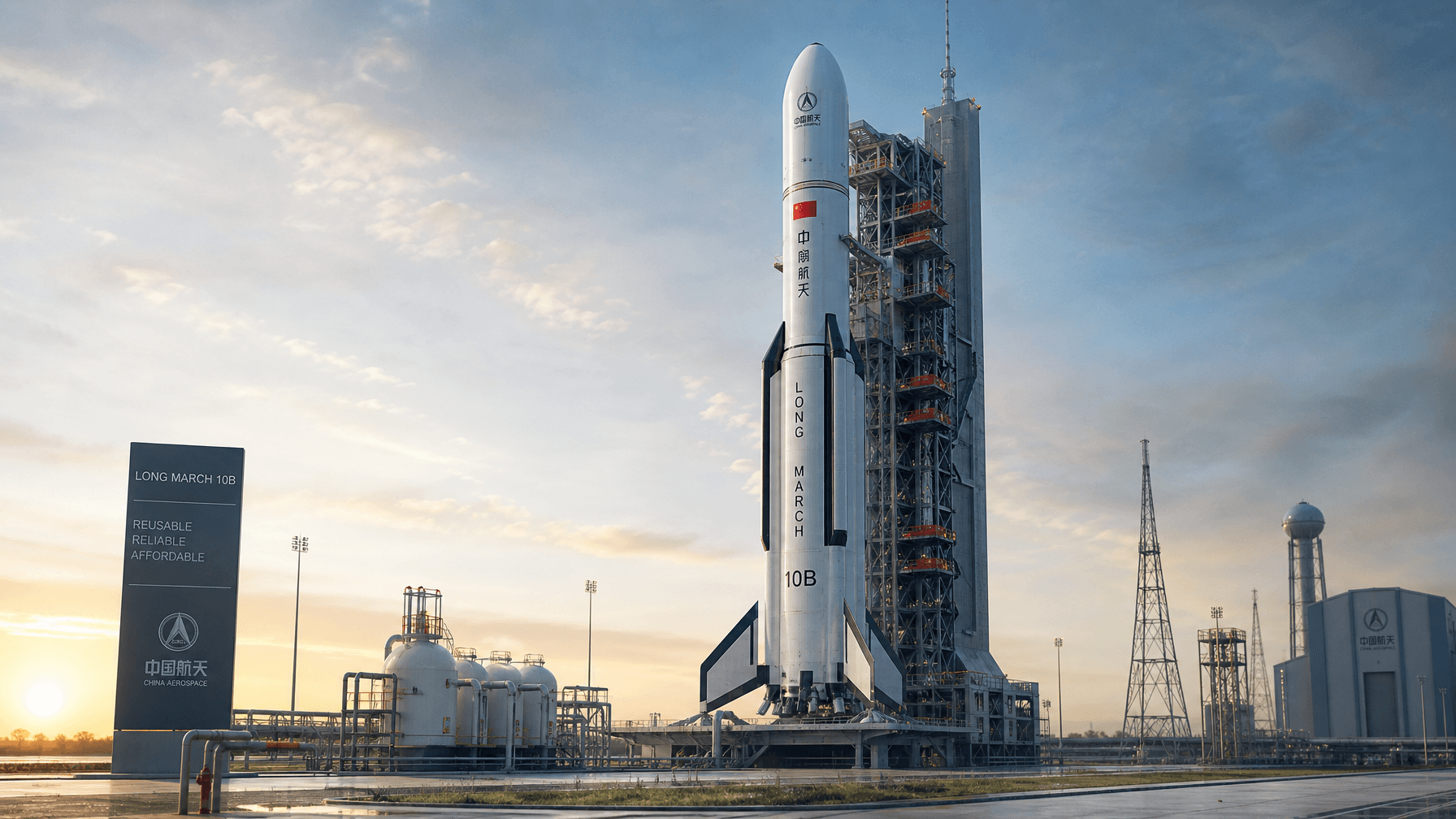
#space-tech#aerospace#reusable-rocketslong-march-10b-/-zhuque-3-/-jianyuan-yx-1landspacelong-march-10b
💡可重複使用火箭帶來的發射成本降低,將加速全球 AI 衛星網路的部署。
⚡ 30 秒速覽
有什麼變化
Long March 10B 首飛回收成功,驗證了國內回收能力。
為什麼重要
火箭回收的成功顯著降低了軌道發射成本,這對於部署支援全球 AI 與物聯網網路的大型衛星星座至關重要。
下一步行動
密切關注 LandSpace 的發射時間表,以評估未來邊緣運算衛星部署的潛在成本降低空間。
誰應關注:Developers & AI Engineers
關鍵要點
- •Long March 10B 首飛回收成功,驗證了國內回收能力。
- •LandSpace Zhuque-3 正加速開發,目標於年底進行重複飛行測試。
- •JianYuan YX-1 加入競爭,目標實現商業軌道重複使用。
🧠 深度解析
本篇為 AI 生成分析,非原文內容。
🔑 增強重點摘要
- •The Long March 10B recovery test utilized a grid fin control system and high-precision vertical landing guidance, marking a significant shift toward reusable launch vehicle (RLV) architecture for the China Aerospace Science and Technology Corporation (CASC).
- •LandSpace's Zhuque-3 utilizes stainless steel construction, similar to SpaceX's Starship, to reduce manufacturing costs and improve thermal resistance during atmospheric reentry.
- •The Chinese government has integrated commercial space development into its 14th and 15th Five-Year Plans, providing direct subsidies and infrastructure access to private firms like LandSpace and Deep Blue Aerospace.
- •JianYuan YX-1 (Deep Blue Aerospace) has successfully completed 'hop' tests, utilizing liquid oxygen/kerosene (kerolox) engines to demonstrate low-altitude vertical takeoff and landing (VTVL) capabilities.
- •China's National Space Administration (CNSA) has established new regulatory frameworks for commercial launch site safety and debris mitigation to accommodate the increased frequency of recovery-focused test flights.
📊 競品分析▸ Show
| Feature | LandSpace (Zhuque-3) | Deep Blue Aerospace (YX-1) | SpaceX (Falcon 9) |
|---|---|---|---|
| Material | Stainless Steel | Aluminum Alloy | Aluminum-Lithium Alloy |
| Propellant | Methalox | Kerolox | Kerolox |
| Status | Prototype/Testing | Prototype/Testing | Operational (Flight Proven) |
| Recovery Method | VTVL | VTVL | VTVL |
🛠️ 技術深入
- Zhuque-3 Engine: TQ-12A methalox engine features a high-thrust-to-weight ratio and deep throttling capability (down to 60%) essential for soft landing maneuvers.
- Landing Legs: Implementation of multi-stage shock absorption systems to handle landing impact loads on autonomous drone ships or ground pads.
- Guidance System: Integration of inertial navigation units (INU) combined with laser radar (LiDAR) for real-time terrain relative navigation during the terminal descent phase.
- Reusability Target: Design goal of 20+ flights per booster with minimal refurbishment between missions.
🔮 前景展望基於引用來源的 AI 分析
Launch costs for Chinese commercial payloads will drop by 40% by 2028.
Successful implementation of full-stage reusability significantly lowers the marginal cost per kilogram to orbit compared to expendable launch vehicles.
China will achieve a cadence of 50+ commercial launches annually by 2027.
The transition to reusable hardware allows for faster turnaround times and increased utilization of existing launch infrastructure.
⏳ 時間線
2023-07
LandSpace achieves first successful orbital flight of a methalox-powered rocket (Zhuque-2).
2024-01
Deep Blue Aerospace completes a 350-meter vertical takeoff and landing test with the Nebula-1 prototype.
2025-06
LandSpace conducts a successful VTVL test flight of the Zhuque-3 prototype.
2026-05
CASC executes the first successful vertical recovery test of the Long March 10B first stage.
📰
AI 週報
閱讀本週精選 AI 大事摘要 →
👉相關動態


AI 策展新聞聚合。所有內容版權歸原始發布者所有。
原始來源: Pandaily ↗
每週電子報
每週一封,可隨時退訂。