【調查報告】設計・解析業務中AI應用的現實與挑戰
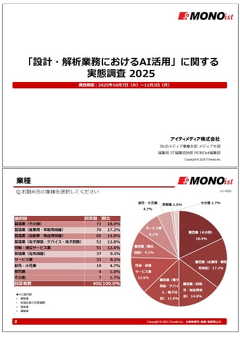
💡406 engineers reveal AI hurdles in design tasks—key for tool builders targeting CAD/CAE.
⚡ 30-Second TL;DR
有什麼變化
調查期間:2025年10月7日至11月3日
為什麼重要
突顯工程領域採用障礙,引導AI工具開發者針對未滿足需求。協助企業評估設計流程中的AI準備度。
下一步行動
Download the MONOist survey report to analyze AI adoption gaps in your design tools.
關鍵要點
- •調查期間:2025年10月7日至11月3日
- •有效回答數:406件
- •聚焦設計・解析業務中AI應用的現實與挑戰
- •由MONOist/TechFactory編集部實施
🧠 深度解析
背景與延伸:來自公開資料,非原文內容。引用 6 個來源。
🔑 增強重點摘要
- •Japan's graphic design market reached USD 2,653.41 million in 2024 and is projected to grow at a CAGR of 5.85% through 2030, driven by increased investment in AI-enhanced design services and interactive technologies[1]
- •92% of Japanese AI users in their twenties do not fully trust AI-generated responses, with over 70% turning to Google Search for verification when answers feel incomplete, indicating significant adoption barriers in design workflows[3]
- •Japan prioritizes reliability and long product lifecycles in AI adoption across engineering disciplines, with process automation (42%), predictive maintenance (28%), and fault detection (28%) as top applications in design and analysis tasks[2]
- •Talent scarcity in IT and Data skills reached 24% in Japan according to ManpowerGroup's 2025 survey, with 77% of Japanese companies reporting difficulty finding skilled professionals—creating demand for AI-assisted design and analysis tools[4]
- •AI agents in product development require user-centric design with faster iteration cycles and human-in-the-loop interaction; eval-driven development has become the standard methodology for validating AI performance in engineering applications[6]
🛠️ 技術深入
• Multi-AI agent platforms combining large language models with autonomous task execution for design workflows, as demonstrated by Fujitsu's platform using the 'Takane' LLM[4] • Eval-driven development methodology where evaluation frameworks define core use cases and requirements; model selection varies by subtask (Claude Sonnet: 65% accuracy, Gemini 3.0 Pro: 62% accuracy for design agents)[6] • Interactive design technologies including AR/VR, 3D visualization, motion graphics, and gamified content enabling immersive digital experiences in e-commerce and engineering visualization[1] • Autonomous agents handling requirement definition, source code generation, manufacturing specifications, and testing with external quality auditing agents that understand tacit organizational knowledge[4] • User preference for fast-response agents with logical transparency over long-running autonomous background tasks; exploratory analysis users reject 30-minute wait times in favor of iterative interaction[6]
🔮 前景展望AI analysis grounded in cited sources
The convergence of talent scarcity (77% of Japanese companies), growing design market value (projected USD 3.8 billion by 2030), and low user trust in AI outputs (92% distrust rate) suggests Japan's design and analysis sector will experience significant transformation through hybrid human-AI workflows rather than full automation. Organizations will need to invest in eval-driven development practices and interactive AI agents that maintain human oversight, positioning reliability-focused AI solutions as competitive differentiators in Japan's sophisticated digital marketplace. The gap between AI promise and user trust creates opportunities for design tools that emphasize transparency, verification capabilities, and integration with traditional search and validation methods.
⏳ 時間線
📎 來源 (6)
Factual claims are grounded in the sources below. Forward-looking analysis is AI-generated interpretation.
AI 週報
閱讀本週精選 AI 大事摘要 →
👉相關動態
AI 策展新聞聚合。所有內容版權歸原始發布者所有。
原始來源: ITmedia AI+ (日本) ↗
每週 AI 簡報
每週一封,可隨時退訂。