來源钛媒体•較早收集於 18h
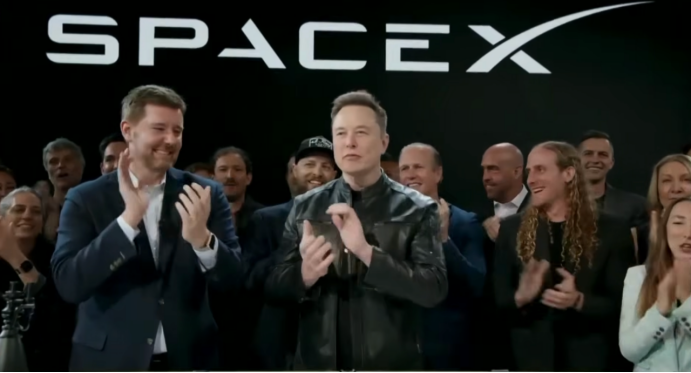
SpaceX 二十四年:馬斯克的五次「信仰之躍」
💡了解高風險戰略賭注如何為深科技與航太領域創造巨大價值。
⚡ 30 秒速覽
有什麼變化
回顧 SpaceX 二十四年的歷史里程碑
為什麼重要
本文提供了關於長期技術擴展與風險管理的戰略見解。對於建立資本密集型深科技公司的創辦人而言,這是一個很好的案例研究。
下一步行動
研究 SpaceX 歷史上的戰略轉折,學習如何將長期研發與商業可行性相結合。
誰應關注:Founders & Product Leaders
關鍵要點
- •回顧 SpaceX 二十四年的歷史里程碑
- •分析 Elon Musk 的高風險戰略決策過程
- •評估該公司的商業估值與成長
🧠 深度解析
背景與延伸:來自公開資料,非原文內容。引用 27 個來源。
🔑 增強重點摘要
- •SpaceX's early survival was a "high-stakes survival story," overcoming three Falcon 1 failures before a successful fourth launch in September 2008, which was crucial for securing a significant $1.6 billion Commercial Resupply Services contract from NASA.
- •Elon Musk's strategic decision to vertically integrate, manufacturing approximately 85% of components in-house, significantly reduced contractor markups and timelines, a departure from traditional aerospace practices.
- •The company's valuation has seen exponential growth, reaching $100.3 billion by October 2021 and culminating in a historic Initial Public Offering (IPO) on June 12, 2026, with an initial valuation of $1.77 trillion, making it the largest IPO in history.
- •SpaceX recently absorbed Elon Musk's artificial intelligence company xAI in February 2026, integrating AI capabilities, including the Grok models and the social network X, into its core business, significantly broadening its scope beyond space and telecommunications.
- •Starlink's revenue generation has become a primary commercial engine for SpaceX, leading the company's revenue growth by almost 50% in 2025 and projected to exceed $12 billion annually.
📊 競品分析▸ Show
| Category | SpaceX (Falcon 9/Heavy, Starship) | Traditional Aerospace (e.g., ULA - Boeing/Lockheed Martin) | Emerging Private (e.g., Blue Origin) | Satellite Internet (Starlink) | GEO Satellite Internet (e.g., Viasat, Hughesnet) | LEO Satellite Internet (e.g., Amazon Leo/Project Kuiper, OneWeb) |
|---|---|---|---|---|---|---|
| Primary Focus | Reusable launch, Mars colonization, satellite internet | Government/military contracts, traditional expendable launches | Reusable rockets (New Glenn), lunar landers | Global low-latency broadband internet | Rural broadband internet | Global low-latency broadband internet |
| Reusability | High (Falcon 9/Heavy first stages, Starship fully reusable) | Low/None (mostly expendable) | Developing (New Shepard, New Glenn first stage) | N/A (satellites are replaced) | N/A (satellites are replaced) | Developing (satellites are replaced) |
| Cost per Launch | Significantly lower due to reusability and vertical integration | Higher due to expendable nature and complex supply chains | Aiming for lower costs with reusability | N/A (service cost) | Generally lower upfront equipment costs, higher latency | Aiming for competitive pricing, potentially bundled services |
| Technology | Falcon 9/Heavy (Merlin engines, RP-1/LOX), Starship (Raptor engines, methalox, full-flow staged combustion), Starlink (LEO constellation, laser links, ion thrusters) | Atlas V (RD-180, RL10), Delta IV (RS-68, RL10) | New Glenn (BE-4 engines, methalox) | LEO constellation (~550km orbit), optical intersatellite links, argon/krypton ion thrusters, phased array antennas | Geostationary (GEO) satellites (~36,000km orbit) | LEO constellation, similar to Starlink |
| Latency | N/A (launch services) | N/A (launch services) | N/A (launch services) | Low (20-25ms median in U.S.) | High (600-800ms) | Aiming for low latency |
| Speed (Download) | N/A (launch services) | N/A (launch services) | N/A (launch services) | High (median U.S. 97.23 Mbps, up to 400Mbps for premium) | Lower (10-150Mbps) | Aiming for high speeds |
| Market Share | Leading global launch provider by cadence | Significant, but declining in commercial launches | Emerging, with future heavy-lift capabilities | Dominant in LEO satellite internet with 9+ million subscribers | Established, but challenged by LEO providers | Emerging, with Amazon Leo launching Q1 2026 |
🛠️ 技術深入
- Raptor Engine:
- Utilizes a full-flow staged combustion fuel cycle, making it the first such engine to power a vehicle in flight.
- Propellants: Cryogenic liquid methane (CH4) and liquid oxygen (LOX), a combination known as methalox.
- Thrust: Raptor 1 produced 185 metric tons-force (tf), Raptor 2 achieved 230 tf (sea-level) and 258 tf (vacuum), while Raptor 3 nominally produces 250 tf (sea-level) and 275 tf (vacuum), with a target of 300 tf.
- Chamber Pressure: Raptor 3 has achieved 350 bar (over 5,000 psi) in ground testing, making it one of the highest chamber pressures of any rocket engine.
- Specific Impulse (Isp): Sea-level Isp ranges from 327-350 seconds, and vacuum Isp from 350-380 seconds.
- Designed for high reusability with minimal maintenance.
- Starship System (Super Heavy Booster + Starship Spacecraft):
- A fully reusable transportation system designed for crew and cargo to Earth orbit, the Moon, and Mars.
- Combined Height: 124 meters (407 feet); Diameter: 9 meters (29.5 feet).
- Construction: Both stages are made from stainless steel, manufactured by stacking and welding stainless steel cylinders.
- Super Heavy (First Stage): Powered by 33 Raptor engines (20 outer, 10 inner, 3 center for control). Designed to return to the launch site and be caught by the Mechazilla launch tower for rapid reuse.
- Starship (Upper Stage): Powered by 6 Raptor engines (3 sea-level optimized, 3 vacuum-optimized). Features a payload compartment larger than any fairing currently in operation, capable of carrying 100-150 metric tons to LEO in a fully reusable configuration or up to 100 people.
- Reentry: Reenters the atmosphere belly-first at a 60-70 degree angle, using heat shield tiles and four body flaps for aerodynamic control.
- Missions beyond LEO require multiple in-orbit refueling flights.
- Starlink Satellites:
- Operate in Low Earth Orbit (LEO) at approximately 550 km, resulting in significantly lower latency (around 20-25 ms) compared to geostationary satellites.
- Feature a compact, flat-panel design to maximize launch efficiency on Falcon 9 rockets.
- Equipped with optical intersatellite links (space lasers) for a global internet mesh, enabling data transmission without local ground stations. V2 Mini lasers operate up to 200 Gbps, while V3 lasers target 800 Gbps.
- Utilize advanced Ku-band phased array antennas and dual-band (Ka-band and E-band) antennas for high-bandwidth connectivity.
- Employ efficient argon (V1) or krypton (V2) ion thrusters for orbit raising, maneuvering, and deorbiting.
- Incorporate autonomous collision avoidance capabilities to prevent conjunctions with orbital debris and other spacecraft.
- Starlink V3 satellites are designed for Starship launches, offering 1 Tbps downlink, 160 Gbps uplink, and nearly 4 Tbps of combined RF and laser backhaul capacity.
🔮 前景展望基於引用來源的 AI 分析
SpaceX's recent IPO and integration of xAI will accelerate its multi-planetary mission.
The substantial capital raised from the IPO and the added AI capabilities are expected to fuel the rapid development and deployment of Starship and advanced space technologies, including those for lunar and Martian missions.
The increasing competition in the LEO satellite internet market will drive innovation and potentially lower costs for consumers.
New entrants like Amazon Leo (formerly Project Kuiper) and China's SpaceSail are directly challenging Starlink's dominance, forcing all providers to enhance services and optimize pricing to attract and retain subscribers.
Starship's full reusability and massive payload capacity will fundamentally transform space logistics and exploration.
By drastically reducing the cost per launch and enabling the transport of unprecedented amounts of cargo and crew, Starship is poised to unlock ambitious lunar and Martian missions, including the establishment of permanent bases.
⏳ 時間線
2002-03
SpaceX founded by Elon Musk to revolutionize space technology and enable Mars settlement.
2008-09
Falcon 1 becomes the first privately funded liquid-fueled rocket to reach orbit.
2012-05
Dragon becomes the first commercial spacecraft to deliver cargo to the International Space Station (ISS).
2015-12
Falcon 9 achieves the first successful propulsive landing of an orbital-class rocket first stage on land.
2019-05
SpaceX launches the first 60 Starlink satellites, initiating its global internet constellation.
2026-06
SpaceX completes the largest Initial Public Offering (IPO) in history on Nasdaq, with a $1.77 trillion valuation, following its acquisition of xAI.
📎 來源 (27)
Factual claims are grounded in the sources below. Forward-looking analysis is AI-generated interpretation.
- matrixbcg.com
- lucensoftware.com
- wikipedia.org
- britannica.com
- spacedaily.com
- theguardian.com
- cryptobriefing.com
- substack.com
- thenetworkinstallers.com
- clarus-networks.com
- pcmag.com
- ig.space
- wikipedia.org
- grokipedia.com
- reddit.com
- youtube.com
- bgr.com
- spacex.com
- wikipedia.org
- builtin.com
- wevolver.com
- uchicago.edu
- starlink.com
- eoportal.org
- reddit.com
- technologymagazine.com
- quora.com
📰
AI 週報
閱讀本週精選 AI 大事摘要 →
👉相關動態



AI 策展新聞聚合。所有內容版權歸原始發布者所有。
原始來源: 钛媒体 ↗
每週電子報
每週一封,可隨時退訂。