💰钛媒体•較早收集於 32m
OpenClaw 背後:那些尚沒被說透的關鍵
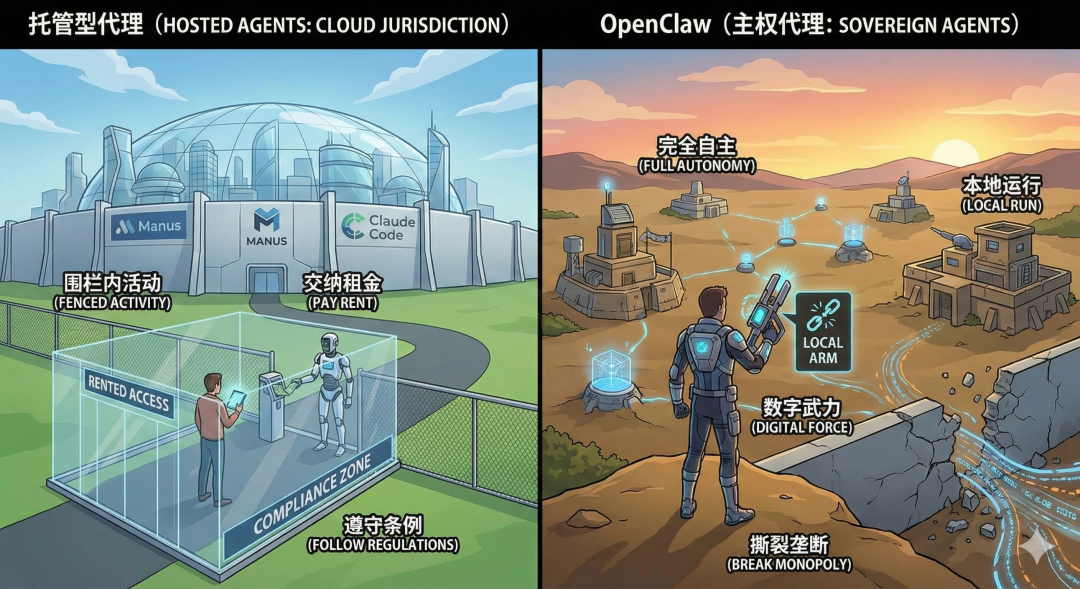
💡Unpacks OpenClaw's pros/cons—avoid pitfalls in your next robotics/open-source project.
⚡ 30-Second TL;DR
有什麼變化
OpenClaw是正面初始發展
為什麼重要
OpenClaw是很好的開始,但其實也是個小坑。文章探討背後那些尚未被說透的關鍵。
下一步行動
Investigate OpenClaw's documentation to identify and mitigate its potential pitfalls.
誰應關注:Developers & AI Engineers
關鍵要點
- •OpenClaw是正面初始發展
- •隱藏「小坑」或挑戰
- •多項關鍵背景尚未充分揭露
🧠 深度解析
背景與延伸:來自公開資料,非原文內容。引用 8 個來源。
🔑 增強重點摘要
- •OpenClaw, previously known as Moltbot and Clawdbot, was created by a single developer in November 2025 and runs as a persistent Node.js Gateway process.
- •It features a Heartbeat Daemon that autonomously checks HEARTBEAT.md every 30 minutes to execute proactive tasks without user prompts.
- •Adoption surged dramatically, with publicly exposed instances jumping from ~1,000 to over 21,000 in under a week by January 31, 2026.
- •The architecture includes five core subsystems: channel adapters, session manager, message queue, agent runtime, and control plane with WebSocket API on port 18789.
- •Enterprise concerns highlight security risks due to its ability to self-modify code, integrate skills with minimal vetting, and operate without oversight.
🛠️ 技術深入
- •Runs as a long-running Node.js service called the Gateway, launched via
openclaw gateway. - •Composed of five subsystems: channel adapters (normalize messages from Telegram, Slack, WhatsApp), session manager (isolates conversation contexts), message queue (serializes agent runs), agent runtime (executes model-tool-feedback loop), control plane (WebSocket API on port :18789).
- •Heartbeat Daemon: Configurable interval (default 30 minutes) reads HEARTBEAT.md, decides and executes actions autonomously for monitoring, tasks, cron-like jobs.
- •Memory stored locally as Markdown files on disk; supports user-provided API keys for models like Anthropic Claude, OpenAI GPT, Gemini, DeepSeek.
- •Extensible via 'skills' packages for filesystem access, network interactions, shell commands, browser control, and 50+ integrations including chat apps, productivity tools, smart home devices.
🔮 前景展望AI analysis grounded in cited sources
OpenClaw's rapid adoption will accelerate demand for agentic AI governance frameworks by mid-2026.
Its architecture prioritizes capabilities over security, leading to explosive growth from 1,000 to 21,000+ exposed instances in weeks, highlighting risks that outpace controls.
Local open-source agents like OpenClaw will shift productivity tools from cloud SaaS to self-hosted models.
By enabling autonomous task execution on personal hardware without vendor lock-in, it differentiates from managed enterprise copilots like those from OpenAI and Microsoft.
Cybersecurity vulnerabilities in self-modifying agents will prompt new open-source security standards.
Experts note inherent flaws in OpenClaw's design allowing unchecked code modification and skill integrations, rendering it risky for production use without mitigations.
⏳ 時間線
2025-11
OpenClaw created by single developer as Clawdbot/Moltbot, released open-source on GitHub.
2025-12
Initial adoption begins as local AI agent for task automation via chat platforms.
2026-01
Adoption surges to ~1,000 then over 21,000 publicly exposed instances by January 31.
2026-02
Gains widespread media attention for autonomous capabilities and security risks.
📎 來源 (8)
Factual claims are grounded in the sources below. Forward-looking analysis is AI-generated interpretation.
- digitalocean.com — What Is Openclaw
- dev.to — What Is Openclaw AI in 2026 a Practical Guide for Developers 25hj
- o-mega.ai — Openclaw Creating the AI Agent Workforce Ultimate Guide 2026
- chiefexecutive.net — Openclaw a New Class of Autonomous AI Requires Attention
- techtarget.com — Openclaw and Moltbook Explained the Latest AI Agent Craze
- acronis.com — Openclaw Agentic AI in the Wild Architecture Adoption and Emerging Security Risks
- TechCrunch — After All the Hype Some AI Experts Dont Think Openclaw Is All That Exciting
- youtube.com — Watch
📰
AI 週報
閱讀本週精選 AI 大事摘要 →
👉相關動態



AI 策展新聞聚合。所有內容版權歸原始發布者所有。
原始來源: 钛媒体 ↗
每週 AI 簡報
每週一封,可隨時退訂。