來源Digital Trends•較早收集於 89m
NASA X-59 接近靜音超音速飛行目標
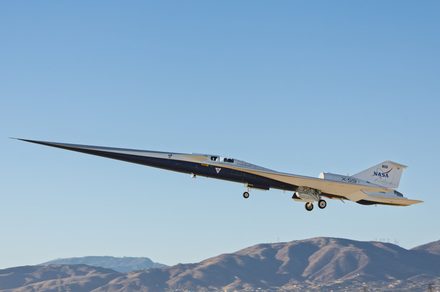
💡利用先進模擬與建模技術的尖端航太工程。
⚡ 30 秒速覽
有什麼變化
X-59 達到 924 英里/小時和 55,000 英尺高度
為什麼重要
成功的噪音降低可能導致陸地超音速飛行禁令解除,從而創造一個龐大的新航太產業領域。
下一步行動
追蹤 NASA 關於 X-59 飛行測試的開源數據發布,以獲取先進空氣動力學建模的見解。
誰應關注:Developers & AI Engineers
關鍵要點
- •X-59 達到 924 英里/小時和 55,000 英尺高度
- •專注於降低音爆噪音水平
- •有潛力徹底改變未來的客運航空
🧠 深度解析
本篇為 AI 生成分析,非原文內容。
🔑 增強重點摘要
- •The X-59 utilizes a unique 'Quiet SuperSonic Technology' (Quesst) design, featuring an elongated nose that prevents shockwaves from coalescing into a loud boom.
- •NASA plans to conduct community response overflight studies to gather data on how humans perceive the 'sonic thump' compared to traditional sonic booms.
- •The aircraft is powered by a single General Electric F414-GE-100 engine, the same engine used in the F/A-18E/F Super Hornet.
- •Because the X-59's design obscures forward visibility, it employs an eXternal Vision System (XVS) using a high-resolution camera and cockpit monitor instead of a traditional front windshield.
- •The project is a collaboration between NASA and Lockheed Martin, with the aircraft being manufactured at the Skunk Works facility in Palmdale, California.
🛠️ 技術深入
- Length: Approximately 99.7 feet (30.4 meters) to manage shockwave distribution.
- Wingspan: 29.5 feet (9 meters).
- Maximum Speed: Mach 1.4 (approx. 925 mph) at altitude.
- Design Philosophy: Shaped to separate shockwaves, resulting in a soft 'thump' (approx. 75 Perceived Level decibels) rather than a disruptive boom.
- Avionics: eXternal Vision System (XVS) replaces the forward-facing window to maintain the aerodynamic profile required for low-noise flight.
🔮 前景展望基於引用來源的 AI 分析
Regulatory bodies will revise supersonic flight bans over land.
Data collected from X-59 community overflights is intended to provide the empirical evidence required for the FAA and ICAO to establish noise-based standards rather than speed-based bans.
Commercial supersonic travel will return to domestic routes.
If the X-59 proves that sonic booms can be mitigated to acceptable levels, manufacturers will have a viable path to certify supersonic passenger aircraft for overland flight.
⏳ 時間線
2016-02
NASA awards the preliminary design contract for the X-59 to Lockheed Martin.
2018-11
NASA officially names the aircraft the X-59 QueSST.
2023-08
The X-59 is moved to the flight line for ground testing and engine runs.
2024-01
The X-59 is officially rolled out at the Lockheed Martin Skunk Works facility.
2025-07
NASA conducts initial taxi tests to verify ground handling and braking systems.
📰
AI 週報
閱讀本週精選 AI 大事摘要 →
👉相關動態
AI 策展新聞聚合。所有內容版權歸原始發布者所有。
原始來源: Digital Trends ↗
每週電子報
每週一封,可隨時退訂。