來源Engadget•較早收集於 32m
Google 測試 Chrome 瀏覽器 AI 優先搜尋功能
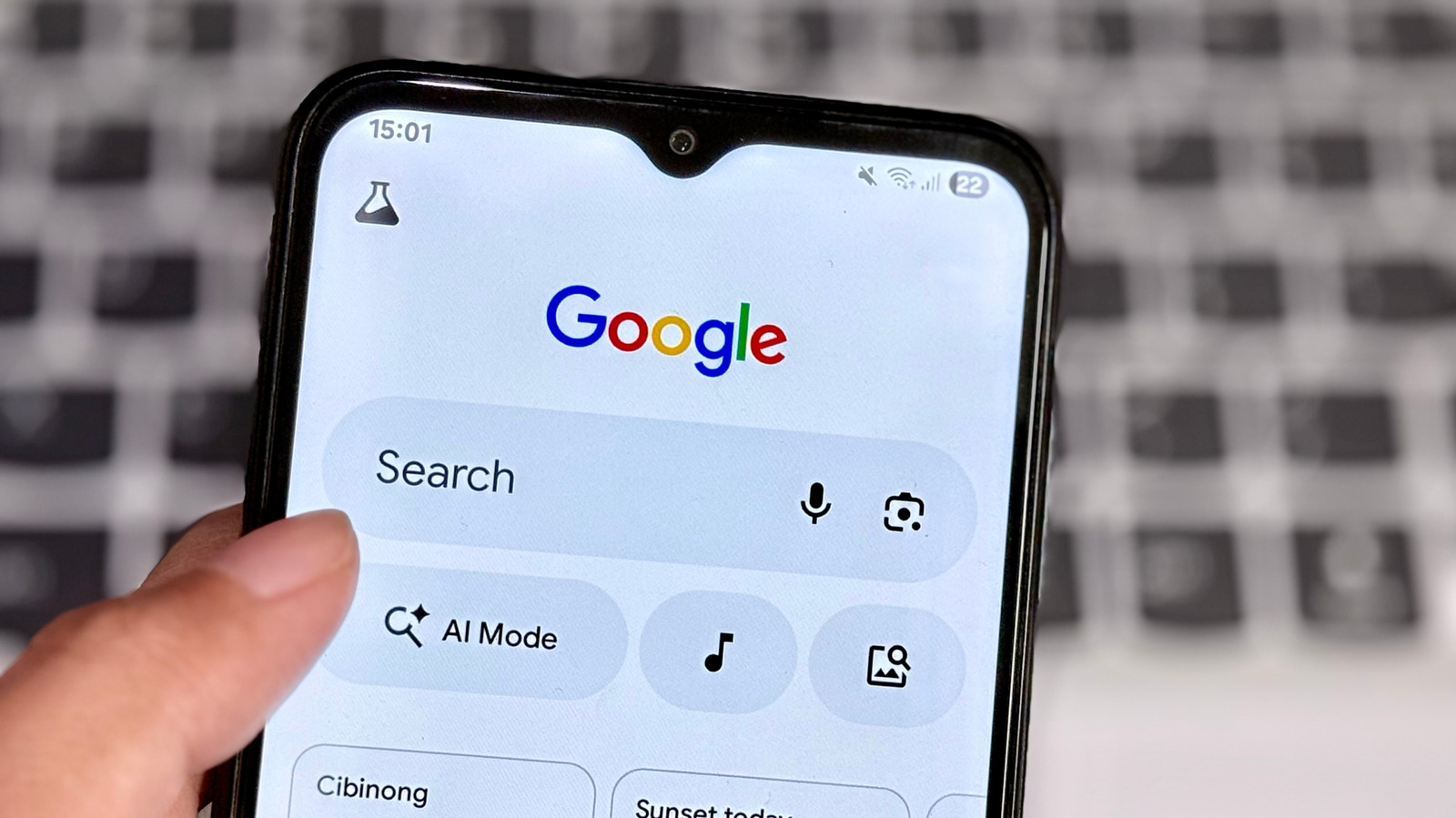
💡Google 正將 Chrome 的預設搜尋轉向 AI,這預示著使用者發現網路內容方式的重大改變。
⚡ 30 秒速覽
有什麼變化
Chrome 正在測試搜尋查詢的預設「AI 模式」。
為什麼重要
此變更可能會從根本上改變開發者與內容創作者的搜尋流量模式及 SEO 策略。這表明 Google 正優先考慮 AI 原生介面,而非傳統的連結導向導航。
下一步行動
監控您網站的搜尋流量,並分析 AI 生成的摘要如何影響您的點擊率,與傳統自然搜尋結果進行比較。
誰應關注:Developers & AI Engineers
關鍵要點
- •Chrome 正在測試搜尋查詢的預設「AI 模式」。
- •該功能旨在繞過傳統搜尋結果,優先提供 AI 生成的答案。
- •這顯示了 Google 在瀏覽器 AI 整合策略上的重大轉變。
🧠 深度解析
背景與延伸:來自公開資料,非原文內容。引用 31 個來源。
🔑 增強重點摘要
- •Google's AI-first search in Chrome is part of a broader strategic shift towards an 'agentic web,' where AI is designed to perform multi-step tasks and interact with websites on behalf of the user, moving beyond simple information retrieval.
- •The new 'AI Mode' in Chrome's address bar (omnibox) is designed to handle complex, multi-part questions and conversational follow-ups, aiming to provide direct, 'zero-click' answers within the browser interface, thereby reducing the need to navigate to external websites.
- •The underlying technology for Google's AI search, including AI Overviews and AI Mode, integrates customized Gemini models with Google's extensive, decades-old search infrastructure, utilizing techniques such as 'query fan-out' and Retrieval-Augmented Generation (RAG).
- •Beyond search, Gemini's integration into Chrome extends to features like natural language search of Chrome history, intelligent tab organization, AI-powered writing assistance ('Help me write'), AI themes for browser customization, and advanced agentic capabilities for tasks like ordering groceries or comparing products across multiple tabs.
- •This deep integration of AI raises significant user privacy concerns due to the extensive collection of personal data, including browsing history, location, device ID, product interactions, and purchase history, although Google states these features are optional and user-controlled.
📊 競品分析▸ Show
| Feature / Platform | Google Chrome (AI-first Search / Gemini) | Microsoft Edge (Copilot) | Perplexity AI (Answer Engine / Comet Browser) |
|---|---|---|---|
| Core Function | AI-first search, conversational answers, agentic tasks, browser integration | AI assistant, context-aware browsing, summarization, agentic tasks, browser integration | AI-native answer engine, direct answers with citations, research-focused |
| AI Models Used | Customized Gemini models (e.g., Gemini 3.5 Flash) | Integrated with Microsoft's AI models | Orchestrates external models (GPT, Claude, Gemini, Llama, DeepSeek) |
| Search Experience | Redirects standard queries to AI mode, AI Overviews, conversational follow-ups, multimodal input | AI chat, visual search, voice interaction, multi-tab context, personalized daily briefings | Synthesized summaries with inline citations, focus on accuracy and source backing |
| Agentic Capabilities | 'Auto Browse' for multi-step tasks (e.g., ordering groceries, comparing products), 'Help me write', tab organizer | Summarize open tabs, compare across tabs, complete multi-step actions, unsubscribe from newsletters | Agentic browser ('Comet') for complex queries and analysis |
| Data Collection / Privacy | Collects extensive user data (24 types) including browsing/search history, location, product interactions, purchase history; opt-in personalization | Stores voice data, uses interactions to improve service, opt-out control for training generative AI models on consumer data | Focuses on transparency and source backing; less emphasis on user experience metrics like page speed |
| Speed | AI Overviews produce summaries in ~0.3–0.6 seconds | Not explicitly benchmarked against Google, but aims for real-time assistance | Summaries in ~1–1.8 seconds per query; handles multi-step queries faster for market intelligence |
| SEO Impact | Reduced CTR for organic links, increased competition for citations in AI Overviews, focus on authority and structured data | Aims to replace traditional search with conversational answers, citing sources | Prioritizes concise, fact-based summaries; content needs to be summarization-friendly and directly answer questions |
🛠️ 技術深入
- Google's AI Search architecture tightly integrates its LLM stack, specifically customized Gemini models, with its established search infrastructure.
- The system processes queries through five major stages: query understanding, query fan-out (generating multiple subqueries for different intent dimensions), retrieval from diverse data sources, aggregation and filtering of results, and final LLM synthesis.
- Retrieval-Augmented Generation (RAG) is a core architectural pattern, addressing LLM limitations like hallucinations by grounding generated answers in fresh, externally retrieved data.
- In a RAG pipeline, user queries are encoded into embedding vectors, which are then used to search an index of precomputed content embeddings (web pages, videos, documents, multimodal data) to retrieve relevant candidates. These candidates are reranked and fed into an LLM as grounding context for answer synthesis.
- Google's Search Generative Experience (SGE) has evolved through models such as REALM (Retrieval-Augmented Language Model Pre-Training), RETRO, and RARR, which utilize language models and relevant documents for accurate results.
- Both AI Overviews and AI Mode can employ a 'query fan-out' technique, issuing multiple related searches across various subtopics and data sources to construct a comprehensive response.
- The underlying infrastructure reuses and extends Google's two-decade-old search components, including web crawlers, indexers (which build inverted indexes and use incremental indexing like Caffeine for near real-time updates), and query processors.
- Chrome's AI tools, such as AI themes, utilize text-to-image models for visual customization.
- The experimental 'Agentic Browsing' category in Lighthouse 13.3 checks for the presence of an
llms.txtfile at the domain root, signaling discoverability for AI agents.
🔮 前景展望基於引用來源的 AI 分析
Google's AI-first search will significantly reduce organic click-through rates for many websites, particularly for informational queries.
AI Overviews and AI Mode are designed to provide direct answers and comprehensive summaries within the search interface, leading to a high 'zero-click' rate where users find information without visiting external sites.
The shift in Google's search paradigm will intensify competition for 'citations' within AI-generated answers, rather than solely focusing on traditional top search rankings.
Earning a citation within an AI Overview can result in a 35% higher click-through rate compared to standard links, making content optimized for summarization, factual accuracy, and authority crucial for visibility.
Google Chrome will evolve into a more proactive, agentic assistant capable of performing complex multi-step tasks across the web on behalf of the user.
Features like 'Auto Browse' and other agentic AI capabilities are being developed to enable Gemini in Chrome to execute tasks such as ordering groceries, comparing products, or filling out forms, fundamentally changing the browsing experience.
⏳ 時間線
2023-05-10
Google announces the Search Generative Experience (SGE) experiment.
2024-05-14
Google officially launches AI Overviews (formerly SGE) for U.S. users.
2025-09-18
Google announces plans to supercharge Chrome with new AI features, including AI Mode in the address bar and Gemini integration.
2025-09-23
Gemini AI technology is integrated into Chrome for Mac and Windows users in the U.S., with agentic AI capabilities announced.
2026-01-30
Chrome's 'Auto Browse' feature, driven by Gemini 3 AI, becomes available in U.S. preview for AI Pro and Ultra plans.
2026-05-19
Google announces a 'new era for AI Search' at I/O 2026, with the Search box reimagined with AI and AI Mode becoming the default for deeper queries globally, powered by Gemini 3.5 Flash.
📎 來源 (31)
Factual claims are grounded in the sources below. Forward-looking analysis is AI-generated interpretation.
- crn.com
- economictimes.com
- businessinsider.com
- chrome.com
- yotpo.com
- vice.com
- ipullrank.com
- optixsolutions.co.uk
- cuicaihao.com
- google.com
- google.com
- blog.google
- google.com
- youtube.com
- google.com
- itnewsafrica.com
- medium.com
- surfshark.com
- reddit.com
- webiano.digital
- microsoft.com
- seraphicsecurity.com
- windows.com
- microsoft.com
- medium.com
- firstaimovers.com
- llmrefs.com
- marketvantage.com
- brindledigital.com
- backbone.media
- systemdesignhandbook.com
📰
AI 週報
閱讀本週精選 AI 大事摘要 →
👉相關動態

AI 策展新聞聚合。所有內容版權歸原始發布者所有。
原始來源: Engadget ↗
每週電子報
每週一封,可隨時退訂。