來源SCMP Technology•較早收集於 14m
Alibaba 將 AI 團隊整合為全新 Token Foundry 部門
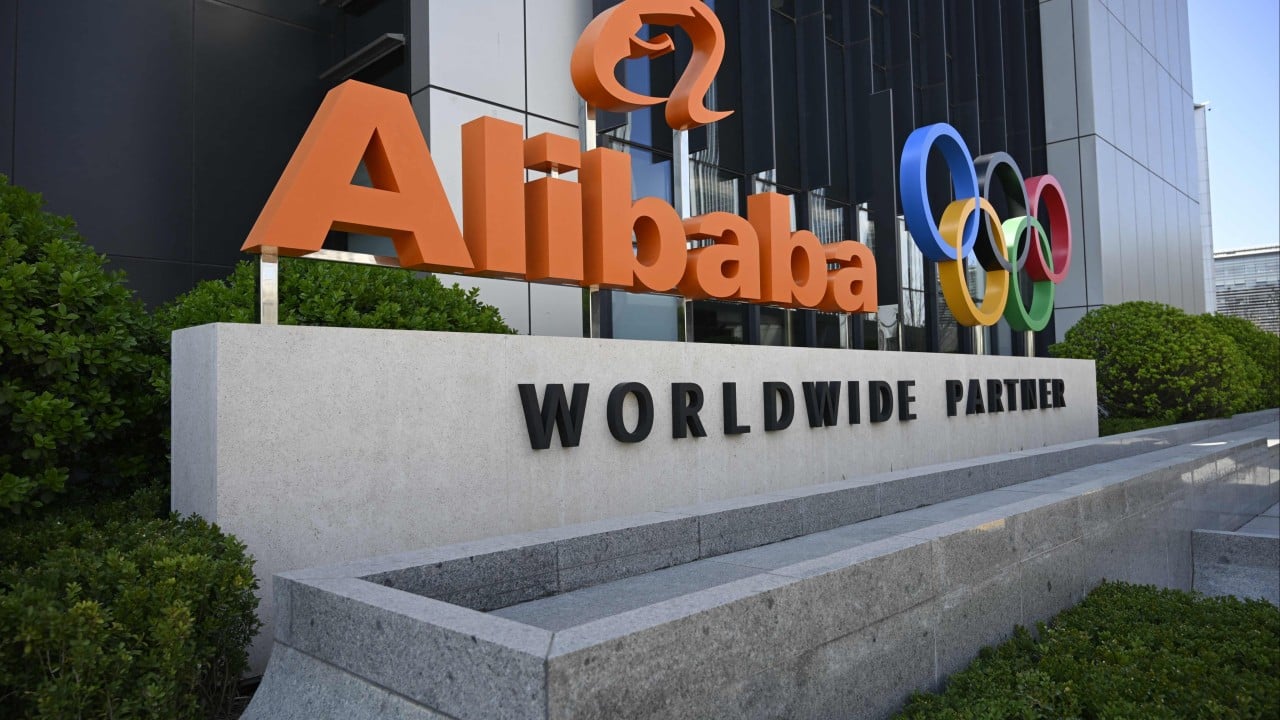
#corporate-strategy#ai-commercialization#alibaba-cloudtoken-foundryalibabatongyi labeddie wu
💡Alibaba 的重大 AI 重組顯示其正推動專有模型的快速商業化。
⚡ 30 秒速覽
有什麼變化
Token Foundry 整合了包括 Tongyi Lab 與 Future Life Lab 在內的關鍵模型開發團隊。
為什麼重要
此次重組顯示 Alibaba 正從實驗性 AI 研究轉向更積極、統一的產品導向商業化階段。預期其專有模型將更快速地整合進 Alibaba 的核心電商與雲端生態系統中。
下一步行動
密切關注 Alibaba Cloud 平台,留意由新成立的 Token Foundry 部門發布的 API 或 SDK 更新。
誰應關注:Enterprise & Security Teams
關鍵要點
- •Token Foundry 整合了包括 Tongyi Lab 與 Future Life Lab 在內的關鍵模型開發團隊。
- •新部門旨在精簡 AI 商業化流程並統一 Alibaba 的內部 AI 策略。
- •執行長 Eddie Wu 將直接掌管該部門,顯示其對公司的戰略重要性。
🧠 深度解析
背景與延伸:來自公開資料,非原文內容。引用 24 個來源。
🔑 增強重點摘要
- •The establishment of Token Foundry is a further evolution of Alibaba's AI restructuring, following the creation of the Alibaba Token Hub (ATH) business group in March 2026, which also aimed to consolidate AI capabilities under CEO Eddie Wu.
- •The 'Token' in Token Foundry represents a strategic shift towards encapsulating AI capabilities, data permissions, compute orchestration, and user feedback into 'digital tokens' that are transferable, verifiable, and composable.
- •Future Life Lab, now integrated into Token Foundry, previously developed consumer-facing projects such as Happy Horse, a video-generation model, and Happy Oyster, an open-world AI model.
- •As part of this restructuring, Zhou Jingren has been appointed Alibaba's Chief Scientist and will lead a newly established Alibaba AI Future Research Institute, focusing on frontier AI research and next-generation technological breakthroughs.
- •Alibaba's AI business has transitioned from an initial investment phase into full-scale commercialization, with a projected AI revenue of 30 billion yuan (US$4.41 billion) in 2026, and AI agents expected to contribute over half of cloud sales.
🛠️ 技術深入
- Alibaba's Qwen large language models are a cornerstone of its open-source AI strategy, having surpassed 1 billion cumulative downloads.
- The Qwen family includes various model sizes optimized for different use cases, supporting multiple languages (with particular strength in Chinese and English), and encompassing language, multimodal, mathematical, and code models.
- Specific models include Qwen-7B (the first open-source LLM released in August 2023), Qwen-VL (a vision-language model), Qwen3-Omni (a fully multimodal model accepting text, images, video, and audio inputs, and generating text and speech), Qwen-Audio, Qwen3-TTS (text-to-speech), and Qwen3-Coder (a code-specialized variant).
- Alibaba has also introduced Qwen3.5-Omni and Qwen3.6-Plus, advanced AI models capable of real-time understanding across multiple data types and languages.
- The Tongyi DeepResearch project, developed by Tongyi Lab, utilizes a 30.5B Mixture-of-Experts (MoE) architecture with approximately 3.3B parameters active per token ('A3B'), balancing efficiency with a large expert pool for reasoning, and features a context length of 128k.
- Alibaba's chip design subsidiary, T-Head, develops proprietary GPUs that support end-to-end AI workloads, from training and fine-tuning to inference, contributing to Alibaba's full-stack AI ecosystem.
🔮 前景展望基於引用來源的 AI 分析
Alibaba will intensify its focus on enterprise AI solutions and AI agents.
The consolidation under Token Foundry, the emphasis on 'creating, delivering, and applying tokens,' and the launch of platforms like Wukong (an enterprise AI agent platform) indicate a strong push towards commercializing AI for business workflows.
Alibaba's significant AI investments will continue to impact its short-term profitability while aiming for substantial long-term revenue growth.
The company has stated it is prioritizing long-term growth over near-term margins, with increased spending on AI and cloud infrastructure weighing on profitability, but forecasting significant AI revenue by 2026.
Alibaba aims to establish itself as China's leading full-stack AI provider, encompassing hardware, infrastructure, models, and applications.
The company's ecosystem spans proprietary T-Head chips, cloud infrastructure, model-as-a-service platforms, and Qwen foundation models, with executives explicitly stating the goal to be a full-stack AI provider.
⏳ 時間線
2014
Alibaba Group founded the Institute of Data Science & Technologies (iDST), initiating core AI technology R&D.
2017-10
DAMO Academy was officially established, committing over US$15 billion in R&D and opening seven global research labs.
2022
Tongyi Lab was officially established, and the Qwen project was launched.
2023-04
The Tongyi Qwen large language model was officially released.
2023-08
Qwen-7B, the first open-source model in the Qwen series, was released.
2026-03
Alibaba established the Alibaba Token Hub (ATH) Business Group, consolidating AI capabilities under CEO Eddie Wu.
2026-04
Alibaba formed a group-level AI technology committee led by CEO Eddie Wu, and Tongyi Lab was upgraded to the Tongyi Large Model Business Unit.
2026-06
Alibaba launched 'Token Foundry,' merging the Tongyi Large Model Business Unit and Future Life Lab, directly led by CEO Eddie Wu.
📎 來源 (24)
Factual claims are grounded in the sources below. Forward-looking analysis is AI-generated interpretation.
- moomoo.com
- pulse2.com
- alibabagroup.com
- futunn.com
- phemex.com
- scmp.com
- aibase.com
- techinasia.com
- scmp.com
- digitalcommerce360.com
- alibabacloud.com
- alibabagroup.com
- aliyun.com
- respan.ai
- experts-exchange.com
- enterpriseviewpoint.com
- substack.com
- chroniclejournal.com
- yicaiglobal.com
- seekingalpha.com
- recodechinaai.com
- qz.com
- channellife.com.au
- samenacouncil.org
📰
AI 週報
閱讀本週精選 AI 大事摘要 →
👉相關動態
AI 策展新聞聚合。所有內容版權歸原始發布者所有。
原始來源: SCMP Technology ↗
每週電子報
每週一封,可隨時退訂。